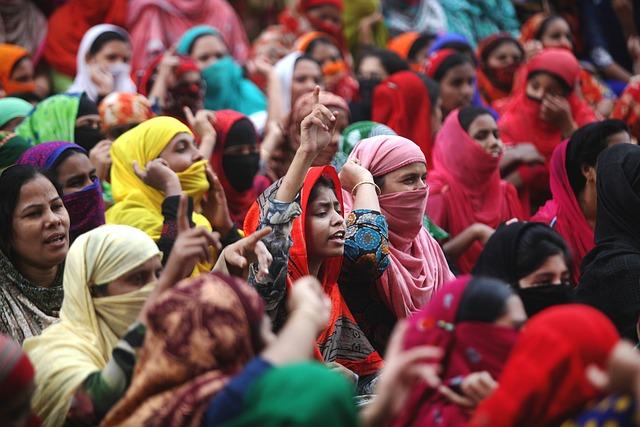
In recent months,teh vibrant streets of Georgia reverberated with the calls for democratic reform as thousands of citizens took to the streets in protest against what they perceived as an erosion of democratic values by their goverment. The fervor and passion of these pro-democracy protests captured the attention of both regional observers and the global community, sparking hopes for a political transformation in the country. However, despite their initial momentum and widespread public support, these demonstrations ultimately failed to achieve their goals, leaving many to question the reasons behind this setback. In this article, we delve into the complex dynamics that contributed to the failure of Georgia’s pro-democracy protests, exploring the socio-political landscape, government responses, and the broader implications for democracy in a region grappling with authoritarian pressures.
Understanding the Underlying Causes of the Protests in Georgia

The pro-democracy protests in georgia were ignited by a complex interplay of political, social, and economic factors that reflect deeper systemic issues within the country.Key contributors to the unrest included:
- political Disillusionment: A pervasive sense of disenchantment with the government spurred citizens to voice their frustrations. Many felt that promises of democratic reforms had been sidelined.
- Economic Inequality: rising living costs and unemployment rates made it difficult for ordinary citizens to thrive, contributing to the perception that the government was failing to provide for its people.
- corruption and Governance: allegations of corruption among leading officials eroded trust in political institutions, leaving many to question the integrity of those in power.
Furthermore, the protests were characterized by a notable generational divide, with younger activists often taking the lead. This generational gap brought to light differing priorities between the youth and older political factions. Factors exacerbating the situation included:
- Digital Mobilization: The use of social media became a double-edged sword; while it mobilized support,it also led to increased scrutiny and crackdown by authorities.
- External Influences: Regional geopolitical dynamics also played a role, as Russia’s actions in neighboring countries raised concerns about national sovereignty.
- Mixed Messaging: The leadership’s inability to present a cohesive response or plan to address protestors’ demands led to further frustration, resulting in failed negotiations and trust erosion.
| Factor | Impact on Protests |
|---|---|
| Political Disillusionment | Increased participation and urgency |
| Economic Inequality | Heightened grievances and demands for change |
| Corruption | Eroded trust in government |
The Role of Political Leadership in Shaping Protest Dynamics

the impact of political leadership on the dynamics of protest movements cannot be overstated. In the context of Georgia’s recent pro-democracy protests, the response from political leaders played a vital role in either galvanizing or stifling public sentiment. Leaders who adeptly resonate with the populace can bolster support for a movement, transforming initial grievances into a widespread call for reform. Conversely, when leadership is perceived as out of touch or repressive, it can stifle momentum and diminish the legitimacy of the protests. Recent events demonstrate that effective communication,inclusive dialog,and genuine responsiveness from leadership are crucial to harnessing public energy towards constructive change rather than escalation into violence or division.
The failure of the protests in Georgia highlights specific leadership behaviors that can exacerbate dissent rather than mitigate it. Notably, the absence of a unifying figure who can bridge ideological divides led to fragmentation among protest groups. Key challenges included:
- Lack of Clear Objectives: Without a shared vision, protests can easily lose focus.
- Polarization of Leadership: Competing factions within the movement diluted its strength.
- Government Repression: Heavy-handed tactics by authorities reinforced public fear rather than encouraging participation.
Moreover, as leaders struggled to address the concerns of the populace effectively, many protestors found themselves disillusioned, leading to diminished turnout and momentum over time. The interplay of these factors illustrates the crucial need for adaptive political leadership that can both guide and harness the energies of civil society in pursuit of democratic ideals.
Media Influence and public Perception During the Pro-Democracy Movement

The role of media in shaping public perception was pivotal during the pro-democracy movement in Georgia. With the rise of social media platforms, conventional news sources often struggled to keep pace with the rapid data dissemination that new media encouraged.Key influencers included local activists who harnessed platforms like Facebook and Twitter to mobilize supporters, share real-time updates, and amplify voices that traditional media outlets might overlook. This democratization of information allowed for a more vibrant discourse; though, it also brought challenges, such as the spread of misinformation that further complicated the public’s understanding of the movement’s objectives and challenges.
moreover, the portrayal of the protests in mainstream media significantly influenced public perception both domestically and internationally. Coverage frequently enough focused on sensational aspects rather than the grassroots motivations behind the movement, leading to a skewed understanding of the protesters’ goals. Importantly, the lack of cohesive narratives in media outlets resulted in fragmented interpretations of the events, leaving many potential allies confused or apathetic. The contrast in coverage between localized portrayals versus international narratives illustrated a broader trend where media optics could undermine collective action,suggesting that a more unified and accurate representation might have altered the trajectory of the demonstrations.
lessons from History: Comparing Georgia’s Protests to Regional Movements

The pro-democracy protests that erupted in Georgia can be analyzed through the lens of historical movements across the region, revealing both similarities and stark differences in their trajectories. One key lesson from history is the importance of unity among diverse groups. Past movements,like the Rose Revolution in 2003,thrived on a coalition of various social and political factions working towards a common goal. In contrast, recent protests in Georgia were marred by internal divisions, with competing interests sometiems overshadowing the ultimate push for democratic reforms. Without a clear and unified vision, the protests struggled to maintain momentum, facing increasing challenges from a government eager to quash dissent.
Moreover, the historical context of regional movements sheds light on the role of external support in sustaining protests. The successes of the Euromaidan protests in Ukraine and the Arab Spring were aided by international attention and support, both moral and logistical. In Georgia, while there was some global sympathy for the protestors, the perceived lack of robust international backing may have contributed to their eventual dwindling energy. This highlights the necessity for local movements, like those in georgia, to not only build grassroots initiatives but also engage diplomatically with the global community to galvanize broader support and solidarity against authoritarian trends.
Strategic Recommendations for Future Civic Engagement Initiatives

Future civic engagement initiatives must prioritize dynamic and inclusive strategies that address the diverse needs and motivations of participants. Key to this is developing a multifaceted approach that not only encourages participation but also fosters deeper understanding of civic responsibilities. Organizations can enhance their outreach by implementing the following strategies:
- Collaboration with Local Leaders: Engage community leaders who can bridge gaps between organizations and the populace.
- education Campaigns: Launch programs that highlight the importance of civic involvement and the specific issues at stake.
- Utilization of Technology: Adopt social media platforms and mobile apps to disseminate information and mobilize support.
Furthermore, it’s crucial to establish a feedback mechanism to assess the effectiveness of these initiatives. By measuring engagement levels and participant satisfaction, organizations can adapt their strategies in real time.Consider implementing structured feedback through:
| Feedback Method | Description |
|---|---|
| Surveys | Gather quantitative and qualitative data on participant experiences. |
| Focus Groups | Encourage in-depth discussions to understand community sentiments. |
| Social Media Polls | Engage followers in real-time to gauge opinions on various topics. |
Building a Sustainable Framework for Democratic Resilience in Georgia

The recent pro-democracy protests in Georgia highlighted significant gaps in the country’s governance structures, which ultimately hindered their effectiveness. A sustainable framework for fostering democratic resilience must be established, emphasizing transparency, accountability, and inclusivity. Key components of this framework could include:
- Enhanced civic education: Empower citizens with knowledge about their rights and responsibilities.
- Strengthening institutions: Ensure independent judiciary and media to promote checks and balances.
- Engaging marginalized communities: Involve diverse groups in civic engagement to drive broader participation.
Additionally, a collaborative approach between civil society, government, and international partners could foster a more robust democratic surroundings. Establishing a systematic feedback mechanism woudl allow the population to voice concerns, contributing to policy reforms that reflect the populace’s needs. The table below outlines essential strategies for building this framework:
| Strategy | Description |
|---|---|
| Dialogue Platforms | Facilitate regular discussions between citizens and leaders. |
| Capacity Building | Train local organizations in advocacy and governance. |
| Monitoring & evaluation | Implement systematic assessment of democratic initiatives. |
Wrapping Up
the pro-democracy protests in Georgia, despite their initial fervor and widespread support, ultimately faced a confluence of challenges that hindered their success. From internal divisions among opposition groups to external pressures from a resurgent Russia, the obstacles were formidable. The government’s strategic countermeasures and the international community’s complex responses further complicated the landscape.As Georgians navigate this tumultuous period, the lessons learned from these protests may shape future movements and democratic aspirations in the region. while the immediate calls for change may have faded, the underlying desire for democratic reform remains a powerful force that could resurface, driving the nation’s political discourse in the years to come. Understanding these dynamics is crucial for both observers and participants in the ongoing struggle for democracy in Georgia and beyond.