* . *
EUROP INFO
ADVERTISEMENT
Sunday, January 11, 2026
No Result
View All Result
No Result
View All Result
EUROP INFO
No Result
View All Result
Home Georgia

Reversing Georgia’s Drift Away from European Integration

Noah Rodriguez by Noah Rodriguez
June 20, 2025
in Georgia
Reversing Georgia’s Drift Away from European Integration
ADVERTISEMENT

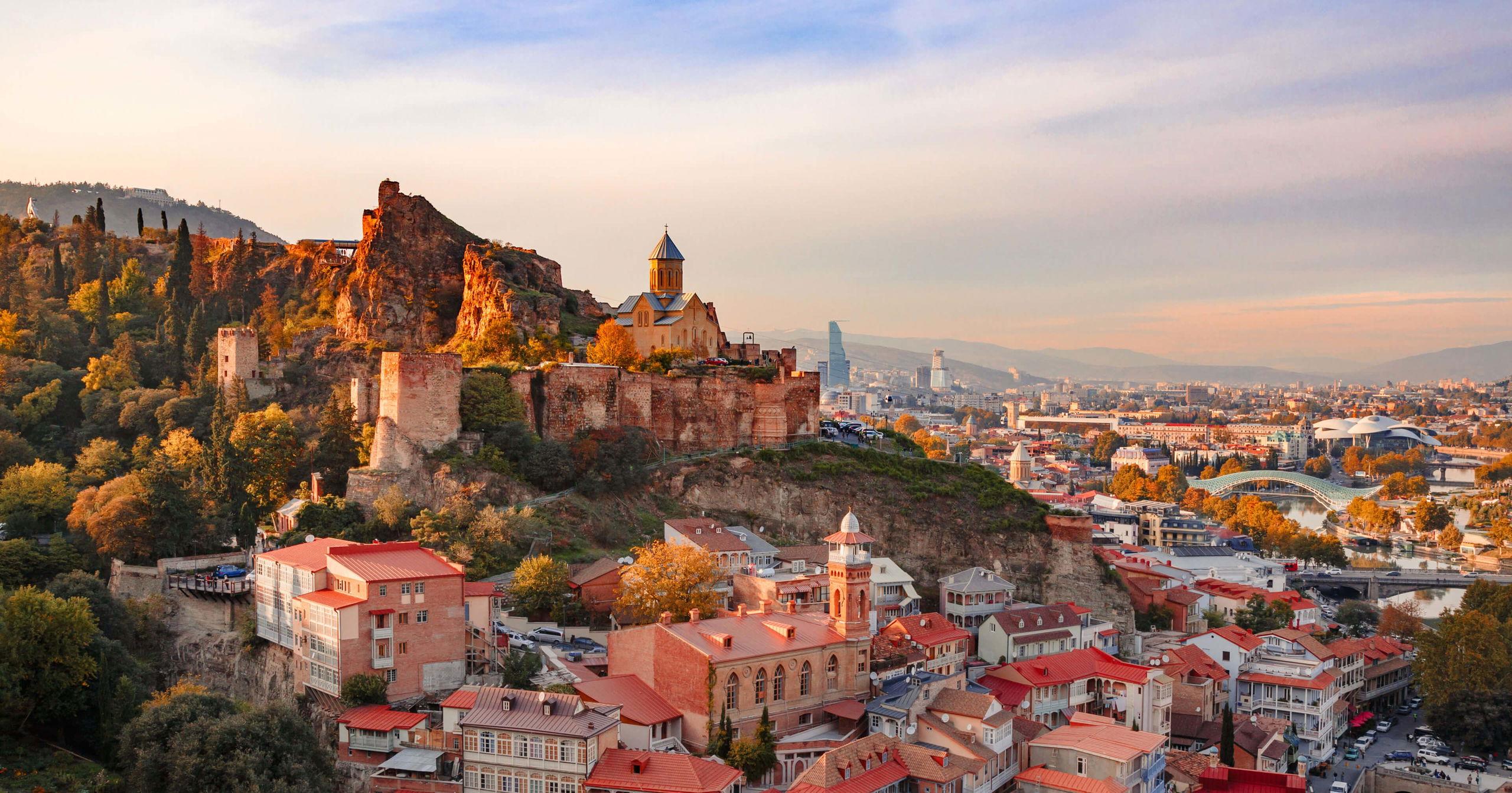
Georgia’s aspirations for closer ties with Europe have faced renewed challenges amid a backdrop of political turbulence and external pressures. The Atlantic Council, a leading transatlantic think tank, has recently highlighted concerns over Georgia’s gradual drift away from its European integration goals. This development raises critical questions about the future trajectory of the country’s foreign policy and its commitment to democratic reforms. In this article, we examine the factors contributing to Georgia’s slide away from European integration and explore the implications for the broader regional security landscape.

Table of Contents

Toggle
  • Georgia’s Waning Commitment to European Integration Challenges Democratic Progress
  • Bridging the Gap Strengthening Institutional Reforms to Restore EU Trust
  • Strategic Recommendations Enhancing Georgia’s Policy Alignment and Regional Partnerships
  • Concluding Remarks

Georgia’s Waning Commitment to European Integration Challenges Democratic Progress

Recent developments reveal a troubling retreat from the robust European integration process that once anchored Georgia’s democratic aspirations. Political infighting, weakened rule of law, and diminishing reform momentum have eroded public trust and jeopardized the country’s future alignment with the EU. Civil society groups and international observers alike warn that this backslide endangers not only democratic governance but also economic stability and regional security. As electoral processes grow increasingly fraught with controversy, the space for transparent dialogue between the government and opposition narrows, fueling societal polarization rather than fostering consensus-driven progress.

Key obstacles now stand in the way of renewed European integration efforts, illustrated by both structural and political challenges, including:

  • Judicial independence: Selective interference undermines confidence in fair legal recourse.
  • Media freedom: Rising pressures on journalists curb critical reporting and public discourse.
  • Anti-corruption reforms: Slow implementation signals institutional resistance to change.

Without vigorous reforms and genuine commitment, Georgia risks straying further from the path toward the European Union, imperiling years of gradual democratic development.

AspectCurrent StatusEU Expectation
Judicial ReformPartial implementation, political influence evidentFull independence and transparency
Media FreedomIncreased pressure and censorship attemptsUnrestricted and pluralistic media environment
Anti-Corruption MeasuresSlow enforcement, lack of accountabilitySwift, impartial investigations and prosecutions

Bridging the Gap Strengthening Institutional Reforms to Restore EU Trust

Recent developments in Georgia’s political landscape have cast a shadow over its path toward European integration, raising urgent questions about the integrity and effectiveness of its institutions. Without decisive institutional reforms, the trust essential for a stronger partnership with the EU risks eroding further. Crucially, accountability mechanisms must be reinforced to ensure transparency and the rule of law, which are foundational pillars of EU standards. Georgia’s government faces the challenge of demonstrating genuine commitment through concrete legislative changes and independent judiciary enhancements.

Effective reform requires a multi-dimensional approach that engages all stakeholders, from civil society to international partners. Key actions recommended include:

  • Revamping anti-corruption frameworks to close loopholes and deter malpractice
  • Strengthening electoral processes to guarantee fairness and prevent political manipulation
  • Enhancing media freedom to create a more balanced public discourse
  • Bolstering civil society participation in reform monitoring and policy feedback
Institutional Reform AreaCurrent StatusEU Expectation
Judiciary IndependenceHighly PoliticizedImpartial and Autonomous
Anti-Corruption MeasuresWeak EnforcementRobust and Transparent

Recent developments in Georgia’s political landscape have cast a shadow over its path toward European integration, raising urgent questions about the integrity and effectiveness of its institutions. Without decisive institutional reforms, the trust essential for a stronger partnership with the EU risks eroding further. Crucially, accountability mechanisms must be reinforced to ensure transparency and the rule of law, which are foundational pillars of EU standards. Georgia’s government faces the challenge of demonstrating genuine commitment through concrete legislative changes and independent judiciary enhancements.

Effective reform requires a multi-dimensional approach that engages all stakeholders, from civil society to international partners. Key actions recommended include:

  • Revamping anti-corruption frameworks to close loopholes and deter malpractice
  • Strengthening electoral processes to guarantee fairness and prevent political manipulation
  • Enhancing media freedom to create a more balanced public discourse
  • Bolstering civil society participation in reform monitoring and policy feedback

Institutional Reform AreaCurrent StatusEU Expectation
Judiciary IndependenceHighly PoliticizedImpartial and Autonomous
Anti-Corruption MeasuresWeak Enforcement

Strategic Recommendations Enhancing Georgia’s Policy Alignment and Regional Partnerships

To reverse Georgia’s recent drift from European integration, it is imperative to recalibrate its foreign policy underpinnings. Prioritizing alignment with EU standards on governance, the judiciary, and anti-corruption measures must become non-negotiable facets of state reform. Dedicated working groups that include civil society and expert stakeholders could ensure transparency and accountability in this realignment process. Moreover, leveraging targeted diplomatic initiatives will help reaffirm Georgia’s commitment to the European project and rebuild trust among key EU partners.

Strengthening regional alliances in the South Caucasus and beyond remains a critical vector for strategic leverage. Enhancing cooperation frameworks with neighbors like Armenia and Azerbaijan, especially in areas like energy security, trade facilitation, and digital infrastructure, can create a united front fostering stability amid geopolitical volatility. Emphasizing multilateral dialogue platforms and cross-border projects will not only improve practical connectivity but also amplify Georgia’s voice in regional policymaking arenas.

  • Reinvigorate EU-Georgia Association Agreement implementation through joint monitoring and rapid response mechanisms.
  • Establish a South Caucasus economic corridor to boost trade flows and infrastructure investment.
  • Expand people-to-people exchanges focused on youth and professional development across the region.
Policy AreaActionExpected Impact
Governance ReformIndependent judiciary enhancementIncreased EU trust and investment
Regional CooperationCross-border energy projectsEnergy security and market integration
Trade FacilitationCustoms procedure harmonizationBoosted bilateral trade volumes

Concluding Remarks

As Georgia faces mounting internal challenges and renewed external pressures, the path toward deeper European integration remains fraught yet crucial. Reversing the recent slide away from Euro-Atlantic aspirations will require sustained political will, comprehensive reforms, and unwavering support from Western partners. The Atlantic Council’s insights underscore that Georgia’s future as a democratic and European-oriented state depends not only on overcoming immediate obstacles but also on reaffirming its strategic commitment to the principles and values that underpin the European project.

Tags: Atlantic Councildemocratic reformsEastern PartnershipEU relationsEurasian geopoliticsEuropean integrationforeign policygeorgiaRegional Securitytransatlantic relations
ADVERTISEMENT
Previous Post

A Very Finnish Innovation: Giant Sand Battery Begins Storing Wind and Solar Energy in Crushed Soapstone

Next Post

Germany’s Merz Reveals US Considering Involvement in Strikes Against Iran

Noah Rodriguez

Noah Rodriguez

A podcast host who engages in thought-provoking conversations.

Related Posts

Georgia’s president calls BBC report ‘Deep State’ retaliation for Tbilisi’s refusal to follow orders – Anadolu Ajansı
Georgia

Georgia’s President Slams ‘Deep State’ Retaliation Over Tbilisi’s Defiance

January 11, 2026
“Georgia is a core country of the South Caucasus. It is not possible to visualise the region without Georgia.” – Commonspace.eu
Georgia

Georgia: The Heart of the South Caucasus You Can’t Imagine the Region Without

January 9, 2026
Germany recalls envoy to Georgia amid growing tensions – politico.eu
Georgia

Germany Recalls Envoy to Georgia as Tensions Escalate

January 8, 2026
Georgia’s prime minister announces crackdown on dissent after Tbilisi protests – The Guardian
Georgia

Georgia’s Prime Minister Launches Bold Crackdown Following Tbilisi Protests

January 6, 2026
Georgia To Introduce Health Insurance For All International Tourists Starting January 2026: All You Need To Know – Travel And Tour World
Georgia

Georgia to Launch Health Insurance for All International Tourists Starting January 2026: What You Need to Know

January 4, 2026
Georgia’s government clamps down after Tbiilisi unrest – DW
Georgia

Georgia’s Government Takes Strong Action Following Tbilisi Unrest

January 2, 2026
Tourists Ignore Rogue Wave Warnings at Iceland’s Deadliest Beach (Video) – SURFER Magazine

Tourists Brave Danger as Rogue Waves Hit Iceland’s Deadliest Beach (Video)

January 11, 2026
Ukraine’s collapse would be a disaster for Hungary, says Orbán – Euronews.com

Orbán Warns: Ukraine’s Collapse Would Spell Disaster for Hungary

January 11, 2026
‘Terrifying’ storm causes widespread damage in Guernsey – BBC

Terrifying’ Storm Ravages Guernsey, Leaving Widespread Damage in Its Wake

January 11, 2026
Top 7 Honeymoon Destinations in Greece Beyond Santorini – GreekReporter.com

Discover the Top 7 Breathtaking Honeymoon Destinations in Greece Beyond Santorini

January 11, 2026
As millions flow to the Gibraltar estate, Wilmington City council is asking questions – Spotlight Delaware

As Millions Flock to Gibraltar Estate, Wilmington City Council Raises Concerns

January 11, 2026
Azerbaijan reaffirms support for Somalia’s sovereignty at OIC emergency meeting [PHOTOS] – AzerNews

Azerbaijan Strongly Reaffirms Support for Somalia’s Sovereignty at OIC Emergency Meeting [PHOTOS]

January 11, 2026
EUR 123mn to Fund Largest Green H2 Project in Austria – Energy Industry Review

Austria Launches Largest Green Hydrogen Project with €123 Million Investment

January 11, 2026
One million without heat and water after Russian strikes, Ukraine says – BBC

One Million Left Without Heat and Water Following Russian Strikes in Ukraine

January 11, 2026

Categories

Archives

June 2025
MTWTFSS
 1
2345678
9101112131415
16171819202122
23242526272829
30 
« May   Jul »

Our authors

  • Atticus Reed
  • Ava Thompson
  • Caleb Wilson
  • Charlotte Adams
  • Ethan Riley
  • Isabella Rossi
  • Jackson Lee
  • EURO-NEWS
  • Mia Garcia
  • Noah Rodriguez
  • Olivia Williams
  • Samuel Brown
  • Sophia Davis
  • Victoria Jones
  • William Green

© 2024 EUROP.INFO - Copyright for syndicated content belongs to the linked Source.

No Result
View All Result

    © 2024 EUROP.INFO - Copyright for syndicated content belongs to the linked Source.

    This website uses cookies. By continuing to use this website you are giving consent to cookies being used. Visit our Privacy and Cookie Policy.
    Go to mobile version

    1 - 2 - 3 - 4 - 5 - 6 - 7 - 8