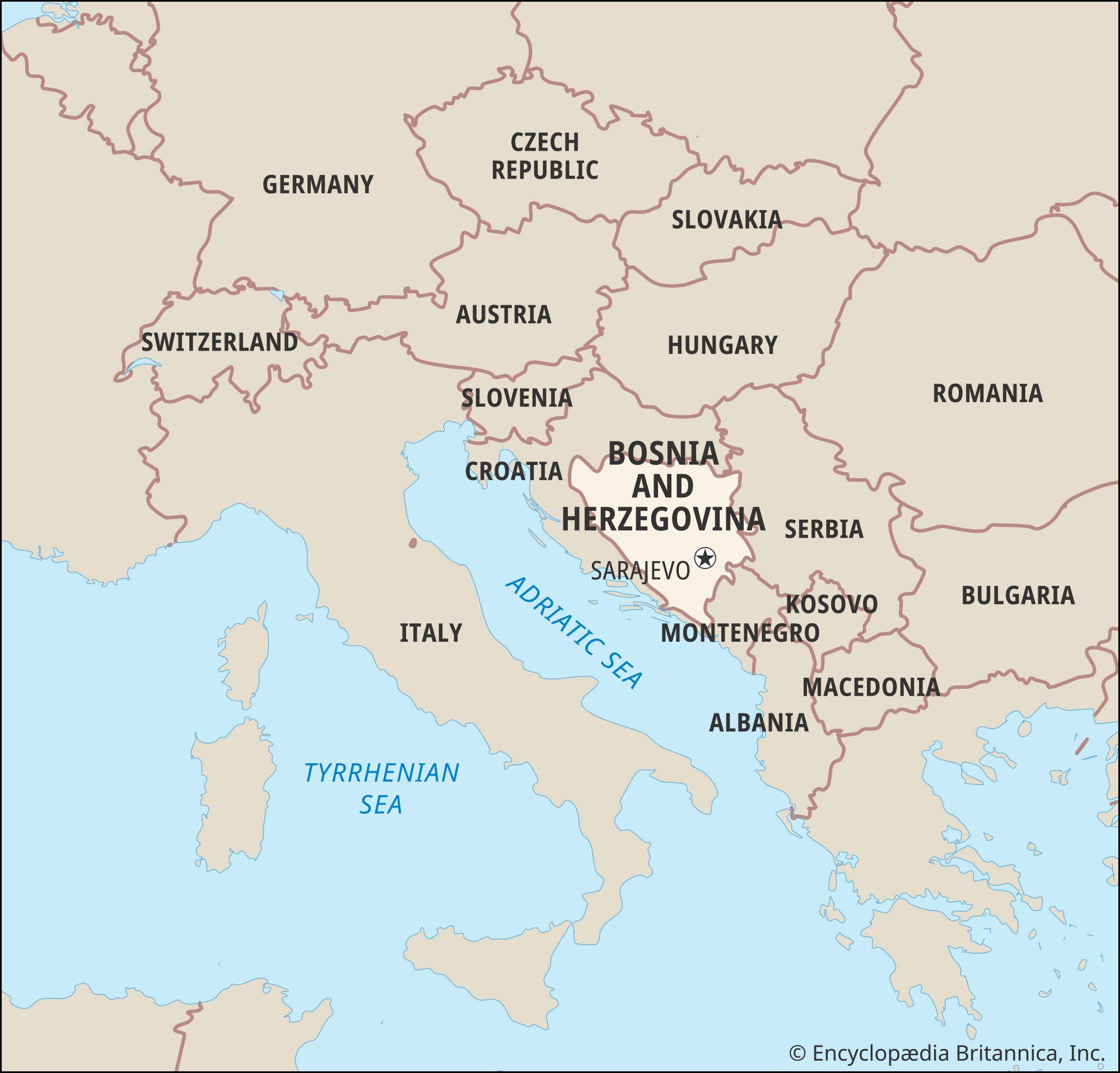
As Bosnia and Herzegovina approaches a critical crossroads in 2025, two competing US strategies for the Balkans are emerging, each with distinct implications for the country’s future. While both plans aim to stabilize the region, they also reveal underlying tensions between Washington’s stated goals and the expansionist ambitions influencing local and regional actors. This article examines how these divergent approaches intersect with Bosnia and Herzegovina’s complex political landscape, raising questions about the viability of lasting peace and the prospects for integration in a still-fragile Balkans.
US Strategic Approaches to Bosnia and Herzegovina in 2025 Clash with Regional Expansionist Agendas
In 2025, Washington’s dual-track policy toward Bosnia and Herzegovina underscores a complex balancing act between strengthening state institutions and countering regional influences that threaten the fragile stability of the Balkans. The first US approach focuses on institutional reforms aimed at enhancing the rule of law, promoting economic integration, and supporting multi-ethnic governance frameworks. Meanwhile, the second plan operates on a strategic level to deter nationalist agendas that seek to redraw borders or expand regional hegemony, especially by neighboring powers with vested interests in the country’s territorial integrity. This multiplier of diplomacy and deterrence has reignited debates over the efficacy of US engagement in preventing escalation amid competing geopolitical ambitions.
The clash becomes starkly visible when assessing how these plans confront local and external actors’ visions for Bosnia and Herzegovina’s future. While American initiatives emphasize:
- Inclusive dialogue among ethnic communities
- Compliance with Dayton Accords
- International partnership for economic recovery
regional expansionists-often shadowed by the interests of Moscow and Belgrade-promote a narrative of sovereignty redefinition through cultural and political influence, risking re-drawing internal boundaries. The tension plays out in diplomatic rallies and discreet negotiations, with US pressure backed by diplomatic and economic tools contrasting sharply with local political actors’ efforts to capitalize on ethno-nationalist rhetoric and external patronage to pursue fragmentation.
| US Strategy | Regional Expansionist Agenda |
|---|---|
| Promoting multi-ethnic governance | Advocating for ethnic autonomy |
| Supporting rule-of-law reforms | Undermining central institutions |
| Economic integration with EU and NATO | Fostering economic dependence on rival powers |
| Maintaining Dayton Accords framework | Challenging existing borders and agreements |
Analyzing the Implications of Divergent US Plans for Balkan Stability and BiH Sovereignty
The contrasting approaches embedded within the two US strategies for the Balkans reveal a complex balancing act between regional stability and national sovereignty, particularly for Bosnia and Herzegovina (BiH). One plan advocates for a reinforced federalist structure, emphasizing the integrity of BiH as a sovereign state, with focused support on inter-ethnic dialogue and institutional reform. This approach aligns with traditional Western notions of democracy and state-building but faces criticism from local nationalist factions who perceive it as a constraint on their autonomy. Conversely, the alternative plan prioritizes decentralization and increased autonomy for the entity-level governments, a framework viewed by some as enabling expansionist tendencies under the guise of self-governance, threatening to exacerbate ethnic divisions and potentially destabilize the broader region.
The implications of these divergent strategies become clearer when examining their *practical outcomes* on the ground:
- Federalist Plan: Promotes unified security policies but struggles with minority representation dissatisfaction.
- Decentralization Plan: Enhances local governance but risks fragmenting national cohesion.
- Regional Stability: Both plans aim to deter external interference but approach threats differently.
| Aspect | Federalist Plan | Decentralization Plan |
|---|---|---|
| Governance | Centralized with strong institutions | Local autonomy empowered |
| Ethnic Relations | Focus on integration | Separate ethnic empowerment |
| Security | Unified national defense | Entity-based security systems |
| Risk | Political gridlock | Potential fragmentation |
Pathways to Harmonizing US Policy and Regional Interests for Sustainable Peace in Bosnia and Herzegovina
Achieving a sustainable peace in Bosnia and Herzegovina demands a nuanced approach that bridges the intricate divergences between US policy objectives and the multifaceted regional interests. The US’s dual strategies-one emphasizing integration into Euro-Atlantic structures and the other focused on pragmatic engagement with local power dynamics-reflect competing priorities that must be reconciled. To facilitate this, stakeholders should consider targeted diplomatic frameworks that promote inclusive dialogue, respect for sovereignty, and economic development as cornerstones for stability. Such frameworks would prioritize:
- Enhanced regional cooperation to reduce tensions and build trust between ethnic and political groups.
- Economic incentives aligned with sustainable infrastructure projects fostering interconnected growth.
- Flexible security arrangements that balance NATO aspirations with local autonomy concerns.
Furthermore, reconciling expansionist narratives with the aspirations of Bosnia and Herzegovina’s diverse communities requires a transparent, phased approach to reforms. Understanding that alarmist geopolitical rhetoric may alienate key actors, policymakers are urged to foster an environment where incremental progress is recognized over sweeping transformations. The following table outlines key tensions and suggested harmonizing mechanisms that could underpin a coherent policy alignment:
| Issue | US Policy Aim | Regional Concern | Harmonizing Approach |
|---|---|---|---|
| Euro-Atlantic Integration | Rapid accession to NATO/EU | Local fears of loss of sovereignty | Gradual adaptation with local participation |
| Security Architecture | Unified command structure | Ethnic divisions in security forces | Decentralized, joint security mechanisms |
| Economic Development | Market liberalization | Unequal regional capabilities | Targeted investments and capacity building |
Key Takeaways
As Bosnia and Herzegovina stands at a critical crossroads in 2025, the contrasting visions embedded within two US strategies for the Balkans highlight the complex geopolitical dynamics shaping the region’s future. With competing narratives between integration efforts and expansionist ambitions, the trajectory of BiH remains uncertain. Observers will be closely watching how Washington’s differing approaches influence both internal political developments and broader regional stability in the years ahead. The coming months will be pivotal in determining whether these plans align or collide, ultimately shaping Bosnia and Herzegovina’s path forward in the fractured landscape of the Western Balkans.