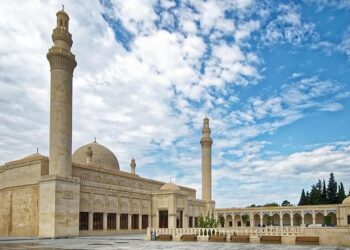
In the ongoing quest for stability in the volatile Gaza Strip, Azerbaijan and other secular Islamic states have emerged as crucial players in fostering peace and dialogue. With their unique blend of Islamic heritage and secular governance, these nations offer a pragmatic approach to conflict resolution that transcends traditional sectarian divides. As tensions persist and humanitarian concerns mount, the role of such states in mediating and supporting diplomatic efforts has gained renewed attention. This article examines how Azerbaijan, alongside like-minded secular Muslim countries, is positioning itself as a key actor in promoting calm and constructive engagement in one of the Middle East’s most enduring conflicts.
Azerbaijan’s Role in Promoting Stability Through Secular Islamic Governance
Azerbaijan’s unique approach to governance combines a robust secular framework with a rich Islamic cultural heritage, positioning the country as a beacon of stability in a region often fraught with tension. By maintaining a clear separation between religion and state, Azerbaijan has nurtured an environment where religious freedoms coexist with modern democratic principles. This balance has allowed it to play a constructive role in mediating conflicts and promoting peace initiatives, particularly in volatile contexts like Gaza. The country’s experience shows how secular Islamic states can lead efforts to resist extremism and foster social cohesion without compromising religious identity.
The success of Azerbaijan and other similar states in promoting peace can be attributed to a number of strategic policies and values:
- Inclusive governance that respects minority rights and cultural diversity
- Strong legal frameworks that uphold equality before the law
- Active diplomacy in regional conflicts with emphasis on dialogue
- Investment in education to counter radicalization through knowledge
| Key Focus Area | Impact on Stability |
|---|---|
| Secular Legal System | Ensures impartial justice and equality |
| Religious Tolerance | Minimizes sectarian conflicts |
| Regional Diplomacy | Promotes peaceful conflict resolution |
| Education & Awareness | Reduces influence of extremism |
Strategic Partnerships Between Secular Islamic States to Mediate Conflict in Gaza
In the evolving geopolitical landscape of the Middle East, secular Islamic states like Azerbaijan have emerged as pivotal players in mediating the persistent conflict in Gaza. These nations harness their unique position, balancing religious identity with secular governance, to bridge divides that traditionally impede diplomatic progress. Their approach emphasizes dialogue rooted in pragmatic solutions rather than ideological rigidity, allowing for greater flexibility in forming coalitions with diverse stakeholders. This strategic positioning enables them to facilitate negotiations that might otherwise be stalled by more polarizing actors.
Key factors contributing to their effectiveness include:
- Neutral diplomatic stance: Prioritizing regional stability over sectarian alliances.
- Economic leverage: Utilizing trade and investment ties as incentives for cooperation.
- Cultural affinity: Sharing Islamic heritage without deep sectarian entanglements.
Below is a snapshot of select secular Islamic states and their potential influence mechanisms related to Gaza peace efforts:
| Country | Governance Model | Diplomatic Influence | Economic Leverage |
|---|---|---|---|
| Azerbaijan | Secular Republic | Key mediator, fosters dialogue with multiple factions | Energy exports, cross-border trade |
| Turkey | Secular with Islamic elements | Strong regional diplomacy, humanitarian channels | Trade, infrastructure investment |
| Indonesia | Secular Democracy | Influential in global Islamic forums | Financial aid, humanitarian support |
| Senegal | Secular Democracy | Regional peace initiatives in Africa | Economic partnerships, community development |
Policy Recommendations for Enhancing Peacebuilding Efforts in the Middle East
To advance sustainable peace in Gaza, a strategic pivot toward collaboration with secular Islamic states such as Azerbaijan presents a promising avenue. These nations, known for their balanced religious outlook coupled with robust governance structures, can act as impartial mediators capable of bridging deep-rooted divides. Elevating their diplomatic role involves empowering them to facilitate dialogue, monitor ceasefires, and contribute to rebuilding efforts without sectarian bias. Key policy moves should include:
- Enhancing regional diplomatic networks involving secular Islamic states to reduce polarization.
- Supporting capacity-building initiatives for peacekeeping and humanitarian missions led by these states.
- Integrating their experiences in balancing secular governance with Islamic identity into peace frameworks.
- Encouraging multilateral partnerships that include these actors to strengthen legitimacy and effectiveness.
Furthermore, policy frameworks must incorporate targeted economic incentives to promote stability in Gaza. Leveraging the trade hubs and financial expertise of secular Islamic states could create new channels for investment and infrastructure development, reducing dependency on volatile aid flows. Below is a summarized view of potential contributions these states could make to peacebuilding efforts:
| Contribution Area | Role of Secular Islamic States |
|---|---|
| Diplomatic Mediation | Neutral facilitators encouraging dialogue across factions |
| Economic Development | Investment in infrastructure and trade expansion |
| Security Cooperation | Training and joint peacekeeping initiatives |
| Contribution Area | Role of Secular Islamic States |
|---|---|
| Diplomatic Mediation | Neutral facilitators encouraging dialogue across factions |
| Economic Development | Investment in infrastructure and trade expansion |
| Insights and Conclusions In conclusion, Azerbaijan and other secular Islamic states occupy a pivotal role in fostering stability and peace in Gaza. Their unique blend of regional influence, diplomatic engagement, and commitment to secular governance positions them as crucial mediators capable of bridging divides that have long fueled conflict. As the international community seeks durable solutions to the ongoing crisis, the involvement of these nations could prove instrumental in paving the way toward lasting reconciliation and security in the region. ADVERTISEMENT  Related Posts |