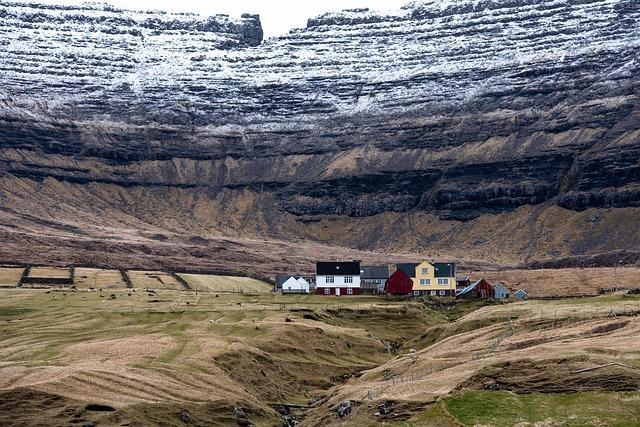
The Faroe Islands have enacted a new sanction bill targeting Russia, a move that could complicate ongoing bilateral negotiations between the two parties. The legislation, which imposes restrictions in response to geopolitical tensions, marks a significant shift in the Faroese government’s foreign policy stance. Industry experts and officials now warn that these measures may jeopardize economic and diplomatic relations, particularly impacting key sectors such as seafood exports. This development comes amid broader international efforts to address the conflict involving Russia, highlighting the Faroe Islands’ growing role on the geopolitical stage.
Faroe Islands Enacts Russian Sanction Bill Raising Diplomatic Concerns
The recent enactment of the sanction bill targeting Russian entities by the Faroe Islands has sparked unease among diplomatic circles, as it threatens to derail ongoing bilateral negotiations crucial to both parties. The legislation, aimed at restricting trade and financial transactions with Russia, particularly impacts the lucrative seafood sector-a cornerstone of the Faroese economy. Industry insiders warn that these measures could provoke retaliatory actions, hampering fisheries cooperation and complicating future dialogue on sustainable resource management in the North Atlantic region.
Key elements of the sanction bill include:
- Prohibition of imports and exports linked to Russian seafood companies
- Financial restrictions on Russian investments within Faroese maritime operations
- Enhanced customs checks and reporting requirements for goods suspected of Russian origin
| Impact Area | Potential Consequence |
|---|---|
| Seafood exports | Decline in trade volume by up to 15% |
| Diplomatic relations | Increased tensions and stalled talks |
| Local industry | Supply chain disruptions |
Implications for Faroe-Russia Seafood Trade and Regional Economic Stability
The recent sanction bill passed by the Faroe Islands targeting Russia signals a significant shift in bilateral seafood trade relations. Traditionally, Russia has been a crucial market for Faroese seafood exports, particularly cod and shrimp, which together represent a substantial share of the archipelago’s fishing economy. With the new restrictions now in place, export volumes are projected to decrease sharply, impacting Faroese fishermen and processing industries directly. Market analysts warn that this could lead to a downturn in trade negotiations, as Russia may respond with countermeasures, further limiting access to one of the region’s vital seafood markets.
- Export Volume Reduction: Estimated 25-30% decline in Russian seafood imports from Faroes
- Economic Impact: Potential revenue losses exceeding €15 million annually
- Supply Chain Disruptions: Increased costs and logistic challenges for seafood processors
The broader economic stability of the North Atlantic region is also at risk, as diminished Faroese-Russian cooperation can unsettle local employment and the ancillary services sector connected to seafood trade. Regional authorities are exploring diversification strategies, including expanding partnerships with EU markets and Asia-Pacific countries, to offset losses. However, these efforts require time to mature, putting immediate financial strain on coastal communities. The situation is a delicate balancing act between geopolitical alignments and sustaining the economic lifeblood of the Faroe Islands.
| Sector | Short-term Impact | Mitigation Strategy |
|---|---|---|
| Fish Export | ↓ 30% sales to Russia | Boost EU and Asia market access |
| Processing Plants | ↓ Operating capacity | Invest in automation, diversify products |
| Local Employment | Potential layoffs | Government subsidies, retraining programs |
Experts Recommend Strategic Dialogue and Risk Mitigation to Preserve Bilateral Relations
Industry analysts emphasize the crucial need for strategic dialogue between the Faroe Islands and Russia to prevent the recent sanction bill from escalating tensions. Experts argue that open communication channels can act as a vital tool to address misunderstandings and safeguard long-term economic interests, particularly in the seafood trade sector. Without a coordinated approach, both parties risk weakening a cooperation framework that has benefited their fisheries industries for years.
To navigate the complexities introduced by sanctions, specialists advocate for robust risk mitigation measures including:
- Establishing joint crisis management teams
- Enhancing transparency on trade policies
- Investing in diplomatic backchannels to circumvent public escalations
- Implementing phased sanction reviews linked to compliance benchmarks
| Risk Factor | Potential Impact | Recommended Action |
|---|---|---|
| Trade Disruptions | Reduced seafood exports | Temporary exemptions for key products |
| Political Retaliation | Suspension of negotiations | Regular diplomatic dialogues |
| Market Instability | Price fluctuations | Joint market monitoring |
Final Thoughts
As the Faroe Islands move forward with the newly passed Russian sanction bill, the implications for future bilateral negotiations remain uncertain. Stakeholders within the seafood industry and international trade circles will be closely monitoring developments, as the legislation could reshape diplomatic and economic relations between the Faroe Islands and Russia. Further updates are expected as both sides assess the impact of these measures on ongoing cooperation.