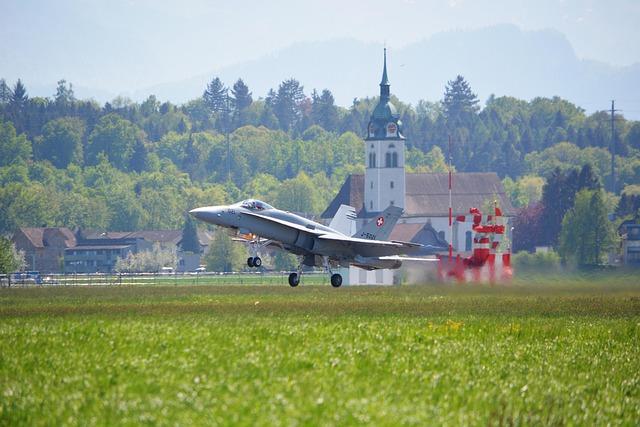
In a significant development marking closer defense ties between New Delhi and Moscow, India has agreed to open its airbases to Russian military aviation under a newly signed pact. The agreement, revealed by senior officials this week, is set to deepen bilateral military cooperation amid evolving geopolitical dynamics in the region. This unprecedented move underscores India’s strategic recalibration and Russia’s ongoing efforts to bolster its defense partnerships in Asia, signaling potential shifts in the balance of power and airpower projection capabilities.
India Russia Military Aviation Pact Signals Strategic Shift in South Asia
The recent agreement allowing Russia access to select Indian airbases marks an unprecedented level of defense collaboration between the two nations. This pact not only enhances Russia’s operational reach in South Asia but also signals India’s strategic intent to diversify its military partnerships amid evolving geopolitical pressures. Experts suggest that this move could significantly alter the balance of power in the region, especially in the context of rising tensions and the shifting dynamics involving neighboring countries.
Key elements of the agreement include:
- Joint exercises focused on advanced aviation technology and aerial combat tactics
- Shared maintenance and logistical support for Russian aircraft operating from Indian bases
- Exchange of intelligence related to airspace security and regional threat assessments
| Aspect | Details |
|---|---|
| Airbases Involved | Kalaikunda, Bareilly, and Hindon |
| Duration of Access | Initial 5-year term with renewal options |
| Primary Aircraft | Su-30MKI and MiG-29 variants |
| Strategic Goal | Enhanced regional deterrence and operational synergy |
Implications for Regional Security and Air Power Dynamics
The strategic opening of Indian airbases to Russian military aviation significantly recalibrates the regional security landscape. This unprecedented access facilitates enhanced interoperability between the two nations’ air forces, potentially accelerating joint exercises, logistics support, and rapid deployment capabilities. It also signals a bolstered defense partnership amid shifting global alliances, with India positioning itself as a pivotal player capable of influencing air power dynamics in South Asia and beyond. Neighboring countries and global powers alike will closely monitor these developments, anticipating shifts in aerial reconnaissance, surveillance dominance, and rapid response frameworks.
Moreover, this agreement introduces a complex set of considerations for regional deterrence postures. India’s expanded airbase utility offers Russia strategic depth, augmenting its operational reach in the Indo-Pacific theater. Analysts highlight the potential for:
- Enhanced force projection capabilities leveraging Indian infrastructure
- Updated aerial defense protocols among involved forces
- Increased diplomatic leverage in regional security dialogues
Below is a comparative summary of airbase capacity and strategic value added through the pact:
| Airbase | Location | Runway Length (m) | Strategic Advantage |
|---|---|---|---|
| Agra Air Force Station | Uttar Pradesh | 3,050 | Centrally located, high sortie rate |
| Jodhpur Air Force Base | Rajasthan | 2,743 | Desert operations, extended patrol range |
| Kalaikunda Air Base | West Bengal | 2,743 | Proximity to eastern borders |
Such infrastructural leverage transforms not only bilateral military readiness but also injects new momentum into air power balance considerations, challenging rival forces to recalibrate strategies accordingly.
Recommendations for Monitoring and Strengthening Diplomatic Channels
To ensure the continued success and stability of the newly established military aviation pact, it is essential for both India and Russia to implement robust mechanisms aimed at real-time communication and conflict resolution. Establishing dedicated joint operation centers at key airbases can facilitate smooth coordination, while regular bilateral meetings will help address emerging challenges proactively. Furthermore, integrating technological platforms for secure and transparent information sharing will lessen misunderstandings and streamline operational efficiency in complex aviation activities.
Key strategies to fortify this cooperative framework include:
- Periodic diplomatic envoy exchanges focusing exclusively on defense aviation collaboration.
- Setting up bilateral crisis management protocols to mitigate risks during joint missions.
- Launching cultural and language workshops to enhance communication between personnel.
- Developing joint training programs to harmonize operational procedures and standards.
| Area of Focus | Action Item | Expected Outcome | |
|---|---|---|---|
| Communication | Joint operation centers | Enhanced real-time coordination | |
| Diplomacy | Regular envoy exchanges | Stronger bilateral relations | |
| Training | Training | Joint training programs | Harmonized operational procedures and standards |
| Crisis Management | Bilateral crisis management protocols | Mitigated risks during joint missions | |
| Cultural Integration | Cultural and language workshops | Improved communication between personnel |