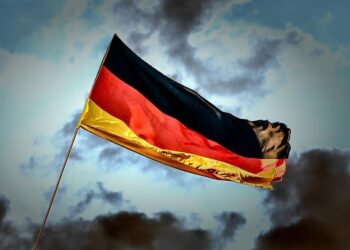
Germany’s far-right Alternative for Germany (AfD) party has been formally invited to participate in the upcoming Munich Security Conference (MSC) 2026, marking a controversial development in one of Europe’s most significant annual security forums. The decision to include the AfD, known for its nationalist rhetoric and polarizing policies, has sparked debate across Germany and beyond, raising questions about the boundaries of legitimate political discourse within international security dialogues. This invitation underscores the evolving political landscape in Germany and highlights the challenges faced by global institutions in balancing inclusivity with the preservation of democratic norms.
AfD’s Inclusion in Munich Security Conference Sparks Controversy Among European Allies
The decision to include the Alternative for Germany (AfD), widely regarded as a far-right political party, at the upcoming Munich Security Conference in 2026 has ignited sharp criticism from multiple European governments and diplomatic circles. Many allies view the invitation as a controversial move that risks undermining the conference’s long-standing reputation as a forum dedicated to fostering democratic values and security cooperation within Europe. Critics argue that AfD’s participation could legitimize extremist rhetoric and polarize discussions on critical issues such as migration, NATO cooperation, and regional stability.
Supporters of the inclusion emphasize the importance of engaging all political voices in dialogue to strengthen democratic debate. However, opponents warn that granting the AfD a platform may embolden nationalist sentiments and complicate collective security efforts. Below is a brief overview of the primary reactions from key European nations:
- France: Expressed strong reservations, citing concerns about the party’s stance on EU unity.
- Poland: Voiced unease regarding AfD’s approach to Eastern European security.
- Netherlands: Called for increased scrutiny of extremist influences in international forums.
- Italy: Adopted a wait-and-see approach but urged caution.
| Country | Position on AfD Inclusion | Impact on Diplomatic Relations |
|---|---|---|
| France | Opposed | Tense |
| Poland | Critical | Strained |
| Netherlands | Concerned | Uncertain |
| Italy | Cautious | Neutral |
Implications for Germany’s Foreign Policy and Democratic Values
Germany’s decision to invite the far-right AfD to the Munich Security Conference signals a potential recalibration in its foreign policy approach. Traditionally, Germany has positioned itself as a champion of liberal democracy and collective security within Europe and beyond. Welcoming the AfD-a party known for its nationalist rhetoric and Euroscepticism-raises concerns about the coherence of Germany’s diplomatic messaging and its commitment to established alliances. This move could embolden similar parties across Europe, challenging the unity of the European Union’s foreign policy stance on issues such as migration, defense cooperation, and relations with Russia.
The democratic values that underpin Germany’s post-war identity are also at stake. Critics argue that legitimizing far-right political actors on such a prominent international platform risks normalizing exclusionary and divisive ideologies. Observers warn of:
- Potential shifts away from human rights-centered policies
- Increasing polarization within Germany’s political system
- Undermining trust in democratic institutions
The unfolding scenario demands close scrutiny of how Germany will navigate its role as a global leader while confronting internal pressures that test the resilience of its democratic framework.
| Aspect | Possible Impact |
|---|---|
| Foreign Alliances | Strain on EU and NATO cooperation |
| Domestic Politics | Heightened ideological divisions |
| Security Policy | Reassessment of defense priorities |
| Democratic Values | Risk of eroding pluralism |
Experts Call for Clear Guidelines on Political Representation at International Security Forums
The decision to invite Germany’s far-right party, AfD, to the Munich Security Conference 2026 has ignited a heated debate among international political analysts and security experts. Many stress the urgent need for clear and consistent criteria when determining which political parties are granted representation at such pivotal global forums. Current protocols, critics argue, lack transparency and risk legitimizing extremist viewpoints, potentially undermining the Conference’s role as a platform dedicated to cooperative security and democratic values.
Security specialists and policy makers are calling for a comprehensive framework that includes:
- Objective vetting standards based on parties’ adherence to democratic principles.
- Transparent selection processes with multi-stakeholder oversight.
- Regular reviews to adapt guidelines to evolving geopolitical realities.
| Criteria | Purpose | Expected Impact |
|---|---|---|
| Democratic Integrity | Ensure participants promote democratic norms | Prevent extremist influence |
| Transparency | Open invitation and vetting procedures | Enhance forum credibility |
| Periodic Review | Adapt guidelines as political landscapes shift | Maintain relevance and fairness |
In Conclusion
The invitation extended to Germany’s far-right Alternative for Germany (AfD) to participate in the Munich Security Conference 2026 marks a contentious moment in the event’s history, reflecting ongoing debates about the inclusion of populist and extremist voices in high-profile security discussions. As the conference approaches, eyes will remain on how this decision impacts the dialogue around Germany’s role in European and global security, and what it signifies for the broader political landscape both domestically and internationally.