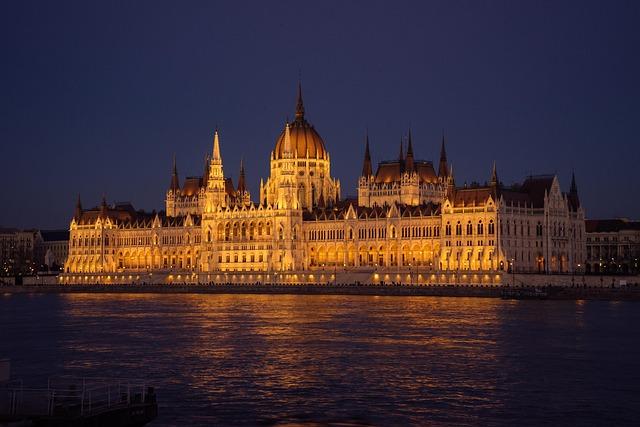
Hungary stands at a critical crossroads as Viktor Orbán’s long-standing hold on power faces mounting challenges. Once celebrated by his supporters for promoting national sovereignty and conservative values, Orbán’s governance has increasingly drawn international criticism over democratic backsliding and authoritarian tendencies. As political opposition gains momentum and social unrest grows, questions arise about whether the era of Orbánism is nearing its end. This article examines the shifting political landscape in Hungary, assessing the factors that could signal a turning point in the country’s future.
Hungary Faces Growing Domestic and International Pressure on Orbán’s Regime
The steady erosion of democratic institutions under Viktor Orbán’s leadership has prompted unprecedented scrutiny both inside Hungary and from the global community. Civil society organizations, opposition parties, and independent media outlets face increasing obstacles, including legal challenges and financial constraints that severely limit their operations. Meanwhile, ordinary Hungarians have taken to the streets, expressing growing dissatisfaction with what many describe as an authoritarian drift. Protests have surged in cities like Budapest and Debrecen, reflecting a deepening divide between Orbán’s government and a populace yearning for transparency and accountability. At the heart of the unrest lies a combination of shrinking freedoms and an economy increasingly tied to cronyism, sparking calls for systemic change across social and political spectrums.
On the international front, Hungary’s alliances within the European Union face severe strain. Brussels has initiated multiple infringement procedures against Budapest for undermining judiciary independence and media plurality, actions that threaten Hungary’s access to vital EU funds. Diplomatic pressures mount as EU leaders debate whether to activate Article 7 sanctions, a move that could formally censure Orbán’s administration for breaching the bloc’s fundamental values. Below is a snapshot of recent key developments illustrating the widening gap between Hungary and its EU partners:
| Event | Date | Impact |
|---|---|---|
| European Parliament calls for Article 7 sanctions | March 2024 | Potential suspension of voting rights |
| Launch of EU investigation into media freedom | January 2024 | Financial penalties threatened |
| Hungarian opposition forms united front for 2026 elections | April 2024 | Increased challenger momentum |
- Domestic challenges: Growing grassroots mobilization and enhanced opposition collaboration.
- International reactions: Heightened EU scrutiny and conditional funding tied to rule of law benchmarks.
- Political risks: Rising uncertainty over Orbán’s hold on power amid mounting pressures.
Erosion of Democratic Norms Challenges Orbán’s Grip on Power
Over the past decade, Viktor Orbán’s administration has systematically undermined key democratic institutions in Hungary, sparking concerns both domestically and across the European Union. The ruling Fidesz party has tightened control over the judiciary, media, and electoral system, eroding the separation of powers that safeguards democratic accountability. Independent media outlets have dwindled under state pressure or been absorbed into pro-government conglomerates, while electoral reforms have skewed representation in Fidesz’s favor. This consolidation of power, once hailed as a patriotic defense of national sovereignty, now tests the resilience of liberal democratic norms in Hungary.
Recent public opinion polls highlight a growing skepticism among Hungarian voters regarding Orbán’s political monopoly, signaling potential cracks in his authority. Civil society organizations face increased obstacles, and opposition parties struggle to mobilize under restrictive regulations. Below is an overview of key democratic indicators in Hungary compared to other EU member states, illustrating the country’s shift away from normative democratic standards:
| Democratic Indicator | Hungary (2023) | EU Average (2023) | ||||||||||||||||||||||
|---|---|---|---|---|---|---|---|---|---|---|---|---|---|---|---|---|---|---|---|---|---|---|---|---|
| Judicial Independence | Low | High | ||||||||||||||||||||||
| Media Pluralism | Weak | Moderate to High | ||||||||||||||||||||||
| Electoral Fairness | Compromised | Over the past decade, Viktor Orbán’s administration has systematically undermined key democratic institutions in Hungary, sparking concerns both domestically and across the European Union. The ruling Fidesz party has tightened control over the judiciary, media, and electoral system, eroding the separation of powers that safeguards democratic accountability. Independent media outlets have dwindled under state pressure or been absorbed into pro-government conglomerates, while electoral reforms have skewed representation in Fidesz’s favor. This consolidation of power, once hailed as a patriotic defense of national sovereignty, now tests the resilience of liberal democratic norms in Hungary. Recent public opinion polls highlight a growing skepticism among Hungarian voters regarding Orbán’s political monopoly, signaling potential cracks in his authority. Civil society organizations face increased obstacles, and opposition parties struggle to mobilize under restrictive regulations. Below is an overview of key democratic indicators in Hungary compared to other EU member states, illustrating the country’s shift away from normative democratic standards:
Insights and ConclusionsAs Hungary approaches a critical juncture, the question of Viktor Orbán’s political future remains uncertain. With mounting domestic challenges and increasing international scrutiny, the longstanding leader’s grip on power faces unprecedented tests. Whether Orbán can maintain his hold or if change is on the horizon will not only shape Hungary’s trajectory but also reverberate across the European political landscape. The coming months promise to be decisive in determining the country’s direction after more than a decade under his rule. ADVERTISEMENT  Related Posts |