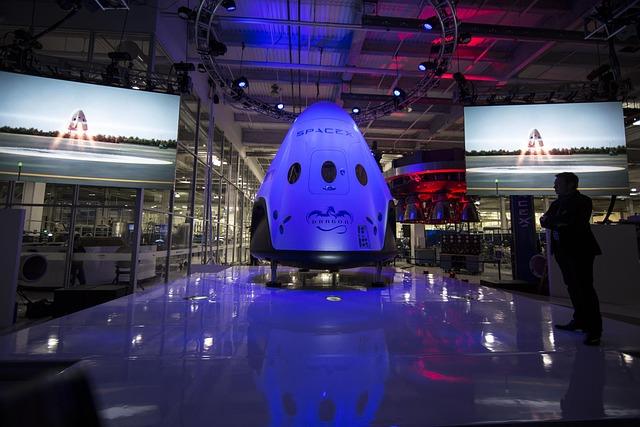
SpaceX kicked off 2026 with a high-profile launch, successfully deploying Italy’s Cosmo-SkyMed Earth observation satellite into orbit. The mission, conducted from Cape Canaveral, marks a significant milestone for both SpaceX and the Italian space program, enhancing capabilities for environmental monitoring and defense. As one of the first major launches of the year, the deployment underscores SpaceX’s continuing role as a leading provider of reliable and cost-effective access to space.
SpaceX Kicks Off 2026 with Key Cosmo SkyMed Satellite Launch for Italy
SpaceX launched a significant milestone into orbit at the dawn of 2026, delivering Italy’s latest Cosmo-SkyMed Second Generation (CSG) satellite aboard a Falcon 9 rocket. This mission, marking the first Italian Earth observation payload of the year, underscores the growing collaboration between the Italian Space Agency and SpaceX’s reliable ride-share capabilities. Designed to enhance radar imaging for environmental monitoring, disaster response, and security purposes, the satellite elevates Italy’s strategic capabilities by providing all-weather, day-and-night surveillance from space.
The Falcon 9’s highly precise deployment, executed from Cape Canaveral, guarantees optimal orbital insertion to maximize the satellite’s efficiency. Key features and objectives of the Cosmo-SkyMed mission include:
- Advanced Synthetic Aperture Radar (SAR): Enables high-resolution imaging even through clouds or darkness.
- Dual-band radar capability: Supports versatile applications from agriculture to maritime security.
- International cooperation: Strengthens Italy’s role within the European space community and global environmental initiatives.
| Launch Details | Information |
|---|---|
| Rocket | Falcon 9 Block 5 |
| Launch Site | Cape Canaveral SLC-40 |
| Payload Mass | ~2,200 kg |
| Orbital Target | Sun-synchronous orbit, ~600 km altitude |
Enhanced Earth Observation Capabilities Expected to Benefit Environmental Monitoring
The newly launched Cosmo-SkyMed satellite marks a significant leap forward in Italy’s environmental monitoring efforts, equipped with advanced radar imaging technology capable of delivering high-resolution data regardless of weather conditions. This mission is set to enhance the accuracy of climate modeling, natural disaster assessment, and land-use change tracking, providing critical insights for policymakers and researchers. By harnessing synthetic aperture radar (SAR), the satellite offers unprecedented capabilities to observe subtle environmental shifts in near real-time, a vital asset in the global response to climate change.
Among the most anticipated benefits of this deployment are improved monitoring of:
- Deforestation and forest degradation, helping combat illegal logging activities;
- Water resource management, through detailed mapping of lakes and river basins;
- Urban expansion, by tracking land-cover changes around rapidly growing cities;
- Disaster resilience, via early detection of floods, landslides, and seismic activity.
These capabilities align with international environmental goals, positioning Italy as a key player in the development of space-based Earth observation infrastructure.
Recommendations for Strengthening International Collaboration on Satellite Data Sharing
To elevate the effectiveness of satellite data sharing on a global scale, stakeholders must prioritize the establishment of standardized protocols and interoperable platforms. This calls for international bodies and private space entities, such as SpaceX and governmental agencies, to collaboratively develop unified data formats and communication channels. Enhanced transparency and open access policies could foster faster disaster response, climate change monitoring, and urban planning, leveraging the wealth of Earth observation data generated by missions like Cosmo-SkyMed.
Furthermore, investing in robust legal frameworks that address data privacy, security, and intellectual property rights is crucial to encourage cross-border cooperation. Introducing an international consortium dedicated to satellite data exchange could streamline partnerships, fund joint research ventures, and orchestrate shared infrastructure. The following table summarizes key areas where collaboration can be intensified:
| Collaboration Area | Potential Benefit | Key Stakeholders |
|---|---|---|
| Data Standardization | Seamless integration across platforms | Space agencies, Private companies |
| Legal Frameworks | Secure and fair data sharing | Governments, International law bodies |
| Joint Infrastructure | Cost-efficient technology deployment | Consortiums, Research institutes |
| Funding & Research | Innovative Earth observation tools | Public-private partnerships |
In Summary
As SpaceX continues to demonstrate its growing dominance in the commercial launch sector, the successful deployment of Italy’s Cosmo-SkyMed Earth observation satellite underscores the expanding international collaboration in space. This mission not only marks a strong start to 2026 for the private aerospace company but also reinforces the critical role of advanced satellite technology in global environmental monitoring and defense. With an ambitious launch manifest ahead, SpaceX remains a pivotal player shaping the future of space exploration and satellite services worldwide.