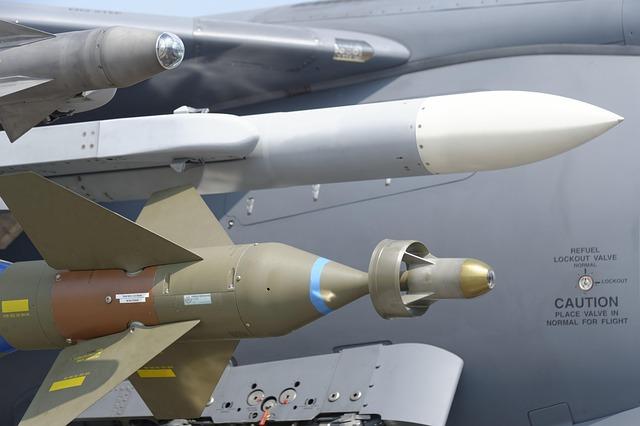
Russia has announced that it has launched its Oreshnik hypersonic missile during ongoing military operations in Ukraine, according to statements reported by Reuters. The deployment marks a significant development in the conflict, underscoring Moscow’s emphasis on advanced weaponry amid escalating tensions. Details surrounding the strike, including its targets and impact, remain limited as the situation continues to evolve.
Russia Claims Successful Launch of Oreshnik Hypersonic Missile Targeting Ukraine
Russia has announced the successful test launch of its latest Oreshnik hypersonic missile, claiming that the weapon targeted Ukrainian positions with precision. This represents a significant development in Moscow’s ongoing military operations amid escalating tensions in the region. According to Russian defense sources, the missile, capable of traveling at speeds exceeding Mach 5, struck its marked objectives without deviation, showcasing advancements in the nation’s missile technology.
The deployment of the Oreshnik missile highlights several key features that Moscow emphasized:
- Hypersonic speed: Enabling rapid penetration of defensive lines
- Advanced maneuverability: Designed to evade radar detection and interception
- Extended range: Allowing strikes deep into contested territories
- Precision targeting systems: Increasing effectiveness against military installations
| Missile Feature | Details |
|---|---|
| Speed | Over Mach 5 |
| Range | Approx. 2,000 km |
| Warhead | High-explosive or nuclear-capable |
| Launched from | Land-based platforms |
Technical Analysis of the Oreshnik Missile Capabilities and Strategic Impact
The Oreshnik hypersonic missile represents a significant leap in Russia’s arsenal, featuring advanced propulsion systems that enable speeds exceeding Mach 5. This capability allows the missile to evade traditional missile defense mechanisms by drastically reducing response times and increasing trajectory unpredictability through complex maneuvering. Equipped with a high-precision guidance system, the Oreshnik can adjust its flight path mid-course, enhancing target accuracy even under electronic countermeasure conditions. Additionally, its compact size and stealth coating reduce radar cross-section, complicating early detection and interception efforts.
- Speed: Hypersonic, >Mach 5
- Range: Estimated 1,200 km
- Guidance Systems: Inertial navigation integrated with satellite updates
- Maneuverability: High, capable of evasive maneuvers
- Warhead Type: Conventional or nuclear options
| Capability | Description | Strategic Impact |
|---|---|---|
| Speed & Maneuverability | Enables missile to outpace interceptors and alter trajectory | Challenges existing missile defense networks |
| Stealth Features | Minimized radar signature due to coatings and design | Reduces early warning time for adversaries |
| Versatile Warhead | Adaptable payloads for diverse operational use | Increases deterrence and tactical flexibility |
Strategically, the deployment of the Oreshnik missile alters the balance of power in regional conflicts by amplifying Russia’s ability to conduct rapid, high-impact strikes deep within contested territories. Its use signals a direct escalation in advanced weapon system integration aimed at undermining adversary defenses and complicating response strategies. The missile’s demonstrated precision and lethality also serve as a psychological tool, potentially deterring counterattacks by raising the operational risks of engagement.
Recommendations for Enhanced Regional Security and International Response Strategies
In light of recent developments involving advanced missile technologies, it has become imperative for regional powers and international bodies to rethink their defense postures. Strengthening early-warning systems and enhancing cooperative intelligence sharing across borders can mitigate the risks posed by hypersonic weaponry. Joint military exercises focused on missile defense should be prioritized to develop synchronized response protocols that can quickly adapt to emerging threats without escalating conflicts inadvertently.
Moreover, diplomatic channels need revitalization to establish clear communication frameworks, reducing the potential for misunderstandings during crises. Key strategies include:
- Implementing multilateral arms control agreements targeting hypersonic technologies
- Expanding sanctions regimes to deter further proliferation of destabilizing weapons
- Investing in counter-hypersonic research initiatives drawing on cross-national expertise
- Creating crisis hotlines specifically designed for rapid de-escalation related to missile tests or launches
| Strategy | Expected Impact | Actions Required |
|---|---|---|
| Integrated Early-Warning | Quicker threat detection | Expand satellite and radar cooperation |
| Multilateral Arms Control | Reduce arms race risk | Negotiate new treaties including hypersonic limits |
| Joint Military Drills | Improved response coordination | Regular exercises among regional allies |
| Diplomatic Hotlines | Rapid conflict de-escalation | Establish direct military-to-military communications |
Final Thoughts
The reported launch of the Oreshnik hypersonic missile marks a significant development in the ongoing conflict between Russia and Ukraine, underscoring the increasing emphasis on advanced weaponry in modern warfare. As details continue to emerge, international observers remain attentive to the implications of such escalations on regional stability and global security dynamics. Further updates will be provided as more information becomes available.