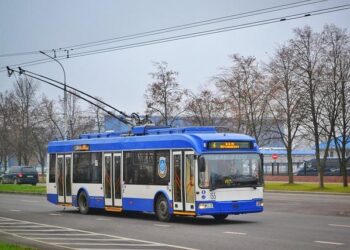
Four regions in Belarus have raised public transportation fares following a recent price increase in the capital, Minsk, according to reports from Белсат. The fare hikes come amid ongoing economic challenges across the country, impacting daily commuters in multiple areas beyond the capital. This coordinated adjustment reflects broader shifts in public service costs and raises concerns about affordability for residents relying on public transit.
Impact of Minsk Fare Increase Triggers Regional Public Transport Price Adjustments
Following Minsk’s recent decision to raise public transport fares, four neighboring Belarusian regions-Brest, Gomel, Vitebsk, and Grodno-have announced corresponding fare increases. Local authorities cite rising operational costs and fuel prices as the primary reasons for these adjustments. Commuters across these regions expressed concern over the sudden hike, especially as many households are already struggling with inflation and stagnant wages.
The new fare structures vary slightly between the regions but generally reflect a 10-15% increase, which officials say is necessary to maintain service quality. Key factors influencing the fare adjustments include:
- Increased fuel and maintenance expenses
- Growing demand for sustainable transport upgrades
- Inflationary pressure impacting operational budgets
| Region | Previous Fare (BYN) | New Fare (BYN) | Percentage Increase |
|---|---|---|---|
| Brest | 0.80 | 0.92 | 15% |
| Gomel | 0.75 | 0.85 | 13% |
| Vitebsk | 0.78 | 0.90 | 15% |
| Grodno | 0.77 | 0.86 | 12% |
Economic Strain on Commuters Intensifies Amidst Multiple Fare Hikes
Public transportation users across Belarus are facing mounting financial pressure as four additional regions implement fare hikes shortly after Minsk’s recent price adjustment. The rise in ticket costs comes amid an already challenging economic landscape marked by inflation and stagnant wages, exacerbating the daily burden on commuters who rely on buses, trams, and metro services. Transport authorities cite increased operational costs, including fuel prices and maintenance, as driving factors behind the decision, urging residents to adjust to a “new normal” in public transit expenses.
Details of the current fare changes reveal a varied impact across affected regions, with some seeing increases of up to 20%, while others adopt more moderate adjustments. Commuters have expressed concern over the cumulative effect of these hikes, fearing reduced access to affordable transit options. Below is a summary of the updated fares in key Belarus areas:
| Region | Previous Fare (BYN) | New Fare (BYN) | Percentage Increase |
|---|---|---|---|
| Gomel | 0.60 | 0.72 | 20% |
| Vitebsk | 0.55 | 0.65 | 18% |
| Mogilev | 0.50 | 0.60 | 20% |
| Grodno | 0.60 | 0.70 | 16.6% |
- Commuter backlash: Growing calls for subsidies and alternative fare models.
- Economic implications: Higher travel costs may affect employment accessibility.
- Government stance: Emphasizes necessity while monitoring inflation effects.
Policy Recommendations to Mitigate Transport Cost Burdens in Belarus Regions
To alleviate the financial strain caused by ongoing fare increases, local governments should prioritize targeted subsidies that support low-income commuters without distorting the entire transport system. Implementing tiered pricing schemes based on income levels or travel frequency can provide relief while maintaining operator revenue. Additionally, investing in alternative commuting options such as cycling infrastructure and pedestrian-friendly routes will offer cost-effective and environmentally friendly choices, reducing dependence on public transport and its fluctuating costs.
Coordination between Minsk and regional authorities is crucial to harmonize fare policies and avoid disproportionate burdens on residents outside the capital. Enhancing transparency in fare-setting processes can also restore public trust and encourage dialogue. The following table outlines potential policy measures alongside expected benefits and challenges:
| Policy Measure | Expected Benefit | Potential Challenge |
|---|---|---|
| Tiered Fare Pricing | Supports vulnerable groups, improves equity | Administrative complexity in enforcement |
| Subsidies for Low-Income Passengers | Immediate relief on transport costs | Budget constraints for regional governments |
| Investment in Non-Motorized Transport | Promotes healthier, cheaper travel options | Requires upfront infrastructure spending |
| Fare Coordination with Minsk | Reduces disparities and improves fairness | Needs political will and inter-regional cooperation |
Insights and Conclusions
As public transport fares continue to rise across Belarus, the recent hikes in four regions following Minsk’s increase underscore the growing financial pressures on everyday commuters. Authorities cite economic challenges and rising operational costs as key factors driving the adjustments. However, the changes have sparked concern among residents, many of whom rely on affordable transit for their daily needs. The situation remains dynamic, with stakeholders closely monitoring the social and economic impact of these fare increases.