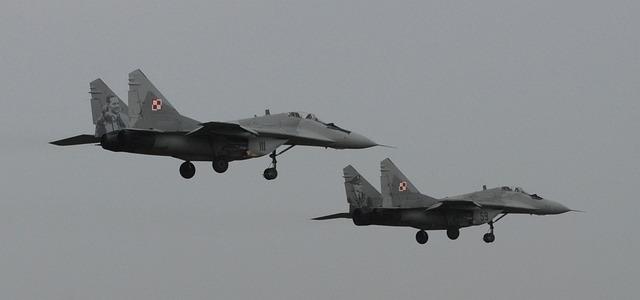
Serbia has taken a significant step in modernizing its air combat capabilities by equipping its MiG-29 fighter jets with Chinese-made CM-400AKG anti-ship missiles. This development, reported by the Ukrainian defense outlet Мілітарний, marks a notable shift in the Balkan nation’s military arsenal and underscores its efforts to enhance precision strike options amid a complex regional security environment. The integration of the CM-400AKG missiles, known for their advanced guidance systems and versatility, reflects Serbia’s strategic move to diversify its weapons suppliers and strengthen its air force’s operational reach.
Serbia Enhances MiG-29 Capabilities with Integration of Chinese CM-400AKG Missiles
Serbia has taken a significant step in modernizing its air force by equipping its MiG-29 fighter jets with the advanced Chinese CM-400AKG anti-ship cruise missiles. This integration marks a strategic enhancement of the Serbian Air Force’s offensive capabilities, extending the reach and precision of its aerial assets. The CM-400AKG, known for its supersonic speed and advanced guidance systems, provides the MiG-29s with a potent weapon capable of striking sea and land targets at considerable distances, increasing Serbia’s deterrence factor in the Balkan region.
The successful adaptation involved multiple technical upgrades to the aircraft’s avionics and weapons control systems, ensuring seamless compatibility and operational efficiency. Key features of the CM-400AKG integration include:
- Extended Strike Range: Over 290 km (180 miles), allowing standoff engagement capabilities.
- Supersonic Speed: Mach 3 flight, reducing enemy reaction time.
- Multi-Platform Compatibility: Adapted for launch from MiG-29s without compromising existing armament options.
- Advanced Navigation: GPS/INS and active radar homing for high-precision targeting.
| Specification | CM-400AKG | Serbian MiG-29 Before Upgrade |
|---|---|---|
| Missile Range | 290+ km | Limited to short-range R-73/R-27 |
| Speed | Mach 3 | Mach 2 (missiles) |
| Guidance | GPS/INS + Active Radar | Infrared/Semi-active Radar |
| Target Type | Sea & Land | Air-to-Air |
Strategic Implications of Serbia’s New Air-to-Surface Missile Armament
The integration of the Chinese CM-400AKG air-to-surface missile significantly enhances the strike capabilities of Serbia’s MiG-29 fleet, marking a notable shift in the regional balance of power. With this upgrade, Serbian combat aircraft can engage targets at greater distances and with improved precision, potentially deterring hostile actions and increasing operational flexibility. This modern missile system brings advanced supersonic speeds and a versatile warhead, allowing Serbia to project force more effectively across various conflict scenarios.
From a strategic perspective, this development signals a growing diversification in Serbia’s military procurement sources, reflecting a desire to reduce reliance on traditional suppliers. The CM-400AKG’s characteristics offer several tactical advantages:
- Extended strike range: Enables stand-off attacks beyond enemy air defenses.
- Enhanced target versatility: Capable of attacking ships, ground vehicles, and fortified positions.
- Increased deterrence: The presence of a credible precision missile system raises the cost of potential aggression.
The decision to arm MiG-29s with this missile also hints at possible doctrinal changes emphasizing precision engagement and rapid reaction capabilities amid evolving regional security challenges.
| Feature | CM-400AKG Missile | Previous Armament |
|---|---|---|
| Range | ≥ 290 km | Approx. 70 km |
| Speed | Supersonic (Mach 3+) | Subsonic |
| Guidance | GPS + Infrared Seeker | Radar Homing |
Recommendations for Regional Security Stakeholders on Serbia’s Military Modernization
Regional security stakeholders must urgently recalibrate their strategic outlook to account for Serbia’s enhanced aerial combat capabilities. The integration of Chinese CM-400AKG missiles onto Serbia’s MiG-29 fleet presents a tangible shift in the balance of power, calling for enhanced intelligence sharing and multilateral dialogue. Key recommendations include:
- Establishing swift communication channels for early warning and incident de-escalation.
- Increasing joint air defense exercises to improve interoperability among neighboring states.
- Monitoring arms transfers more closely to prevent further destabilizing acquisitions.
Additionally, policymakers should consider forming a dedicated forum to assess the implications of Serbia’s modernization on regional security dynamics. Emphasis should be placed on transparency and confidence-building measures to avoid miscalculations. Below is a simplified overview of potential strategic responses:
| Strategy | Objective | Expected Outcome |
|---|---|---|
| Enhanced Surveillance | Real-time threat identification | Faster response capabilities |
| Joint Military Exercises | Improve coordination | Reduced accidental conflicts |
| Diplomatic Engagement | Build trust and transparency | Lower regional tensions |
The Way Forward
The integration of Chinese CM-400AKG missiles onto Serbia’s MiG-29 fighter jets marks a significant development in the country’s military capabilities and regional defense strategy. As Serbia continues to diversify its arms procurement and modernize its air force, this move underscores a growing trend of strategic partnerships beyond traditional suppliers. Observers will be closely watching how this enhancement impacts the balance of power in the Balkans and Serbia’s broader defense posture in the coming months.