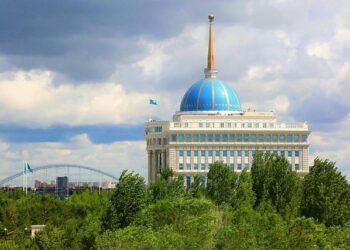
Kazakhstan has swiftly moved to approve a new constitution following a snap referendum held amid a backdrop of political reform and public debate. According to reports from Eurasianet, the majority of voters endorsed the proposed changes, marking a significant shift in the nation’s legal and governmental framework. The referendum, called on short notice by President Kassym-Jomart Tokayev, aims to decentralize power and enhance democratic governance, signaling a pivotal moment in Kazakhstan’s post-Soviet political evolution.
Snap Referendum in Kazakhstan Signals Major Political Shift
The recent referendum in Kazakhstan has paved the way for a sweeping overhaul of the country’s political structures. With a significant majority endorsing the new constitution, the move is widely regarded as a strategic effort by President Kassym-Jomart Tokayev to consolidate power while promising enhanced political freedoms and civic rights. The updated legal framework introduces critical changes including the redistribution of presidential authority, increased roles for the parliament, and revamped local governance systems aimed at fostering greater public participation.
Key amendments under the new constitution include:
- Decentralization initiatives: empowering regional administrations and mayors with greater autonomy.
- Strengthening of checks and balances: more independent judiciary and oversight bodies.
- Expanded rights for political parties: easing registration procedures and promoting pluralism.
- Enhanced human rights guarantees: formal guarantees protecting freedoms of speech, assembly, and religion.
| Aspect | Old Constitution | New Constitution |
|---|---|---|
| Presidential Powers | Highly centralized | More balanced with parliament |
| Judicial Independence | Limited autonomy | Increased safeguards |
| Local Governance | Centralized control | Empowered regional administrations |
| Political Party Registration | Restrictive and bureaucratic | Simplified and encouraging pluralism |
| Human Rights Protections | Limited formal guarantees | Enhanced constitutional guarantees |
Key Reforms and Changes Introduced in the New Constitution
The newly ratified constitution marks a significant departure from the framework set by Kazakhstan’s founding legal document. Among the most critical transformations is the reaffirmation of a stronger separation of powers, designed to curtail executive dominance and boost parliamentary influence. This recalibration aims to promote a more balanced governance structure, facilitating enhanced legislative oversight and judiciary independence. A striking feature is the increased accountability mechanisms introduced for public officials, including stricter transparency requirements and anti-corruption safeguards intended to reinforce public trust in government institutions.
Several structural modifications have been embedded in the document, reflecting a modernized approach to citizen rights and state responsibilities. These include:
- Enhanced civil liberties encompassing freedoms of expression, assembly, and digital rights protections;
- Decentralization initiatives empowering local governments with expanded administrative and fiscal authority;
- Environmental commitments enshrined as state obligations in response to growing ecological concerns;
- Judicial reforms establishing an independent anti-corruption court with specialized jurisdiction.
| Key Reform | Impact |
|---|---|
| Separation of Powers | Balanced governance, reduced presidential dominance |
| Stronger Civil Rights | Expanded freedoms, digital protections |
| Local Government Empowerment | Improved regional autonomy and service delivery |
| Judicial Innovation | Creation of anti-corruption court |
Implications for Regional Stability and Governance Recommendations for Kazakhstan’s Democratic Development
The recent adoption of Kazakhstan’s new constitution through a snap referendum marks a significant pivot point for the nation’s political landscape and its broader regional dynamics. By consolidating presidential authority while introducing select reforms, the move aims to redefine governance structures amid ongoing tensions between calls for democratic progress and the need for stability. This recalibration may offer a strategic advantage to Kazakhstan in maintaining its pivotal role within Central Asia, especially as neighboring countries navigate their own political transformations. However, the balance between strong executive power and inclusive governance remains delicate, with regional actors and international observers closely monitoring how this shift impacts Kazakhstan’s domestic cohesion and geopolitical partnerships.
Key governance recommendations to bolster Kazakhstan’s democratic trajectory include:
- Enhancing transparency mechanisms within executive decision-making processes to reassure both citizens and foreign stakeholders.
- Strengthening the role of independent institutions to provide a system of checks and balances without undermining necessary political stability.
- Promoting civic engagement initiatives that empower local communities and minority groups in policy discourse.
- Encouraging electoral reforms that increase competitiveness and accountability in future political contests.
- Fostering regional cooperation frameworks that align Kazakhstan’s internal reforms with broader Eurasian stability goals.
| Impact Area | Potential Outcomes | Recommended Actions |
|---|---|---|
| Political Stability | Consolidated authority; risk of centralized power | Institutional checks, transparent governance |
| Regional Influence | Stronger leadership role; diplomatic leverage | Enhanced multilateral engagement |
| Democratic Development | Incremental reforms; limited opposition space | Electoral fairness; civic participation |
Key Takeaways
The approval of Kazakhstan’s new constitution in the snap referendum marks a significant step in the country’s political evolution. As the government moves forward with implementing the reforms enshrined in the updated legal framework, observers will be closely monitoring how these changes impact governance, civil liberties, and regional dynamics. The referendum’s outcome reflects both the administration’s ambitions and the complex challenges facing Kazakhstan as it seeks to balance stability with calls for modernization.