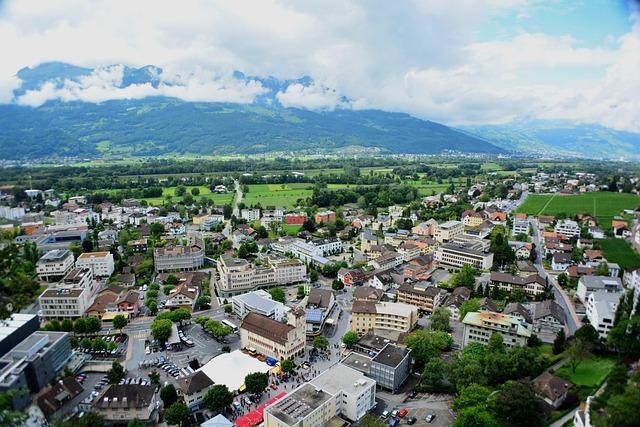
Liechtenstein has once again secured a top spot in Freedom House’s latest annual assessment, the “Freedom in the World 2026 Country Report.” The report evaluates political rights and civil liberties worldwide, providing a comprehensive overview of democratic governance across nations. As a small yet prosperous principality, Liechtenstein’s continued high ratings underscore its strong commitment to political freedom, rule of law, and individual rights. This article delves into the key findings of the 2026 report, examining how Liechtenstein maintains its status amid evolving global democratic trends.
Liechtenstein’s Political Landscape Upholds Robust Democratic Freedoms
Liechtenstein stands as a luminous example of a microstate where democratic principles not only thrive but continuously evolve to match the expectations of its citizens. The country’s political framework is anchored by a constitutional monarchy paired with a parliamentary democracy, fostering a balanced distribution of power. Civil liberties such as freedom of speech, press, and assembly are deeply enshrined and actively protected, creating an environment where diverse political parties freely compete and citizens engage openly in policy debates. This transparency fortifies public trust in governance and ensures that individual rights remain at the forefront of policymaking.
Delving deeper into the institutional safeguards reveals a meticulous architecture designed to uphold democratic freedoms:
- Independent Judiciary: Ensures unbiased interpretation and enforcement of laws.
- Robust Electoral System: Guarantees fair representation through proportional voting methods.
- Civic Participation: Encourages direct citizen involvement in referendums and local governance.
| Aspect | Status | Impact on Democracy |
|---|---|---|
| Freedom of Press | Unrestricted | Enables critical reporting and diverse viewpoints |
| Political Pluralism | High | Fosters competitive party landscape |
| Judicial Independence | Strong | Maintains rule of law impartially |
Civil Liberties and Media Independence Remain Pillars of Stability
The preservation of fundamental civil liberties continues to serve as the backbone of Liechtenstein’s democratic resilience. Citizens enjoy robust protections under the law, including freedom of speech, assembly, and religion, which actively contribute to a vibrant public sphere. Notably, the government’s commitment to upholding these rights ensures an open environment where dissent and diverse opinions are not only tolerated but encouraged, fostering a culture of accountability and transparency.
Significantly, the independence of media outlets plays a crucial role in safeguarding these freedoms. Liechtenstein’s media landscape is characterized by pluralism and minimal state interference, allowing journalists and news organizations to operate without undue pressure or censorship. This autonomy helps maintain a well-informed populace and supports the detection and reporting of corruption or abuses of power. Key features of the media environment include:
- Legal safeguards ensuring freedom of press and protection of sources
- Diverse ownership structures preventing monopolies in news coverage
- Active civil society engagement promoting media literacy and watchdog functions
| Aspect | Score (2026) | Trend |
|---|---|---|
| Civil Liberties | 98/100 | Stable |
| Media Independence | 95/100 | Improving |
| Political Rights | 97/100 | Stable |
Recommendations Focus on Enhancing Judicial Transparency and Civic Engagement
To strengthen governance and uphold democratic principles, reforms targeting judicial transparency have been strongly advocated. These include the implementation of clearer procedural guidelines, greater public access to court rulings, and enhanced accountability mechanisms for the judiciary. By promoting openness in judicial processes, citizens can develop greater trust in the legal system, ensuring fair and unbiased administration of justice.
Simultaneously, efforts to boost civic engagement are gaining momentum, with a focus on inclusive platforms that empower diverse voices. Recommended actions highlight:
- Expanded civic education programs aimed at raising awareness about individual rights and democratic participation.
- Improved channels for public consultation in policy-making to encourage meaningful dialogue between government and citizens.
- Support for grassroots organizations to foster sustained community involvement and oversight.
| Area | Key Recommendation | Expected Outcome |
|---|---|---|
| Judicial Transparency | Publish all court decisions online | Enhanced public scrutiny |
| Civic Education | Integrate democracy modules in schools | Informed and active youth participation |
| Public Consultation | Create digital forums for citizen feedback | Inclusive policy development |
The Way Forward
As the 2026 Freedom House report underscores, Liechtenstein continues to exemplify a robust commitment to democratic principles and civil liberties. Amid a global landscape marked by democratic backsliding, the principality’s sustained freedoms offer a noteworthy contrast and a model for governance in small states. Observers will be keen to monitor how Liechtenstein maintains its status in the years ahead, ensuring that its citizens’ rights remain protected and strengthened in an ever-evolving political climate.