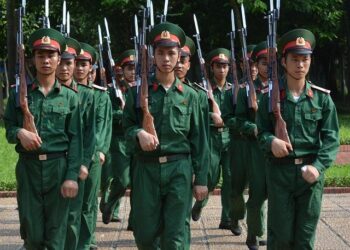
The absence of mandatory military conscription in European Union member states is undermining the bloc’s overall defense capabilities, warns a Lithuanian colonel in a recent statement to Ukrinform. As security challenges mount amid ongoing regional tensions, the official argues that reliance on professional volunteer forces may leave EU countries vulnerable and calls for a reassessment of defense policies to bolster readiness and resilience.
Absence of Conscription Undermines EU Military Readiness Warns Lithuanian Colonel
Lithuanian Colonel Tomas Vitkauskas has voiced serious concerns over the discontinuation of conscription across many European Union nations, emphasizing that this trend significantly weakens the EU’s collective military preparedness. In his recent statement, Vitkauskas argued that professional volunteer armies, while efficient in peacetime, lack the depth and rapid mobilization capacity that conscript forces provide in times of crisis. He stressed that the absence of a national draft limits the pool of trained reservists who can be called upon swiftly, potentially putting the entire region at risk amid escalating geopolitical tensions.
Highlighting key factors contributing to diminished readiness, the colonel pointed to several challenges faced by EU defense systems:
- Reduced manpower reserves: Without conscripts, standing forces are smaller and less flexible.
- Loss of widespread military skills: Civilian populations become less familiar with basic defense training.
- Longer mobilization times: Recruit training in emergencies becomes lengthier and costly.
- More dependence on high-tech equipment: Which may fail or be insufficient in all conflict scenarios.
| Country | Current Conscription Status | Active Military Personnel |
|---|---|---|
| Lithuania | Mandatory conscription active | 20,000 |
| Germany | Conscription suspended | 184,000 |
| France | Conscription abolished | 203,000 |
| Poland | Conscription suspended | 120,000 |
Impact on Collective Defense Strategies and Rapid Response Capabilities
The suspension of mandatory military service across multiple EU member states has significantly weakened the bloc’s unified defense posture. Without a steady influx of trained reservists, the ability to scale forces quickly in the event of a crisis is compromised, leaving collective defense mechanisms less agile and dependable. According to experts, this erosion poses tangible risks, particularly when rapid mobilization is crucial. The reliance on professional volunteer forces, while specialized, does not compensate for the volume and breadth of personnel that compulsory conscription historically provided.
Key challenges emerging from this shift include:
- Decreased pool of trained reservists available for immediate deployment
- Reduced military readiness and operational flexibility in frontier regions
- Heightened dependence on multinational coordination, lengthening response times
- Challenges in sustaining long-term defense commitments amidst evolving threats
| Aspect | Pre-Conscription Status | Post-Conscription Status | |||||||
|---|---|---|---|---|---|---|---|---|---|
| Reservist Pool Size | Broad and diverse | Significantly reduced | |||||||
| Rapid Force Expansion | Highly feasible | Limited and slower | |||||||
| Collective Training Frequency | Calls for Reintroduction of Mandatory Service to Strengthen EU Security Framework In light of growing geopolitical tensions, Lithuanian military leadership has emphasized the urgent need to revive mandatory national service across the European Union. According to a senior colonel, the current lack of conscription weakens the collective defense posture, leaving member states vulnerable to external threats and undermining rapid mobilization capabilities. The professional volunteer forces, while highly trained, cannot fully compensate for the broad-based readiness and societal resilience that mandatory service instills. Key arguments made in favor of reinstating conscription include:
In SummaryAs debates over military preparedness continue across Europe, the concerns raised by the Lithuanian colonel underscore a critical challenge for the European Union’s collective defense strategy. With the absence of conscription potentially weakening the readiness and capabilities of EU member states, policymakers may need to reconsider their approach to military recruitment and training. As tensions persist in the region, the balance between professional volunteer forces and mandatory service remains a contentious issue with significant implications for Europe’s security landscape. ADVERTISEMENT  Related Posts |