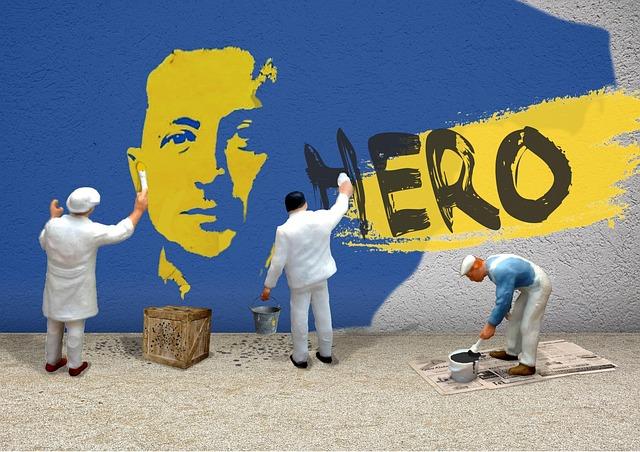
Ukrainian President Volodymyr Zelenskyy has confirmed that no agreement has been reached regarding territorial issues in the ongoing peace settlement talks, ABC News reports. As negotiations continue amid the protracted conflict with Russia, Zelenskyy emphasized that Ukraine remains steadfast on its sovereignty and territorial integrity, underscoring the challenges ahead in achieving a durable resolution.
Zelenskyy Emphasizes Stalemate in Territorial Discussions Amid Peace Negotiations
Ukrainian President Volodymyr Zelenskyy has underscored the persistent deadlock in ongoing peace negotiations, particularly concerning the contentious issue of territorial control. Despite several rounds of high-stakes discussions, no agreement has been reached on the fate of disputed regions, reflecting the profound complexities and deep-seated mistrust between the parties involved. Zelenskyy emphasized that while dialogue continues, any settlement must respect Ukraine’s sovereignty and territorial integrity, signaling a firm stance against compromises that would undermine national unity.
Key challenges highlighted during the latest talks include:
- Disputed territories’ status remains unresolved
- Divergent expectations on security guarantees
- Humanitarian issues and displaced populations
- International mediation efforts continue without breakthroughs
| Issue | Position – Ukraine | Position – Opposition |
|---|---|---|
| Territorial Control | Full sovereignty, no concessions | Autonomy or control claims |
| Security Arrangements | International guarantees, no foreign troops | Demilitarization demands |
| Humanitarian Access | Free movement, aid delivery | Restrictions linked to administration |
Implications of the Territorial Dispute for Ukraine’s Sovereignty and Regional Stability
The ongoing territorial dispute poses a significant threat to Ukraine’s sovereignty, complicating attempts to forge a lasting peace. The refusal to compromise on the territorial question underscores not only the deep-rooted complexities of the conflict but also the broader challenges of maintaining national integrity amidst external pressures. Retaining control over these contested regions is seen by Ukrainian leadership as essential to preserving the country’s legal and political boundaries, which are crucial for international recognition and support.
Beyond Ukraine’s borders, the instability fueled by unresolved territorial claims reverberates across Eastern Europe, heightening security concerns for neighboring states and global powers alike. Some key implications include:
- Increased military tensions: The uncertainty perpetuates a heightened state of alert and potential escalation along border areas.
- Economic disruption: Regional trade routes and energy supplies face risk, impacting economic recovery efforts.
- Diplomatic strain: Alliances within organizations such as NATO and the EU are tested as member states navigate their responses.
| Impact Area | Potential Consequence |
|---|---|
| Military Presence | Sustained troop deployments, risk of skirmishes |
| Economic Stability | Disrupted supply chains and investment hesitance |
| International Relations | Entrenched divisions within diplomatic circles |
Experts Recommend Strategic Diplomatic Approaches to Break Deadlock in Peace Talks
Diplomatic analysts emphasize that overcoming the impasse in territorial discussions requires a multifaceted strategy combining patience, innovative negotiation tactics, and active third-party mediation. Experts advocate for leveraging back-channel communications alongside formal talks to create trust and explore less rigid frameworks for compromise. Key suggestions include:
- Incremental concessions: Breaking down complex territorial issues into smaller, manageable agreements that pave the way for broader settlements.
- International oversight: Engaging neutral international bodies to monitor and validate progress to build confidence among stakeholders.
- Economic incentives: Offering development aid programs linked to phased political agreements as motivation to maintain dialogue.
In addition, some experts propose establishing a rotating facilitation team comprising representatives from diverse geopolitical backgrounds to avoid dominance by any single interest. A comparative overview of suggested diplomatic approaches shows the balance between urgency and pragmatism needed to advance the peace process:
| Approach | Strength | Potential Challenge |
|---|---|---|
| Back-channel diplomacy | Builds trust away from public pressure | Lacks transparency |
| Third-party mediation | Ensures neutral ground | May slow talks |
| Economic incentives | Encourages cooperation practical benefits | Dependency risks |
| Incremental agreements | Reduces complexity | Risk of stalling at early phases |
Closing Remarks
As negotiations continue with no agreement yet on the critical issue of territorial disputes, the path to a comprehensive peace settlement remains uncertain. Ukrainian President Volodymyr Zelenskyy’s firm stance signals that any future deal will require addressing these complex questions in a manner acceptable to Kyiv. Observers will be closely watching further developments as both sides navigate the challenging road ahead.