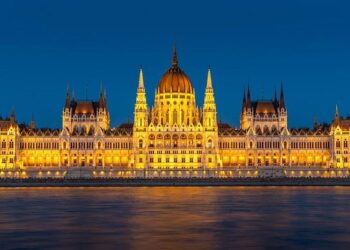
In recent years, Hungary and Israel have witnessed a striking political shift that challenges the prevailing neoliberal order. Populist movements in both countries are reshaping economic and social policies, signaling a departure from market-driven principles toward more nationalist and interventionist agendas. This transformation not only reflects deep-seated domestic frustrations but also raises critical questions about the future of liberal democracies in an era marked by growing skepticism toward globalization and established elites. In this article, we examine how populism is redefining the political landscapes of Hungary and Israel, highlighting the implications for neoliberalism and beyond.
Populism Challenges Neoliberal Policies in Hungary and Israel
Across Hungary and Israel, the rise of populist movements marks a significant departure from the decades-long dominance of neoliberal economic doctrine, characterized by market liberalization, deregulation, and austerity measures. These governments have increasingly prioritized national sovereignty, social welfare, and economic protectionism, challenging the orthodox policies championed by global institutions and financial markets. In Hungary, this has translated into state intervention in key industries, expansion of welfare programs, and a reassertion of cultural identity that resists globalization pressures. Similarly, Israel’s populist leaders have advocated for policies that shield local industries and emphasize social spending targeted at historically marginalized groups, pushing back against austerity-driven reforms that had previously defined its economic landscape.
- Increased state control: Both countries have reintroduced regulatory frameworks to limit foreign influence in strategic sectors.
- Focus on social welfare: Enhanced subsidies, pensions, and social programs aim to address inequality exacerbated under neoliberalism.
- Nationalist rhetoric: Policies emphasize protection of national industries and cultural values over free-market integration.
| Policy Aspect | Hungary | Israel |
|---|---|---|
| Market Intervention | State ownership in energy & banking | Subsidies for local manufacturing |
| Social Spending | Expanded family benefits | Increased funding for healthcare |
| Trade Approach | Selective protectionism | Prioritization of domestic goods |
Economic and Social Impacts of the Populist Shift in Both Nations
As both Hungary and Israel embrace populist governance styles, the economic landscape in each country has experienced notable transformations. Economic policies have shifted away from traditional neoliberal frameworks emphasizing free markets and global integration, toward increased state intervention and protectionism. This pivot has manifested in stronger controls over strategic sectors, including energy and telecommunications, while fostering closer ties between government and business elites. However, these changes have also led to heightened economic uncertainty, capital flight concerns, and fluctuations in foreign direct investment. Equally significant is the impact on social welfare-while populist rhetoric champions the “common people,” actual redistributive measures have been inconsistent, often overshadowed by rising nationalist priorities and budget reallocation to security and defense.
- Hungary: Tightened control over media and increased social spending targeting rural and lower-income populations
- Israel: Emphasis on security-driven economic expenditures, reduction in tech-sector liberalization
- Shared social effects: Growing polarization, challenges to minority rights, and skepticism toward supranational entities
| Impact Area | Hungary | Israel |
|---|---|---|
| GDP Growth | Moderate slowdown | Volatile fluctuations |
| Foreign Investment | Decline in EU funds absorption | Selective FDI, focused on defense |
| Social Cohesion | Increased rural-urban divide | Heightened ethnic tensions |
| State Spending | Boost in social welfare (targeted) | Prioritized security budgets |
Societal repercussions have been equally profound. The populist shift has intensified political polarization and reshaped citizenship debates in both countries, redefining what social inclusion means within increasingly exclusionary frameworks. National identity has become a focal point of public discourse, often linked with exclusionary policies toward minorities, immigrants, and dissenting voices. While populist governments in Hungary and Israel appeal to majority demographics by promising stability and prosperity, marginalized groups face amplified challenges, including diminished access to resources and legal protections. This shift has also stirred public unrest and impacted democratic norms, raising questions about the long-term social fabric The economic and social transformations stemming from the populist governance styles in Hungary and Israel reveal several commonalities and divergences:
Economic Landscape Changes:
- Policy Shift: Both countries moved away from neoliberalism toward greater state intervention and protective economic measures.
- Sector Control: Increased government oversight is observed in strategic sectors such as energy, telecommunications, and defense.
- Investment Dynamics: There is a noted decline or transformation in foreign direct investment patterns-Hungary experiences reduced EU fund absorption, while Israel has more selective foreign investments emphasizing defense.
- Economic Performance: Hungary faces moderate GDP growth slowdown, reflecting some economic deceleration, whereas Israel’s GDP exhibits volatile fluctuations, highlighting economic unpredictability.
Social and Welfare Implications:
- Hungary: Focuses on targeted social spending, especially benefiting rural and lower-income populations, combined with tighter media control which consolidates government narratives.
- Israel: Moves resources predominantly toward security-related expenditures, reducing liberalization in high-tech sectors, and facing heightened ethnic tensions.
- Shared Effects: Both countries see growing societal polarization and challenges to minority rights, alongside skepticism toward supranational organizations (e.g., the EU for Hungary, and broader international institutions for Israel).
Societal Repercussions:
- Polarization & Identity: Populist governments emphasize national identity in exclusionary ways, redefining citizenship and social inclusion to prioritize majority groups.
- Marginalized Groups: Ethnic minorities, immigrants, and dissenters face increased obstacles, including restricted access to legal protections and social resources.
- Democratic Norms: The changes contribute to strains on democratic practices, public unrest, and challenges to the social fabric’s cohesion.
Summary:
Populism in Hungary and Israel has reshaped their economies by increasing state control and shifting investment and spending priorities, while socially driving divisions and marginalization under nationalist paradigms. This convergence of economic protectionism and social exclusion raises critical questions about future democratic resilience and social unity in both nations.
Policy Recommendations for Navigating Post-Neoliberal Governance in Hungary and Israel
To effectively address the challenges posed by the shift away from neoliberal governance in Hungary and Israel, policymakers must prioritize inclusive economic development strategies. This entails redefining the social contract to balance market efficiency with social welfare, ensuring that marginalized groups are not left behind. Key policy steps include strengthening social safety nets, promoting labor rights, and investing in public services such as healthcare and education. Additionally, transparent governance mechanisms must be established to rebuild public trust eroded by years of populist rhetoric and institutional backsliding.
Moreover, fostering regional cooperation and democratic resilience is essential in navigating the post-neoliberal landscape. Policymakers should emphasize the protection of civic freedoms and judicial independence, which are foundational to democratic stability. Attention to rural and peripheral areas where populist appeal often thrives will require tailored initiatives that stimulate local economies through innovation and infrastructure support. Below is a summary of critical focus areas for these policy interventions:
| Focus Area | Policy Actions | Expected Outcome |
|---|---|---|
| Social Welfare | Expand healthcare & education funding | Reduced inequality & improved quality of life |
| Labor Market | Enforce stronger labor protections | Increased job security & workforce empowerment |
| Governance | Enhance transparency & judicial independence | Restored public trust & democratic integrity |
| Regional Development | Invest in rural infrastructure & tech hubs | Balanced economic growth & reduced regional disparities |
In Conclusion
As Hungary and Israel continue to navigate the complexities of populist governance, their departures from neoliberal frameworks signal a broader shift in global political landscapes. These developments underscore how economic discontent and social anxieties are reshaping policy priorities and challenging traditional ideological boundaries. Observers will be watching closely to see how these nations balance nationalist rhetoric with economic realities in the years ahead.