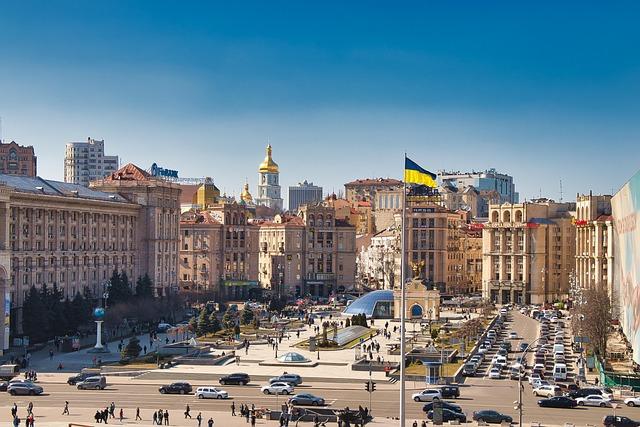
Hungarian Prime Minister Viktor Orbán has warned that the collapse of Ukraine would have devastating consequences for Hungary, underscoring the regional instability that could arise from such a scenario. Speaking amid ongoing tensions and conflict in Eastern Europe, Orbán emphasized the strategic and economic risks his country would face should Ukraine’s sovereignty be compromised. The remarks highlight Hungary’s vested interest in the outcome of the crisis and the broader implications for European security.
Hungary Faces Economic and Security Risks Amid Ukraine Crisis
Hungary finds itself at a precarious crossroads as tensions escalate in neighboring Ukraine. Prime Minister Viktor Orbán has voiced concerns that any collapse of Ukraine’s government would unleash a chain reaction, severely impacting Hungary’s economy and national security. With key trade routes and energy supplies running through the region, disruptions could trigger inflationary pressures and shortages, while escalating refugee flows might strain public services and social cohesion.
Critical vulnerabilities identified by Hungarian officials include:
- Dependence on Ukrainian transit corridors for energy and goods
- Potential spike in refugee arrivals exacerbating resource allocation
- Heightened risk of regional instability spreading to Hungarian borders
- Economic uncertainty dampening investor confidence
| Sector | Impact Risk | Potential Consequences |
|---|---|---|
| Energy | High | Supply disruptions, price volatility |
| Trade | Medium | Transport delays, increased costs |
| Security | High | Border tensions, refugee pressure |
| Investment | Medium | Decreased foreign capital inflow |
Orbán Calls for Strengthened Regional Cooperation to Prevent Destabilization
Hungarian Prime Minister Viktor Orbán emphasized the urgent need for enhanced collaboration among Central and Eastern European nations to ensure regional stability amid the ongoing turmoil in Ukraine. He warned that any further destabilization would directly threaten Hungary’s security and economic wellbeing, urging neighboring countries to unite in proactive defense and diplomatic initiatives. Orbán highlighted existing frameworks but insisted that cooperation must be deepened beyond traditional alliances to effectively counter emerging risks.
In his statement, Orbán presented a clear vision of collective responsibility, calling on governments to share intelligence, coordinate border controls, and foster mutual economic support. Key priorities include:
- Strengthening cross-border infrastructure to mitigate economic shocks
- Enhancing communication channels between security agencies
- Developing joint contingency plans for humanitarian and military emergencies
| Priority Area | Proposed Actions | Expected Outcome |
|---|---|---|
| Security Coordination | Real-time data sharing and joint patrols | Improved border control and threat detection |
| Economic Resilience | Collaborative infrastructure projects | Reduced supply chain disruptions |
| Humanitarian Preparedness | Regional emergency response teams | Efficient refugee assistance and crisis management |
Experts Urge Enhanced EU Support to Safeguard Central European Stability
Central European leaders and policy analysts alike emphasize the crucial role of the European Union in stabilizing the region amid ongoing geopolitical tensions. As the crisis in Ukraine escalates, the potential collapse of the country is seen not only as a humanitarian catastrophe but as a direct threat to the security and economic wellbeing of neighboring nations, particularly Hungary. Experts call for a reinforced EU strategy focused on financial aid, military support, and diplomatic engagement to prevent a destabilizing domino effect across Central Europe.
Key recommendations made by analysts highlight:
- Increased funding for border security and refugee assistance programs, ensuring that member states can manage influxes without internal strain.
- Coordinated sanctions and political pressure aimed at stabilizing Ukraine’s sovereignty, preventing further territorial losses.
- Strategic energy partnerships, reducing dependency on unstable external suppliers and fostering resilience.
| Focus Area | Priority Actions | Expected Outcome |
|---|---|---|
| Security | Border fortifications, joint patrols | Reduced cross-border infiltration |
| Economic | Financial aid, trade incentives | Economic stability, job retention |
| Energy | Diversification projects | Lower energy risk exposure |
In Conclusion
As tensions continue to mount in Eastern Europe, Prime Minister Viktor Orbán’s warning underscores the broader regional implications of Ukraine’s potential collapse. With Hungary sharing a border and deep economic ties with its neighbor, Budapest’s concerns highlight the fragility of stability in the area. The unfolding situation remains a critical watchpoint for both European and global stakeholders, as any deterioration could reverberate far beyond Ukraine’s borders.