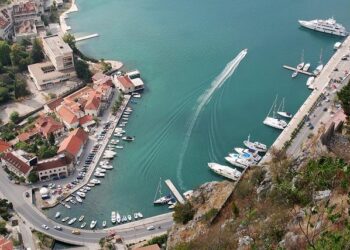
Montenegro’s journey toward European Union membership is increasingly being seen as a valuable case study for Brussels, offering a practical blueprint in confidence-building between aspiring candidates and the Union. As the Western Balkan nation steadily progresses through accession talks, the European Policy Centre (EPC) highlights how Montenegro’s experience provides crucial insights into fostering trust, meeting reform benchmarks, and navigating complex negotiations. This dynamic not only underscores Montenegro’s commitment to European integration but also serves as a timely tutorial for the EU as it seeks to strengthen enlargement processes and reaffirm its strategic partnerships in the region.
Montenegro’s EU Bid Signals New Path for Western Balkans Integration
Montenegro’s renewed push towards European Union membership marks more than just a bureaucratic milestone-it represents a strategic recalibration in the Western Balkans’ integration process. This move underscores a growing determination within the EU to embrace a more pragmatic and confidence-building approach, focusing on tangible reforms over prolonged negotiations. Montenegro’s progress, particularly in governance and judicial transparency, sets a practical precedent, showing how small yet steadfast reforms can catalyze broader regional momentum. The process is increasingly seen not only as a pathway for Montenegro’s growth but also as a pilot for redefining the EU’s enlargement architecture.
Key elements driving this approach include:
- Institutional cooperation: Encouraging joint frameworks for security and economic collaboration across the Balkans.
- Anti-corruption measures: Enhancing transparency through independent audits and civil society involvement.
- Rule of law reforms: Prioritizing judicial independence and enforcement capacity to align with EU standards.
This shift not only accelerates Montenegro’s integration timeline but also injects renewed hope into the EU enlargement narrative. The Union’s adaptive strategy may well serve as a blueprint for stabilizing the broader Western Balkans, anticipating a more inclusive and resilient Europe in the near future.
| Milestone | Status | Impact |
|---|---|---|
| Judicial Reforms | Advanced | Enhanced fairness in legal proceedings |
| Anti-Corruption Strategy | Ongoing | Improved transparency measures |
| Regional Security Cooperation | Initiated | Strengthened cross-border trust |
Deepening Institutional Reforms Key to Boosting Trust Between Montenegro and Brussels
Montenegro’s path towards EU membership hinges crucially on implementing robust institutional reforms that enhance transparency, judicial independence, and anti-corruption measures. Such reforms serve as tangible proof of Montenegro’s commitment to European values, directly addressing Brussels’ lingering concerns over governance and rule of law. By prioritizing these areas, Montenegro not only aligns its domestic policies with EU standards but also paves the way for a renewed partnership built on mutual trust and accountability. Key sectors demanding reform include:
- Judicial system overhaul to guarantee impartiality and efficiency
- Strengthening anti-corruption frameworks and monitoring bodies
- Enhancing transparency in public administration
- Bolstering civic engagement and media freedom
Brussels, for its part, has signaled that steady progress in these domains could catalyze the accession timeline. To illustrate, the following table outlines core areas where Montenegro’s reforms coincide with EU expectations, emphasizing both challenges and achievements to date:
| Institutional Area | Current Status | EU Benchmarks |
|---|---|---|
| Judicial Independence | Ongoing reform, limited independence | Fully autonomous judiciary |
| Anti-Corruption Efforts | Improved legislation, enforcement gaps | Comprehensive prevention and prosecution |
| Transparency | Enhancing public access to information | |
| Transparency | Enhancing public access to information | Open government and proactive disclosure |
| Civic Engagement and Media Freedom | Active civil society, pressured media environment | Pluralistic media and vibrant civic participation |
If you want, I can also help generate some summary or additional content related to this section!
Strengthening Rule of Law and Economic Resilience Essential for Advancing Accession Talks
Efforts to enhance judicial independence and combat corruption remain central to the progress of Montenegro’s EU accession journey. The country’s commitment to transparent governance and an impartial legal system not only boosts domestic confidence but also reassures European partners wary of prolonged negotiation deadlocks. Strengthening institutions responsible for upholding the rule of law is critical in overcoming systemic challenges that have historically slowed integration, thereby reinforcing Montenegro’s image as a reliable future member of the Union.
Economic resilience equally serves as a cornerstone for sustainable accession talks. Montenegro’s ability to adapt to external shocks, diversify its economy, and improve fiscal health aligns with the EU’s broader stability criteria. Key areas such as investment in green technologies, digital transformation, and regional trade cooperation provide tangible pathways to meet accession benchmarks. Below is an overview of priorities shaping economic resilience in the context of EU integration:
- Enhancing public-private partnerships to mobilize innovation funding
- Strengthening financial sector stability through regulatory reforms
- Expanding export capacity in strategic industries
- Implementing social policies to cushion vulnerable populations
| Sector | Recent Progress | EU Expectation |
|---|---|---|
| Judiciary | New anti-corruption units established | Full operational independence |
| Finance | Improved banking regulations enacted | Robust risk management frameworks |
| Energy | Initiatives on renewable projects launched | Align with EU Green Deal targets |
To Wrap It Up
Montenegro’s journey towards EU membership offers a compelling case study in confidence-building and strategic alignment within the broader enlargement framework. As the country continues to implement critical reforms and foster institutional resilience, its progress underscores both the challenges and opportunities facing the Union’s enlargement policy. For the European Union, Montenegro’s experience serves as a valuable tutorial-highlighting the importance of sustained engagement, clear benchmarks, and mutual trust in advancing the integration of Western Balkan states. Moving forward, the lessons drawn from Montenegro’s accession path will be essential in shaping a more coherent and credible enlargement strategy for the entire region.