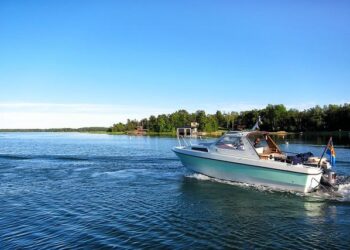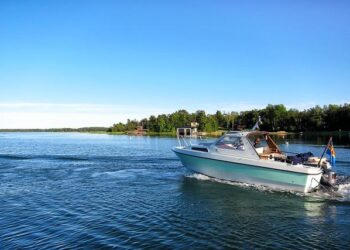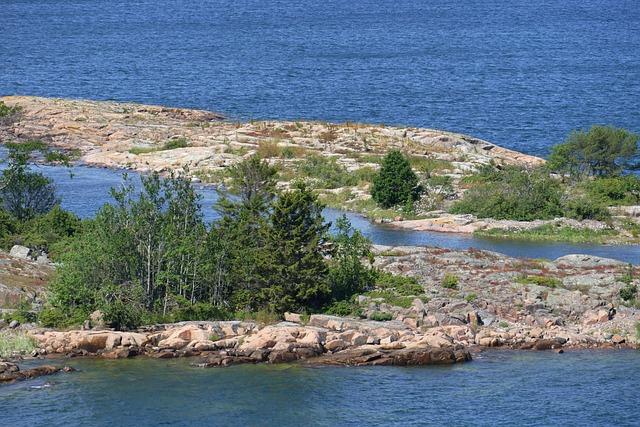
A prominent US security expert has identified Åland, the autonomous Finnish archipelago in the Baltic Sea, as a potential target for Russian aggression under President Vladimir Putin’s expanding strategic ambitions. The warning comes amid rising tensions in the region, where Åland’s unique demilitarized status and geostrategic position have increasingly attracted international attention. Finnish broadcaster Yle reports that the expert’s assessment highlights growing concerns over Russia’s intentions in Northern Europe and the security implications for both Finland and the broader NATO alliance.
US Intelligence Highlights Strategic Importance of Åland in Baltic Security Dynamics
US intelligence officials have increasingly identified the Åland Islands as a critical flashpoint in the evolving security landscape of the Baltic Sea region. This small, demilitarized archipelago-strategically located between Sweden and Finland-holds significant geopolitical value, serving both as a potential staging ground for Russian influence and a key monitoring point for Western forces. Analysts warn that President Putin may view Åland as an accessible target to exert pressure on Nordic countries and disrupt regional stability without provoking a direct NATO response.
Key factors elevating Åland’s strategic importance include:
- Geographical proximity to major sea routes and Russian military bases.
- Status under international treaties limiting military presence, which could be exploited as a vulnerability.
- Potential intelligence and surveillance advantages for controlling Baltic maritime traffic.
| Aspect | Strategic Implication |
|---|---|
| Location | Control of key naval passageways |
| Demilitarization | Limits formal defenses but complicates deterrence |
| Surveillance Potential | Enables monitoring of Baltic activity |
Potential Russian Objectives in Targeting Åland Explored by Defense Analysts
Defense analysts suggest that Russia’s interest in Åland primarily revolves around its strategic position in the Baltic Sea. The archipelago’s location could provide a critical foothold for Russian naval and air operations, potentially disrupting NATO’s maritime supply routes and extending Moscow’s influence deeper into Northern Europe. Moreover, controlling Åland would enable the Kremlin to monitor and possibly challenge Finland’s recent NATO membership, which has shifted the regional security landscape significantly.
Key potential objectives highlighted by experts include:
- Establishing advanced surveillance and intelligence-gathering outposts.
- Gaining control over critical sea lanes connecting the Baltic states and Scandinavian countries.
- Projecting power closer to the Swedish mainland and southern Finland.
- Leveraging Åland’s demilitarized status to complicate NATO’s strategic calculations.
| Objective | Implications |
|---|---|
| Naval Base Establishment | Increased control over Baltic maritime traffic |
| Air Surveillance Hub | Enhanced monitoring of NATO activities |
| Regional Power Projection | Pressure on Finland and Sweden |
Recommendations for Strengthening Åland’s Resilience Amid Heightened Geopolitical Tensions
In light of increasing geopolitical volatility, Åland must bolster its defensive and diplomatic frameworks to deter potential aggression. Prioritizing enhanced intelligence sharing with Nordic and Western allies forms a crucial pillar in this strategy, enabling early warning and rapid response capabilities. Furthermore, investing in critical infrastructure hardening-especially maritime and communication networks-will reduce vulnerability to sabotage or cyber intrusions, which modern hybrid warfare increasingly exploits.
Key recommended measures include:
- Strengthening local coast guard and emergency services with advanced training and technology
- Expanding joint military exercises to improve interoperability with Finnish and Swedish defense forces
- Promoting community resilience programs to enhance civilian preparedness and crisis management
- Enhancing diplomatic engagement to assert Åland’s neutral status while keeping transparency with regional partners
| Capability | Recommended Action | Expected Outcome |
|---|---|---|
| Intelligence Sharing | Establish real-time data exchange protocols | Faster threat detection and response |
| Infrastructure | Upgrade maritime radar and cyber defenses | Reduced risk of disruption |
| Civil Preparedness | Implement island-wide emergency drills | Increased public readiness and cohesion |
The Way Forward
As tensions continue to simmer in the Baltic region, the potential strategic significance of Åland has drawn increased scrutiny from security experts. The warnings from US analysts underscore the complex geopolitical challenges facing Finland and its neighbors amid heightened Russian assertiveness. Moving forward, monitoring developments in Åland will be essential for understanding the broader implications for regional stability and security in Northern Europe.