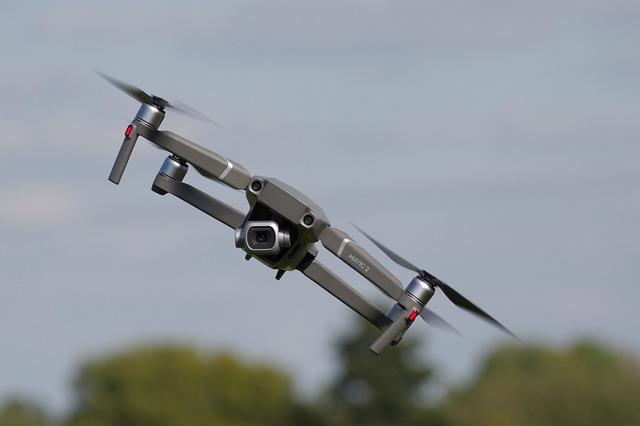
Unidentified drones recently crossed into Latvia and Estonia from neighboring Russia and Belarus, raising alarm among Baltic defense officials and escalating regional security concerns. The incursions mark a troubling development amid heightened tensions on Europe’s eastern flank, prompting renewed calls for vigilance and increased monitoring along the borders. This article delves into the details of the drone activity, the responses from Latvian and Estonian authorities, and the broader implications for Baltic security in the context of ongoing geopolitical challenges.
Drones Crossing Borders Heighten Security Concerns in Latvia and Estonia
Recent incidents involving unmanned aerial vehicles crossing into Latvian and Estonian airspace from Russia and Belarus have sparked a wave of unease among defense officials and security analysts. These unauthorized drone flights are not only challenging national airspace sovereignty but also raising questions about potential surveillance activities and the risks of covert operations near sensitive border zones. Both Latvia and Estonia are now intensifying aerial monitoring and deploying counter-drone technologies to mitigate these emerging threats. The increasing frequency of incursions highlights growing geopolitical tensions in the Baltic region and underscores the urgent need for enhanced cross-border cooperation.
Security agencies have identified several critical risks linked to these drone incursions, including:
- Espionage and intelligence gathering that could compromise military installations;
- Disruption of civil aviation through unauthorized airspace violation;
- Potential for smuggling or delivery of illicit materials across borders.
In response, authorities have launched joint exercises aimed at improving drone detection capabilities and coordinated interception protocols. Below is a summary of key measures currently underway in Latvia and Estonia:
| Country | Counter-Drone Initiative | Status |
|---|---|---|
| Latvia | Deployment of radar networks along Eastern border | Operational |
| Estonia | Integration of drone interception drones in air defense | Testing Phase |
| Both | Joint real-time intelligence sharing platform | Planned |
Analyzing the Tactical Implications of Unmanned Aerial Incursions from Russia and Belarus
Unmanned aerial incursions originating from Russia and Belarus into Latvian and Estonian airspace present multifaceted tactical challenges that extend beyond mere territorial violations. These drone operations serve as a reconnaissance tool, gathering critical intelligence on border defenses, troop deployments, and response protocols, thereby enabling potential adversaries to paint a detailed operational picture without direct engagement. The increased frequency and diversity of these aerial violations signal a shift toward persistent, low-cost surveillance tactics designed to erode situational awareness and intimidate local defense forces. The tactical use of drones in this manner complicates airspace control efforts, as their small size and low radar signature often circumvent traditional detection systems.
- Enhanced ISR Capabilities: Drones provide continuous intelligence, surveillance, and reconnaissance (ISR) capabilities, improving real-time battlefield awareness.
- Psychological Pressure: Persistent incursions exert psychological strain on military personnel and local populations, amplifying uncertainty and distrust.
- Force Multiplication: By exploiting drone swarms or varied UAV types, adversaries can multiply their reconnaissance reach without escalating conventional troop presence.
| Aspect | Implication |
|---|---|
| Surveillance Depth | Extended border monitoring with minimal risk |
| Response Time | Decreased due to early detection challenges |
| Airspace Control | Compromised by low radar visibility |
The tactical landscape in the Baltic region is increasingly shaped by these unmanned incursions, demanding a recalibration of existing defense protocols. Adaptation strategies must involve the integration of advanced counter-UAV technologies, such as electronic jamming, kinetic interceptors, and AI-driven threat analysis to swiftly identify and neutralize rogue drones. Moreover, conventional border defense units require augmented training to interpret drone data streams effectively and coordinate rapid multi-domain responses. This evolving threat dynamic also underscores the need for strengthened international cooperation and intelligence sharing among NATO allies to anticipate movements and collectively deny adversarial exploitation of the airspace.
Strategies for Enhancing Baltic Airspace Surveillance and Defense Against Drone Threats
To counter the rising threat posed by drones crossing into Latvian and Estonian airspace from Russia and Belarus, regional defense authorities are accelerating efforts to integrate advanced surveillance technologies. This includes deploying multi-sensor networks combining radar, radio frequency (RF) detection, and electro-optical systems that enhance real-time threat identification. Additionally, coordination between Baltic states is being strengthened through shared data platforms, enabling rapid information exchange and unified airspace monitoring. Such collaboration ensures that suspicious aerial objects are swiftly classified and, if necessary, intercepted before they pose a danger to civilians or critical infrastructure.
Defensive measures are also evolving beyond mere detection. Authorities are experimenting with a range of counter-drone tactics, including:
- Signal jamming to disrupt hostile drone communication and navigation systems
- Laser and directed energy weapons for precision disabling of drones at various distances
- Deployable interceptor drones capable of capturing or neutralizing airborne threats autonomously
These solutions are being tested for integration into existing air defense frameworks, offering layers of protection tailored to Baltic airspace vulnerabilities. The following table summarizes current surveillance assets and countermeasure capabilities under review:
| Technology | Primary Function | Status |
|---|---|---|
| Multi-Sensor Radar Systems | Long-range drone detection | Operational |
| RF Signal Detectors | Communication interception | Deployed in test zones |
| Directed Energy Weapons | Drone disablement | Prototype phase |
| Interceptor UAVs | Drone capture/neutralization | Field trials ongoing |
In Retrospect
As the situation develops, the continued presence of drones crossing into Latvia and Estonia from Russia and Belarus underscores the escalating security concerns in the Baltic region. Authorities remain vigilant, responding to these incursions amid broader geopolitical tensions. REFORM.news will keep monitoring this story to provide timely updates on the implications for regional stability and international relations.