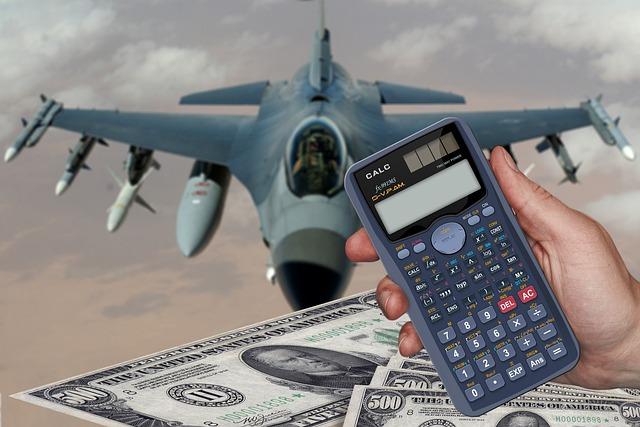
Norway has announced a significant shift in its defense procurement strategy, increasing overall defense spending while postponing planned acquisitions of air defense systems and helicopters. The adjustments, detailed in a recent government briefing covered by Aviation Week, reflect Oslo’s recalibration of priorities amid evolving security challenges in the Nordic region. This move underscores Norway’s intent to bolster capabilities in key areas while delaying investments in other sectors, signaling a nuanced approach to national defense amid a complex geopolitical landscape.
Norway Increases Overall Defense Budget Amid Regional Security Concerns
Amid escalating geopolitical uncertainties in the Nordic region, Norway is set to boost its overall defense budget significantly for the coming fiscal year. Despite this increased funding allocation, the government has opted to delay several key procurement projects, including critical air defense systems and new helicopter acquisitions. This strategic reprioritization aims to strengthen Norway’s broader defense capabilities while navigating budgetary constraints and evolving security demands.
The revised defense spending plan introduces notable shifts:
- Increased investment in cyber defense and intelligence gathering operations
- Postponement of major air defense upgrades originally scheduled for rollout in 2025
- Deferred helicopter acquisitions that were anticipated to enhance rapid response and search-and-rescue missions
| Category | 2023 Budget (NOK Billion) | 2024 Budget (NOK Billion) | Change (%) |
|---|---|---|---|
| Overall Defense Spending | 70 | 77 | +10% |
| Air Defense Systems | 12 | 9 | -25% |
| Helicopter Procurement | 5 | 3 | -40% |
| Cyber & Intelligence Ops | 8 | 12 | +50% |
Officials emphasize that while certain modernization timelines are being pushed back, the elevated budget underscores Norway’s commitment to maintaining robust national defense amid shifting regional dynamics. Increased spending on cyber and intelligence domains reflects a modern approach to addressing unconventional threats and upholding sovereignty in a complex security environment.
Delays in Air Defense Procurement Raise Questions Over Strategic Priorities
Norway’s decision to ramp up overall defense expenditure while deferring key air defense and helicopter acquisitions has sparked debate among defense analysts and policymakers alike. Critics argue that while increased spending signals a strong commitment to national security, the delay in procuring advanced missile systems and rotary aircraft could leave critical capability gaps during a period of rising regional tensions. The nuanced realignment hints at shifting strategic priorities, possibly emphasizing modernization of existing assets and cyber defense capabilities over immediate expansion of air defense networks.
Key implications of the procurement delays include:
- Potential Vulnerabilities: Postponed deployment of next-generation surface-to-air missiles may expose airspace to emerging threats.
- Industrial Impact: Delays might affect domestic defense contractors reliant on government orders, impacting local employment.
- Budget Reallocation: Funds earmarked for air defense and helicopters could be redirected toward intelligence, surveillance, and reconnaissance (ISR) upgrades.
| Procurement Category | Original Schedule | Revised Timeline | Strategic Notes |
|---|---|---|---|
| Air Defense Systems | 2023-2025 | 2027-2029 | Focus shifted to cyber resilience |
| Helicopter Fleet Renewal | 2024-2026 | Postponed indefinitely | Rely on extended service of current platforms |
| ISR Enhancements | 2023-2024 | Accelerated | Increased investment in drones and sensors |
Experts Advocate Accelerated Helicopter Acquisition to Enhance Operational Readiness
Military strategists and industry insiders strongly recommend expediting the procurement of advanced helicopters to mitigate capability gaps emerging from delayed air defense projects. With evolving global threats and Norway’s shift in defense priorities, operability hinges on rapid enhancement of rotary-wing assets to maintain air mobility, reconnaissance, and rapid response abilities. Experts argue that accelerating helicopter acquisitions will not only offset postponed aerial defense upgrades but also bolster joint force interoperability across NATO allies.
Key reasons underpinning this call for speedier deliveries include:
- Maintaining Tactical Flexibility: Enhancing the helicopter fleet ensures readiness for diverse mission profiles, from search and rescue to anti-submarine warfare.
- Closing Capability Gaps: Preventing operational shortfalls caused by deferments in other defense programs.
- Optimizing Budget Allocation: Shifting available funds toward helicopter platforms can provide immediate enhancements in defense posture.
| Helicopter Model | Delivery Timeline | Primary Role |
|---|---|---|
| NH90 | 2024-2026 | Multirole Tactical Transport |
| AW159 Wildcat | 2023-2025 | Maritime Surveillance |
| UH-60 Black Hawk | 2025-2027 | Utility & Combat Assault |
Key Takeaways
As Norway recalibrates its defense priorities amid evolving geopolitical challenges, the decision to increase overall defense spending while delaying key air defense and helicopter acquisitions marks a significant shift in its military procurement strategy. Observers will be closely watching how these adjustments impact Norway’s operational readiness and its role within NATO in the coming years. Continued updates from the Norwegian Ministry of Defense will be essential to understanding the full implications of this strategic pivot.