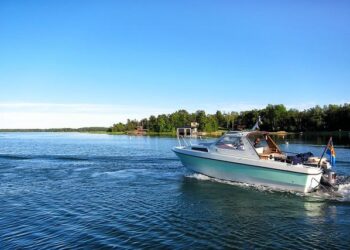
In a startling development that has captured international attention, the question of what might unfold should Russia launch an attack on Finland’s Åland Islands has become a subject of intense analysis. As a demilitarized and autonomous archipelago situated in the Baltic Sea, the Åland Islands hold a unique geopolitical position between Finland and Sweden, making any potential aggression by Moscow a scenario fraught with complex military, diplomatic, and regional security implications. This article examines the strategic significance of the Åland Islands, explores the possible responses from Finland, Sweden, NATO, and the European Union, and assesses the broader consequences for stability in Northern Europe.
Potential Military and Strategic Implications of a Russian Assault on the Åland Islands
A Russian offensive targeting the Åland Islands would introduce a complex set of military and strategic ramifications across the Baltic region. Strategically located at the entrance to the Gulf of Bothnia, Åland’s capture could enable Russia to control vital maritime routes, disrupting Finland’s access to northern ports and threatening Swedish and NATO naval movements. Additionally, the islands’ demilitarized status makes any deployment of troops or weaponry a significant breach of international agreements, potentially escalating regional tensions and prompting swift diplomatic backlash.
Militarily, the assault could compel Finland and its Western partners to reconsider force postures and defense investments in the region. Key implications include:
- Enhanced Russian naval foothold: Control over Åland would provide Russia with forward bases for submarine and missile operations.
- Increased surveillance capability: Deployment of radar and electronic warfare assets could extend Russian monitoring deep into Nordic airspace.
- Disruption of NATO coordination: The geopolitical shock could delay joint defense initiatives and complicate response strategies.
| Aspect | Potential Impact |
|---|---|
| Maritime Access | Restricted for Finland & NATO |
| Military Deployments | Violation of Demilitarization Treaty |
| Regional Stability | Heightened Tensions & Arms Buildup |
How Finland and NATO Could Respond to Escalation in the Baltic Sea Region
Finland and NATO are poised to leverage a mix of diplomatic agility and military preparedness to counter any potential escalation in the Baltic Sea region. In response to a hypothetical attack on the strategically vital Åland Islands, Finland would likely invoke its enhanced partnership with NATO, enabling rapid deployment of joint defense forces. This response could include increased surveillance, bolstered naval presence, and the pre-positioning of critical assets on the mainland. Importantly, Finland’s non-aligned status emphasizes defensive deterrence rather than offensive action, aiming to signal resolve while avoiding uncontrollable escalation.
NATO’s likely measures include:
- Activation of Article 4 consultations to discuss threats with member states
- Deployment of Baltic Air Policing missions with enhanced fighter patrols
- Joint naval exercises focusing on securing maritime routes and protecting critical sea lines of communication
- Strengthened cyber-defense operations to counter hybrid and information warfare
| Response Dimension | Finland’s Role | NATO’s Role |
|---|---|---|
| Military Readiness | Mobilization of defense forces, coastal batteries | Force deployment, air policing enhancement |
| Diplomatic Coordination | Engagement in Nordic security dialogues | Coordinate allied political support and sanctions |
| Cybersecurity | National cyber defense strengthening | Alliance-wide cyber incident response |
Recommendations for Strengthening Åland’s Defense and Preserving Regional Stability
To ensure the security of Åland and maintain stability in the Baltic Sea region, a multi-faceted approach is essential. Enhancing surveillance capabilities through advanced radar systems and increased aerial reconnaissance will provide early warning against potential incursions. Local defense forces should be equipped with modern, rapid-response units specialized in island defense, supported by regular joint exercises with Finnish and Nordic allies to improve interoperability. Strengthening cyber defense is equally critical, given the increasing threat of hybrid warfare targeting communication networks and critical infrastructure.
Diplomatic efforts should also complement military preparedness. Establishing a clear communication channel with Russia and reinforcing Åland’s demilitarized status while ensuring transparent international monitoring can help reduce misunderstandings and de-escalate tensions. The following table highlights key strategic priorities for Åland’s defense posture:
| Priority Area | Action | Expected Outcome | |||||||||||
|---|---|---|---|---|---|---|---|---|---|---|---|---|---|
| Surveillance | Deploy radar & drones | Early threat detection | |||||||||||
| Rapid Response | Specialized island defense units | Increased defensive agility | |||||||||||
| Cybersecurity | Harden critical infrastructure | Prevention of hybrid attacks | |||||||||||
| Diplomacy |
| Priority Area | Action | Expected Outcome |
|---|---|---|
| Surveillance | Deploy radar & drones | Early threat detection |
| Rapid Response | Specialized island defense units | Increased defensive agility |
| Cybersecurity | Harden critical infrastructure | Prevention of hybrid attacks |
| Diplomacy |