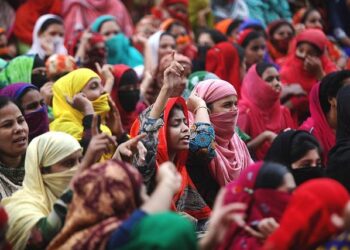
The Czech Republic has reaffirmed its commitment to supporting the reparative mandate of the Trust Fund for Victims (TFV) associated with the International Criminal Court (ICC). This renewed backing highlights Prague’s dedication to advancing justice and providing tangible assistance to victims of crimes under the ICC’s jurisdiction. As global efforts to uphold accountability and promote recovery gain momentum, the Czech Republic’s contribution underscores the critical role of international cooperation in delivering reparations and fostering healing for affected communities worldwide.
Czech Republic Reinforces Commitment to Trust Fund for Victims Reparative Mandate
The Czech Republic has once again demonstrated its unwavering dedication to supporting victims of international crimes by reinforcing its financial contributions to the Trust Fund for Victims (TFV) at the International Criminal Court (ICC). This renewed commitment underscores Prague’s recognition of the critical role the TFV plays in delivering reparative justice, helping victims rebuild their lives through assistance programs ranging from physical rehabilitation to psychological support. By amplifying its resources, the Czech Republic is actively participating in the global effort to ensure that victims are not forgotten in the pursuit of justice.
Key areas where the Czech Republic’s support is expected to make a substantial impact include:
- Expanding access to community-based projects that promote social integration for survivors
- Enhancing trauma counseling initiatives tailored to victim needs
- Supporting sustainable livelihoods programs aimed at economic empowerment
| Year | Contribution Amount (EUR) | Beneficiary Focus |
|---|---|---|
| 2021 | 150,000 | Psychological Counseling |
| 2022 | 200,000 | Community Development |
| 2023 | 250,000 | Vocational Training |
Detailed Analysis of the Fund’s Impact on Victims of International Crimes
Since its inception, the Trust Fund for Victims has played a pivotal role in alleviating the long-term consequences suffered by survivors of international crimes. The fund channels reparations through holistic support programs that focus on both psychological rehabilitation and economic empowerment. By facilitating access to medical care, trauma counselling, and vocational training, these initiatives enable victims to regain autonomy and rebuild their lives with dignity. The Czech Republic’s ongoing contributions have notably expanded the reach of these services, ensuring that vulnerable populations in conflict zones receive timely and culturally sensitive assistance.
Data from recent years illustrate measurable improvements in beneficiaries’ quality of life. The following table highlights key impact metrics across several regions supported by the fund:
| Region | Beneficiaries Supported | Psychological Services (%) | Vocational Training (%) | Reintegration Success Rate (%) |
|---|---|---|---|---|
| Africa | 3,200 | 85 | 70 | 68 |
| Southeast Asia | 1,450 | 78 | 65 | 62 |
| Latin America | 950 | 90 | 55 | 71 |
In addition to direct services, the fund supports community-based initiatives focused on sustainable rehabilitation. These include:
- Support groups fostering peer connections
- Legal assistance for enforcing victims’ rights
- Capacity-building workshops for local NGOs
Such comprehensive strategies reflect a commitment not only to victim recovery but also to strengthening societal resilience in post-conflict environments, affirming the Czech Republic’s role as a vital partner in the international reparative process.
Policy Recommendations to Strengthen Support and Enhance Victim Assistance Programs
To deepen the impact of victim assistance initiatives, it is crucial to prioritize increased funding and resource allocation that directly target the unique needs of survivors. Governments and international partners must collaborate to establish comprehensive training programs for service providers, ensuring trauma-informed care and culturally sensitive approaches are consistently delivered. Additionally, integrating technological tools such as secure digital platforms can enhance accessibility and confidentiality in reporting and support, which remains a critical barrier for many victims.
Expanding partnerships with civil society organizations and local communities is another key step toward sustainable victim support frameworks. Key actions include:
- Developing localized outreach programs to increase awareness and trust among marginalized groups
- Strengthening coordination mechanisms to avoid duplication and maximize resource effectiveness
- Implementing regular monitoring and evaluation protocols to measure program success and inform ongoing improvements
| Recommendation | Expected Outcome |
|---|---|
| Increased multi-year funding | Long-term stability in victim services |
| Enhanced provider training | Improved psychological and legal support |
| Community engagement initiatives | Greater victim accessibility and trust |
In Conclusion
As the Czech Republic reaffirms its commitment to the reparative mandate of the Trust Fund for Victims, it underscores its broader dedication to justice and accountability within the framework of the International Criminal Court. This continued support not only aids survivors of heinous crimes but also strengthens the global pursuit of accountability and healing. Moving forward, the collaboration between the Czech Republic and the ICC signals a steadfast resolve to uphold victims’ rights and promote lasting peace in affected communities worldwide.