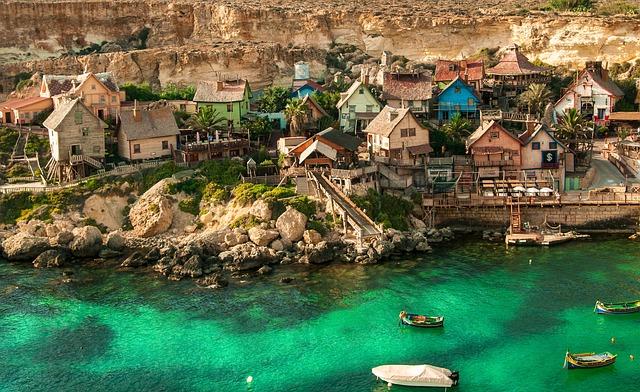
Malta’s rich heritage, a tapestry woven from millennia of history and cultural influences, stands not only as a national treasure but also as a beacon of global significance. As the island nation grapples with the challenges of preservation amid modern development and environmental threats, questions arise about its role in the broader responsibility of safeguarding humanity’s shared legacy. This article explores Malta’s commitment to protecting its historical assets and the imperative to balance heritage conservation with sustainable progress, underscoring the archipelago’s place on the world stage as a custodian of invaluable cultural patrimony.
Malta’s Rich Historical Tapestry and Its Role in Shaping National Identity
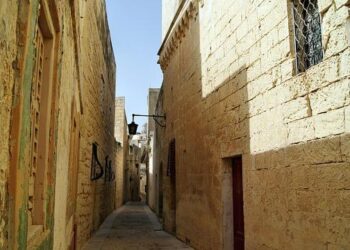
Malta stands as a living chronicle of Mediterranean history, a crossroads where diverse civilizations have left indelible marks. From the Neolithic temples of Ħaġar Qim and Mnajdra to fortifications built by the Knights of St. John, every stone narrates a tale of resilience and adaptation. This layered past has fostered a unique national identity, blending indigenous traditions with influences from Phoenician, Roman, Arab, Norman, and British epochs. The result is a society deeply aware of its heritage, proud to preserve such a multifaceted legacy while embracing its role in the global narrative.
Key elements underpinning this identity include:
- Architectural heritage that illustrates Malta’s strategic maritime importance.
- Language evolution reflective of the island’s diverse rulers and cultural exchanges.
- Religious traditions that unify communities through centuries-old rituals and celebrations.
- Culinary customs that mirror historical connections across the Mediterranean basin.
| Epoch | Influence | Legacy |
|---|---|---|
| Neolithic | Temple-building cultures | World’s oldest free-standing structures |
| Roman | Governance and infrastructure | Roads, villas, and urban layouts |
| Knights of St. John | Military and religious order | Fortifications and Baroque art |
| British | Colonial administration | Legal systems and English language |
The Global Significance of Preserving Malta’s Cultural Heritage Amidst Rapid Modernization
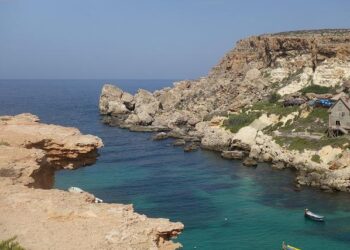
As Malta continues its swift transformation into a vibrant hub for innovation and tourism, the challenge lies in balancing development with the meticulous preservation of its rich cultural tapestry. The island’s heritage-ranging from megalithic temples that predate the pyramids to baroque cathedrals and quaint fishing villages-serves not only as a testament to its unique past but also as a crucial link in the global cultural narrative. Protecting these irreplaceable assets ensures that Malta remains a living museum, fostering a sense of identity and continuity in a rapidly shifting world.
This global responsibility extends beyond national borders, garnering international attention and cooperation. The significance of Malta’s cultural sites is reflected in their UNESCO World Heritage designations and the continuous efforts to mitigate threats posed by urban expansion, climate change, and overtourism. Preserving these sites is essential for maintaining historical scholarship, tourism economy, and community pride. The interdependency between growth and conservation can be outlined as follows:
- Innovation integrated with preservation: Employing modern technology for restoration and virtual accessibility.
- Community engagement: Involving locals in heritage safeguarding to foster stewardship.
- Sustainable tourism: Promoting responsible visitation that does not compromise authenticity.
| Challenge | Impact on Heritage | Mitigation Strategies |
|---|---|---|
| Urban Development | Loss of historical sites and visual integrity | Strict zoning laws, adaptive reuse projects |
| Climate Change | Structural degradation, erosion | Advanced conservation techniques, early warning systems |
| Overtourism | Wear and tear, commercialization | Visitor quotas, cultural awareness campaigns |
Strategies for Sustainable Heritage Management and International Collaboration in Malta
Malta’s approach to preserving its unique cultural and historical assets has increasingly embraced sustainable methodologies that align with global conservation standards. By integrating cutting-edge technology with traditional preservation techniques, local authorities and heritage experts are working to ensure long-term protection against environmental threats and urban development pressures. Key strategies include community engagement programs that foster local stewardship, sustainable tourism policies aimed at reducing wear and tear on fragile sites, and adaptive reuse of historical buildings that balance modern functionality with conservation. Collaboration with universities and research centers further enhances the scientific basis for decision-making, ensuring heritage management is both innovative and sensitive to Malta’s singular identity.
International partnerships have become a cornerstone in Malta’s heritage agenda, recognizing that cultural legacy transcends borders and requires collective responsibility. Malta actively participates in transnational initiatives with UNESCO, the European Union, and Mediterranean heritage networks to share best practices, funding opportunities, and risk management strategies. These alliances enable the pooling of resources and expertise, facilitating emergency response plans for at-risk monuments, as well as joint cultural exchanges that elevate global awareness of Malta’s treasures. Below is a summary of key partnership frameworks supporting Malta’s heritage goals:
| Framework | Focus Area | Key Benefits | |||||||||||||
|---|---|---|---|---|---|---|---|---|---|---|---|---|---|---|---|
| UNESCO World Heritage Collaboration | Site Preservation & Awareness | Global recognition, technical aid, funding | |||||||||||||
| EU Cultural Heritage Programmes | Research & Innovation | Access to grants, cross-border collaboration | |||||||||||||
| Mediterranean Heritage Network |
| Framework | Focus Area | Key Benefits |
|---|---|---|
| UNESCO World Heritage Collaboration | Site Preservation & Awareness | Global recognition, technical aid, funding |
| EU Cultural Heritage Programmes | Research & Innovation | Access to grants, cross-border collaboration |
| Mediterranean Heritage Network | Regional Cooperation & Risk Management | Shared resources, emergency response, cultural exchanges |
| Local University Partnerships | Research & Education | Scientific research, capacity building, community engagement |
If you want, I can assist you with anything else such as CSS styling enhancements, further content development, or making this section responsive and more interactive. Let me know!
The Way Forward
As Malta continues to navigate the challenges of preserving its rich cultural heritage amid rapid modernization, the island nation’s commitment to safeguarding its legacy resonates far beyond its shores. With its unique position at the crossroads of history and geography, Malta embodies not only a national treasure but also a shared global responsibility. The ongoing efforts to protect and promote its historical sites reflect a broader imperative: to ensure that future generations worldwide can appreciate the enduring stories embedded in Malta’s stones. As echoed in the latest initiatives highlighted by the Times of Malta, this delicate balance between preservation and progress remains a critical chapter in both Malta’s future and the wider narrative of cultural heritage conservation.