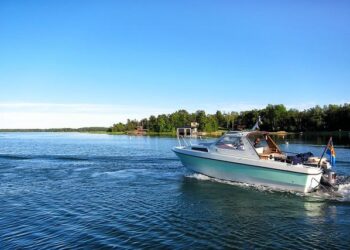
Teams from across the globe are set to converge on the Åland Islands this summer for the highly anticipated 2024 ORC European Championship. As one of the premier events in competitive sailing, the championship promises intense competition and showcases some of the best offshore racing talent on the water. Sailors and support crews alike are preparing to navigate the challenging Baltic Sea conditions, aiming to claim the coveted European title in this prestigious regatta hosted by the unique archipelago between Finland and Sweden.
Teams Prepare for Intense Competition in the Unique Waters of the Åland Islands
As anticipation builds ahead of the 2024 ORC European Championship, teams arriving at the Åland Islands are gearing up to face the distinctive challenges posed by these Baltic waters. Known for their variable winds and complex currents, the archipelago offers a testing ground where strategic navigation and adaptability will determine the frontrunners. Many crews have highlighted the need to study local meteorological patterns closely, emphasizing that success will depend not only on boat speed but also on tactical decision-making.
Key factors teams are preparing for include:
- Rapid shifts in wind direction caused by the archipelago’s topography
- Strong tidal currents that require precise timing when plotting courses
- The potential for sudden weather changes demanding quick adaptation
| Challenge | Impact | Team Strategy |
|---|---|---|
| Variable Winds | Unpredictable sail trim | Enhanced weather monitoring |
| Complex Currents | Course adjustments | Advanced navigation systems |
| Sudden Weather Spikes | Rapid tactical shifts | Flexible crew roles |
Strategies and Vessel Innovations Poised to Define the 2024 ORC European Championship
As the 2024 ORC European Championship approaches, teams are unveiling cutting-edge strategies that promise to rewrite the rules of competitive offshore racing. Skippers are emphasizing adaptive sail trim combined with advanced weather routing technologies, enabling crews to extract maximum speed across the complex and variable Baltic Sea conditions surrounding the Åland Islands. Optimizing crew roles has also become a focal point, with seamless communication and real-time data analysis transforming how tactical decisions are made during critical moments on the racecourse.
In parallel, vessel innovations are pushing the boundaries of design and performance. Carbon fiber composites and hydrofoil elements are increasingly integrated into ORC-class yachts, delivering significant gains in stability and hydrodynamics without compromising rating efficiency. Below is an overview of some standout design innovations expected to influence the championship outcomes:
| Innovation | Benefit | Impact |
|---|---|---|
| Hybrid Hydrofoils | Reduced Drag & Increased Lift | Higher top speeds on downwind legs |
| Dynamic Ballast Systems | Optimized Weight Distribution | Better upwind pointing angles |
| Next-Gen Sail Fabrics | Enhanced Durability & Shape Retention | Consistency across varying wind strengths |
- Integrated weather forecasting apps providing granular insights for tactical shifts.
- Real-time telemetry allowing onshore performance analysis and adjustments.
- Weight-saving cockpit ergonomics to improve crew efficiency during maneuvers.
Expert Recommendations for Navigating Weather and Sea Conditions in the Baltic Region
Competitors at the 2024 ORC European Championship in the Åland Islands face unique challenges posed by rapidly changing weather patterns and complex sea currents endemic to the Baltic region. Experts advise crews to prioritize local meteorological briefings and integrate real-time data into their navigational strategies. The interaction between cold air masses and warm sea currents often leads to sudden fog banks and gusty conditions, demanding agile sail adjustments and precise timing when maneuvering. Understanding the influences of the Gulf of Bothnia’s friction layers on wind shifts can be a decisive factor during coastal legs of the race.
Seasoned sailors recommend a thorough pre-race familiarization cruise to mentally map tide-driven eddies and the frequent Baltic archipelago microclimates. Key tactical considerations include:
- Monitoring local sea surface temperatures for predicting thermals that influence wind strength.
- Utilizing GPS drift analysis to anticipate subtle current directions between the islands.
- Implementing layered clothing solutions to accommodate swift temperature fluctuations during day and night shifts.
| Weather Condition | Effect on Sailing | Recommended Response |
|---|---|---|
| Sudden Fog | Reduced visibility | Activate radar & maintain reduced speed |
| Variable Gusts | Instability in sail trim |