Spain’s renowned jamón ibérico de bellota has long been celebrated as one of the world’s finest cured hams, prized for its distinctive flavor and artisanal production. In a recent feature, National Geographic delves into the rich history and meticulous craftsmanship behind this culinary treasure, revealing how centuries-old traditions and the unique diet of acorn-fed Iberian pigs contribute to its unparalleled quality. This article explores the cultural significance, sustainable farming practices, and the passionate communities dedicated to preserving the legacy of jamón ibérico de bellota.
Origins and Tradition of Jamón Ibérico de Bellota in Spain’s Culinary Heritage
Deeply embedded in Spain’s rich culinary landscape is a centuries-old practice that traces back to the Iberian Peninsula’s pastoral traditions. The origins of Jamón Ibérico de Bellota date to Roman times, where early methods of dry-curing pork were perfected in the dehesa, the sprawling oak forests of southwestern Spain. Here, free-range Iberian pigs roam freely, feasting on acorns (“bellotas”), which lend the ham its unique, nutty flavor and marbled texture. This heritage craft reflects a delicate balance of nature and human expertise refined through generations of farmers and artisans, preserving an ancient way of life against a rapidly modernizing world.
The tradition goes beyond just food; it is a cultural symbol guarded by stringent regulations and guilds that uphold quality and authenticity. Each phase of production is regulated, from breeding and acorn grazing seasons to curing times that span up to 48 months. The process emphasizes patience, sustainability, and respect for the environment – values deeply held in Spanish rural communities. Below is an overview of the traditional curing timeline, illustrating how time and nature converge to create this national treasure:
| Stage | Duration | Key Process |
|---|---|---|
| Salting | 1-2 weeks | Preserves and seasons fresh ham |
| Resting | 6-8 weeks | Salt absorption and moisture redistribution |
| Dry Curing | 12-36 months | Slow dehydration in mountain cellars |
| Maturation | 12-24 months | Final flavor development and texture refinement |
- Free-range acorn grazing shapes the flavor profile.
- Genetics of Iberian pigs produce distinctive fat marbling.
- Traditional curing facilities provide natural air circulation.
- Seasonal climate essential for optimal drying and maturation.
The Unique Diet and Raising Practices That Define Bellota Quality
The hallmark of jamón ibérico de bellota lies deep within the meticulous diet and rearing methods. These prized hams are born from Iberian pigs raised primarily in the dehesa, an expansive pastureland famous for its rich biodiversity in southwestern Spain. Throughout the late autumn and winter months, the pigs enter a phase known as the “montanera,” during which they roam freely, feasting on a diet consisting predominantly of acorns (bellotas), grasses, herbs, and roots. This natural regimen not only infuses the meat with a distinctly nutty flavor but also promotes a unique distribution of healthy fats, resulting in the ham’s signature marbled texture and melt-in-the-mouth quality.
Raising these animals demands patience and strict adherence to traditional protocols that prioritize animal welfare and product authenticity. Farmers continuously monitor the pigs’ wellbeing to ensure balanced growth and prevent stress, which can compromise meat quality. The pigs’ free-range lifestyle, combined with their slow growth cycle of up to 22 months, is key to developing the complex aroma and flavor profile that sets bellota jamón apart from other cured hams.
| Key Factor | Impact on Quality |
|---|---|
| Acorn-Rich Diet | Enhances fat absorption and flavor complexity |
| Free-Range Rearing | Improves muscle tone and natural fat distribution |
| Montanera Period | Ensures optimal meat maturity and texture |
| Extended Growth Cycle | Develops deep aromatic profile and marbling |
How to Savor and Select Authentic Jamón Ibérico de Bellota for the Ultimate Experience
To truly appreciate jamón ibérico de bellota, one must begin by understanding its unique characteristics. The secret lies in the diet of the black Iberian pigs, which are free-range and feeds primarily on acorns during the montanera season. This diet infuses the ham with a delicate nutty flavor and a rich marbled texture that sets it apart from other cured hams. When selecting your jamón, look for the official Denomination of Origin (DO) label and the black hoof brand, which guarantee authenticity and quality. The aroma should be earthy yet sweet, hinting at months – sometimes years – of meticulous curing in the cool cellars of southwestern Spain.
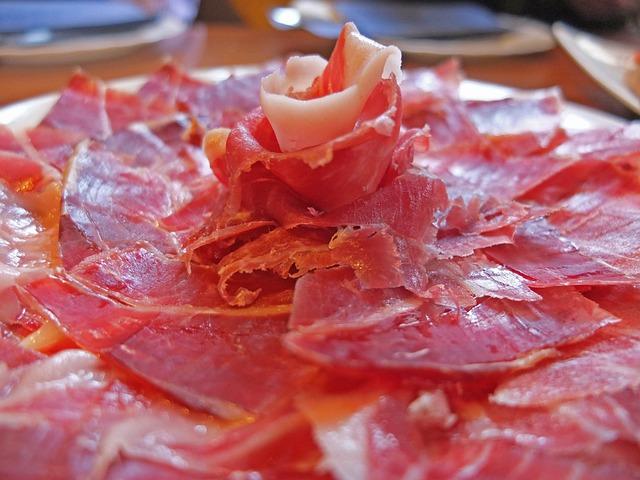
Once you have your prized leg of jamón, proper serving enhances the experience. Slice thinly, almost translucent, using a sharp, flexible ham knife to accentuate the melt-in-your-mouth sensation. Let the slices rest at room temperature so their intricate flavors fully open up. Here’s a quick guide to ideal serving conditions:
| Aspect | Recommendation |
|---|---|
| Serving Temperature | 18-22°C (64-72°F) |
| Slice Thickness | Ultra-thin, almost translucent |
| Pairings | Dry sherry, Rioja red wine, Manchego cheese |
| Presentation | On wooden platter, loosely folded slices |
Remember, the essence of jamón ibérico de bellota lies in its subtlety and complexity. Every bite reveals layers of history, tradition, and nature – a true masterpiece of Spanish gastronomy.
Future Outlook
As Spain’s jamón ibérico de bellota continues to captivate gourmands worldwide, its rich heritage and meticulous production methods remain a testament to centuries of tradition and craftsmanship. From the oak-studded dehesas where acorn-fed pigs roam freely to the hands that carefully cure each leg, this prized delicacy embodies both cultural pride and culinary excellence. National Geographic’s in-depth exploration offers not only a glimpse into the origins of jamón ibérico de bellota but also a deeper appreciation for the artisans dedicated to preserving this iconic Spanish treasure.