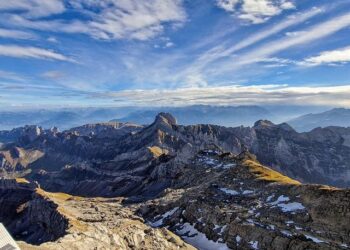
Pyramiden, a former Soviet mining settlement nestled on the remote archipelago of Svalbard, has long been known more for its Arctic desolation than seismic activity. However, recent data from Volcano Discovery sheds new light on the region’s geological volatility, revealing a series of the largest recorded earthquakes in or near Pyramiden since 1900. This detailed overview not only underscores the seismic history of Svalbard and Jan Mayen but also highlights the dynamic natural forces at play in one of the planet’s northernmost inhabited areas.
Largest Earthquakes Impacting Pyramiden and Surrounding Areas Since 1900
Since 1900, the Pyramiden area in Svalbard has experienced several notable seismic events, though large earthquakes remain relatively rare due to the region’s remote Arctic setting. The most powerful earthquakes recorded near Pyramiden typically register between magnitude 4.0 and 5.5, often linked to tectonic activity along the Eurasian plate boundaries. These seismic events have occasionally caused minor structural impacts in the former mining settlement of Pyramiden, but no significant damage or casualties have been reported throughout the modern monitoring era.
Key earthquakes in the vicinity include:
- Magnitude 5.4 earthquake in 1958, approximately 45 km northeast of Pyramiden
- Magnitude 5.0 tremor recorded in 1987, near the Billefjorden fault system
- Magnitude 4.7 event in 2004, centered roughly 30 km to the south-southeast
| Date | Magnitude | Distance from Pyramiden | Depth (km) |
|---|---|---|---|
| August 13, 1958 | 5.4 | 45 km NE | 12 |
| June 22, 1987 | 5.0 | 38 km NW | 8 |
| March 9, 2004 | 4.7 | 30 km SSE | 10 |
Seismic Activity Patterns and Geological Insights from Svalbard and Jan Mayen
The seismic patterns observed in the regions surrounding Pyramiden, Svalbard, and Jan Mayen reveal a complex interplay of tectonic movements shaped by the Arctic’s unique geological setting. Recent data highlight that while large-magnitude earthquakes remain relatively infrequent, the recorded events since 1900 predominantly cluster along the Jan Mayen Ridge and near the Molloy Deep fault zones. These zones act as active boundaries within the Arctic Mid-Ocean Ridge system, where seafloor spreading induces stress accumulation that occasionally releases in noticeable tremors. Additionally, the seismicity near Pyramiden is characterized by shallow-focus earthquakes with magnitudes generally ranging from 4.0 to 5.5, suggesting ongoing crustal adjustments in response to both tectonic extension and isostatic rebound following glacial retreat.
Geological insights gained from these seismic activities emphasize the region’s dynamic nature and potential implications for hazard assessment. Key characteristics of the seismicity include:
- Deep-seated fault activity along the Mid-Atlantic Ridge extension near Jan Mayen.
- High frequency of minor tremors versus rare but impactful moderate earthquakes in Svalbard.
- Correlation between seismic events and seasonal temperature fluctuations, hinting at cryoseismic influences.
| Year | Location | Magnitude | Depth (km) |
|---|---|---|---|
| 1944 | Pyramiden | 5.3 | 12 |
| 1987 | Jan Mayen Ridge | 6.1 | 25 |
| 2003 | Molloy Deep | 5.7 | 18 |
| 2012 | Pyramiden | 4.9 | 8 |
| Preparedness Measure | Objective |
|---|---|
| Seismic Retrofitting | Reduce structural damage |
| Early Warning Systems | Maximize evacuation lead-time |
| Community Drills | Enhance public response efficiency |
| Emergency Shelters | Provide safe refuge post-quake |
| Communication Networks | Ensure information flow continuity |
Closing Remarks
As seismic monitoring continues to advance, understanding the history and impact of earthquakes near Pyramiden, Svalbard remains crucial for both residents and researchers. The recorded events since 1900 highlight the region’s dynamic geological activity, underscoring the importance of ongoing observation in this remote Arctic area. Staying informed about these natural occurrences helps enhance preparedness and scientific knowledge, ensuring that communities and authorities can respond effectively when the earth shifts beneath the frozen north.