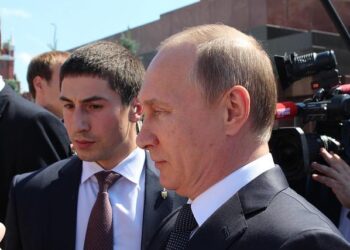
Russian Foreign Minister Sergey Lavrov has accused the United States of abandoning established international conventions and prioritizing its own national interests, Reuters reports. In a statement reflecting growing global tensions, Lavrov criticized Washington’s approach to international law and diplomacy, alleging that American policies undermine multilateral agreements and challenge the rules-based international order. This development comes amid ongoing disputes over geopolitical issues and highlights the deepening rift between Russia and the West.
Russia’s Lavrov Accuses US of Undermining Global Agreements
Russian Foreign Minister Sergey Lavrov has openly criticized the United States for what he describes as a systematic disregard for established international agreements. Speaking at a recent diplomatic forum, Lavrov accused Washington of abandoning key global treaties and conventions, asserting that the US often prioritizes unilateral interests over multilateral cooperation. According to Lavrov, this approach not only destabilizes international relations but also weakens the very foundations of global governance that have been built over decades.
Lavrov highlighted several areas where the US has allegedly undermined collaborative efforts, including:
- Withdrawal from major arms control agreements
- Ignoring commitments under climate accords
- Imposing unilateral sanctions without UN backing
| Agreement | US Status | Lavrov’s Remarks |
|---|---|---|
| INF Treaty | Withdrawn | “Eroded trust in arms control” |
| Paris Climate Accord | Rejoined after withdrawal | “Inconsistent commitment” |
| JCPOA (Iran Nuclear Deal) | Withdrew | “Undermines diplomatic solutions” |
Implications of Disregarding International Conventions on Global Stability
The erosion of commitment to established international conventions by major powers threatens to undermine the delicate framework that sustains global stability. When countries prioritize unilateral interests over multilateral agreements, it leads to increased geopolitical tensions and a breakdown in mutual trust among nations. This reluctance to adhere to shared norms complicates diplomatic efforts, fuels regional conflicts, and creates an unpredictable international environment where power dynamics often overshadow legal and ethical considerations.
Consequences that may arise include:
- Rise of competing legal interpretations weakening global governance
- Escalation of proxy conflicts due to unchecked strategic ambitions
- Diminished effectiveness of international institutions in conflict resolution
- Reduced cooperation on transnational challenges such as climate change and security
| Aspect | Potential Impact | Global Response |
|---|---|---|
| Diplomatic Relations | Increased mistrust between states | Heightened sanctions and isolation |
| Security | Proliferation of arms races | Expanded military alliances |
| Economic Stability | Disrupted trade agreements | Formation of alternative blocs |
| International Law | Selective compliance | Calls for reform and enforcement |
Experts Recommend Strengthening Multilateral Frameworks to Counter Unilateral Actions
In response to escalating unilateral actions perceived by global powers, experts emphasize the urgent need to fortify existing multilateral frameworks. They argue that only through collective adherence to established international conventions can the sovereignty of nations and global stability be safeguarded. This includes not only reinforcing institutions like the United Nations and the World Trade Organization but also ensuring transparency and accountability among member states.
Key recommendations include:
- Enhancing dispute resolution mechanisms to deter unilateral breaches
- Promoting inclusive dialogue that incorporates emerging powers
- Establishing clearer enforcement protocols with defined consequences
| Framework | Current Challenges | Proposed Actions |
|---|---|---|
| United Nations | Veto power impeding consensus | Reform Security Council processes |
| WTO | Trade disputes unresolved timely | Strengthen arbitration bodies |
| International Law | Selective adherence by powerful nations | Introduce binding accountability measures |
| Framework | Current Challenges | Proposed Actions |
|---|---|---|
| United Nations | Veto power impeding consensus | Reform Security Council processes |
| WTO | Trade disputes unresolved timely | Strengthen arbitration bodies |
| International Law | Insights and Conclusions
As tensions between Russia and the United States continue to unfold on the global stage, Foreign Minister Sergey Lavrov’s remarks underscore the deepening rift over the interpretation and adherence to international norms. With Moscow accusing Washington of sidelining established conventions in favor of unilateral agendas, the evolving discourse highlights the challenges facing the current international order. Observers will be closely watching how this rhetoric influences diplomatic relations and the broader geopolitical landscape in the coming months. ADVERTISEMENT  Related Posts |