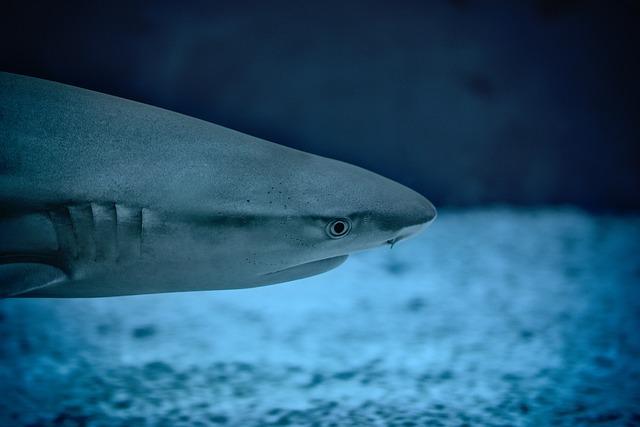
A recent stranding along the coast of Ireland has provided researchers with an extraordinary opportunity to study one of the ocean’s most elusive inhabitants: the deep-sea Greenland shark. Often shrouded in mystery due to its inaccessible habitat and slow-moving nature, this ancient species is now revealing surprising insights into its long, slow, and ice-cold existence. Scientists involved in the discovery described the event as a moment of awe, shedding new light on the biology and longevity of a shark that thrives in some of the coldest waters on the planet.
Deep-Sea Discovery off Ireland Reveals Surprising Behavior of Rare Shark
Scientists examining a rare deep-sea shark that recently stranded on the Irish coast have uncovered astonishing details about its unique lifestyle and adaptability. Contrary to previous beliefs that these elusive creatures are sluggish and inactive, researchers observed unexpected bursts of movement and interactive behavior. The discovery challenges long-held assumptions about deep-sea species, revealing a surprisingly dynamic existence in the frigid, dark waters thousands of meters below the surface. Using advanced underwater cameras and tagging technology, the team documented behaviors such as ‘social interaction signals’ and hunting methods tailored to the extreme environment.
Key findings from the study highlight several remarkable traits:
- Slow metabolism yet periodic bursts of activity: The shark conserves energy but can mobilize quickly when hunting.
- Adaptation to sub-zero temperatures: Unique cellular structures help maintain functionality in near-freezing waters.
- Unexpected social behavior: Occasional aggregation suggests communication previously unseen in this species.
| Trait | Description | Implication |
|---|---|---|
| Movement Speed | Slow most of the time, bursts up to 3 km/h | Efficient energy use and hunting |
| Water Temperature | −1 to 2 °C | Specialized proteins prevent cellular damage |
| Sociality | Observed in small groups | Potential communication for mating or feeding |
Ice-Cold Habitat Challenges Understanding of Deep Ocean Life
Deep beneath the ocean’s surface, where temperatures hover near freezing and sunlight is but a distant memory, scientists have uncovered remarkable insights into a rarely seen deep-sea shark species. The unexpected stranding of this elusive creature off the coast of Ireland has challenged existing perceptions about how marine life survives and thrives in these inhospitable environments. Researchers observed physiological adaptations pointing to an extraordinarily slow metabolism, allowing the shark to conserve energy over extended periods in the oxygen-poor, glacial waters it inhabits.
Among the key discoveries were several traits that underscore the shark’s unique existence:
- Extremely low growth rates: The species appears to grow only a few centimeters per year, suggesting lifespans that may span several decades.
- Specialized blood composition: Adapted to capture oxygen efficiently at frigid temperatures, enabling survival in oxygen-sparse habitats.
- Slow reproductive cycles: Indicating that population recovery from environmental pressures could be particularly prolonged, raising new conservation concerns.
| Feature | Observed Adaptation | Significance |
|---|---|---|
| Growth Rate | ~2 cm/year | Indicates life expectancy of ~70 years |
| Blood Hemoglobin | High affinity for O₂ | Efficient oxygen uptake in cold water |
| Reproduction | Low frequency | Vulnerable to population decline |
Conservation Efforts Urged to Protect Vulnerable Deep-Sea Species
Marine biologists emphasize the urgent need to intensify protection measures for deep-sea species, particularly those exhibiting low reproductive rates and specialized life cycles. The rare stranding event off the Irish coast has illuminated how vulnerable these creatures are to human activities such as deep-sea fishing, pollution, and habitat disruption. Experts argue that current conservation frameworks fail to address the unique challenges faced by deep-sea fauna, many of which remain poorly understood or undocumented.
Key conservation priorities highlighted by researchers include:
- Establishing marine protected areas (MPAs) that encompass critical deep-sea habitats
- Implementing stricter regulations on deep-sea fishing practices
- Enhancing monitoring and reporting mechanisms for rare species observations
- Increasing funding and resources for deep-ocean scientific research
| Threat | Impact on Deep-Sea Sharks | Conservation Response | |||||||
|---|---|---|---|---|---|---|---|---|---|
| Deep-sea trawling | Habitat destruction and bycatch mortality | Ban on fishing in sensitive zones | |||||||
| Pollution | Bioaccumulation of toxins affecting reproduction | Stricter waste disposal regulations | |||||||
|
Marine biologists emphasize the urgent need to intensify protection measures for deep-sea species, particularly those exhibiting low reproductive rates and specialized life cycles. The rare stranding event off the Irish coast has illuminated how vulnerable these creatures are to human activities such as deep-sea fishing, pollution, and habitat disruption. Experts argue that current conservation frameworks fail to address the unique challenges faced by deep-sea fauna, many of which remain poorly understood or undocumented. Key conservation priorities highlighted by researchers include:
|