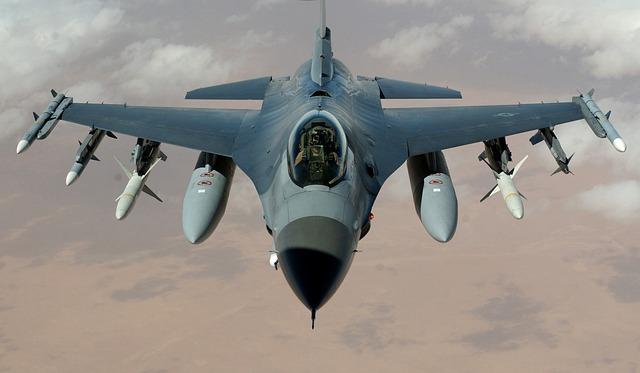
NATO fighter jets intercepted and shot down an unidentified drone over Latvian airspace, marking a significant incident amid rising security tensions in the region. The operation underscores the alliance’s vigilance in protecting its member states’ sovereignty against aerial incursions. Details of the drone’s origin and mission remain under investigation as Baltic nations continue to bolster their air defenses in response to increased surveillance activities.
NATO Intercepts Unidentified Drone Over Latvian Airspace Raising Security Concerns
NATO fighter jets engaged and successfully shot down an unauthorized drone detected in Latvian airspace, marking a significant escalation in regional security dynamics. The unidentified aerial vehicle was tracked approaching the border without any communication or prior clearance, prompting immediate defensive measures. Authorities emphasize that the drone posed a potential threat to national sovereignty and critical infrastructure, highlighting increasing vulnerabilities amid heightened geopolitical tensions in the Baltic region.
This incident has prompted NATO to reinforce its surveillance protocols and air defense readiness across member states. Key concerns revolve around the potential for similar incursions, the origin of these unmanned systems, and the implications for collective security. Experts stress the importance of the following measures:
- Enhanced radar and early warning systems to detect low-flying drones.
- Improved intelligence sharing among NATO allies to swiftly identify threats.
- Development of counter-drone technologies tailored to intercept unmanned aerial vehicles.
| Aspect | Details |
|---|---|
| Interception Method | Air-to-air missile launched by NATO jet |
| Time of Incident | Early morning hours |
| Drone Type | Unidentified, suspected reconnaissance model |
| Response Time | Under 10 minutes from detection to interception |
Analyzing the Incident Implications for Baltic Regional Defense Strategies
The recent downing of a drone over Latvian airspace underscores an urgent need for heightened vigilance and reassessment of defense postures within the Baltic region. NATO’s swift response signals a clear message regarding territorial sovereignty, yet it simultaneously exposes vulnerabilities in early-warning systems that could be exploited by adversarial forces. This incident is likely to accelerate investments in advanced radar and intercept technologies, while pushing Baltic states toward deeper integration of their air defense capabilities.
With tensions escalating, several strategic implications emerge for regional security frameworks, including:
- Enhanced Joint Patrols: Expanded aerial and maritime patrols to ensure continuous surveillance and rapid threat identification.
- Strengthened Intelligence Sharing: More robust, real-time data exchange between NATO members and Baltic states.
- Upgraded Command Networks: Modernized communication hubs to coordinate multi-domain defense responses effectively.
| Aspect | Current Status | Projected Action |
|---|---|---|
| Surveillance Coverage | Partial Gaps | Full Airspace Integration |
| Rapid Response Units | Limited Deployment | Expanded Readiness |
| Cyber Defense | Basic Coordination | Enhanced Collaboration |
Recommendations for Strengthening Air Surveillance and Cross-Border Intelligence Sharing
Enhancing air surveillance capabilities remains paramount amid rising aerial threats. Investing in next-generation radar technologies and integrating artificial intelligence for real-time threat detection can substantially improve response times. Collaborative training exercises between member states will ensure rapid identification and neutralization of unauthorized drones or aircraft. Moreover, expanding the network of early-warning radar stations along the eastern flank can create an impenetrable surveillance shield, reducing blind spots and boosting situational awareness.
Cross-border intelligence sharing must transcend bureaucratic hurdles to facilitate swift, actionable insights. Establishing secure, interoperable communication platforms between NATO countries and regional allies will foster seamless data exchange. Regular joint intelligence briefings, coupled with standardized reporting protocols, can enhance collective threat perception. Below is a proposed framework for improving intelligence sharing efficiency:
| Area | Current Status | Recommended Action |
|---|---|---|
| Data Sharing Speed | Moderate | Implement real-time encrypted channels |
| Interoperability | Fragmented | Adopt NATO-wide communication standards |
| Joint Briefings | Infrequent | Schedule bi-weekly cross-border intelligence sessions |
Wrapping Up
The incident marks a significant escalation in NATO’s vigilance over its eastern borders amid ongoing regional tensions. As investigations continue, NATO officials have reiterated their commitment to safeguarding member states’ airspace and maintaining regional stability. Further updates are expected as more information becomes available.