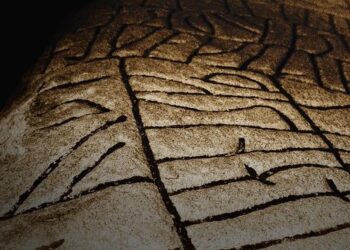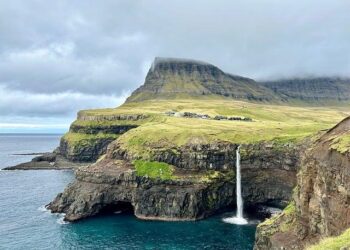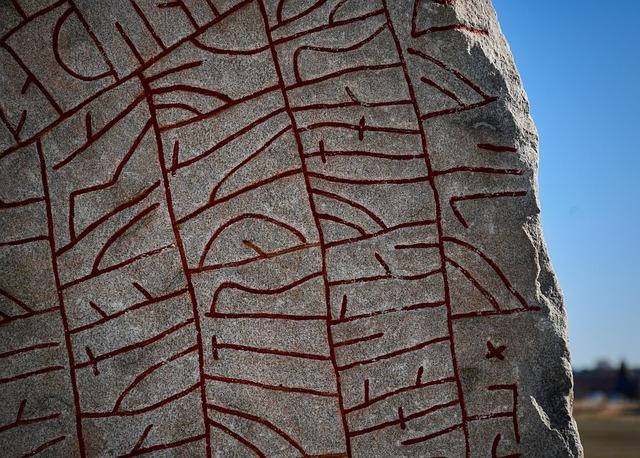
Archaeologists have uncovered a rare and enigmatic runestone at a remote ancient site in the Faroe Islands, shedding new light on the region’s Viking-era history. The discovery, announced this week, has sparked excitement among experts who believe the artifact could offer valuable insights into early Norse culture and its presence in the North Atlantic. As investigations continue, researchers hope the runestone’s mysterious inscriptions will unlock stories long buried beneath the rugged landscape of the archipelago.
Discovery of a Rare Runestone Sheds New Light on Faroe Islands History
Excavated from a previously unexplored mound on the island of Sandoy, the runestone has instantly captivated the archaeological community due to its intricate carvings and surprisingly well-preserved inscriptions. Preliminary analysis suggests the stone dates back to the 9th century, a period crucial to understanding Viking migration and settlement patterns in the North Atlantic. What makes this find extraordinary is the combination of Norse runes intertwined with symbols believed to be native to the Faroese archipelago, hinting at a previously unknown cultural exchange. Scholars are particularly intrigued by the presence of what appears to be a maritime motif, potentially revealing new insights into the seafaring expertise of early Faroese inhabitants.
Beyond its historical significance, the runestone provides a trove of information about language evolution and early Faroese societal structure. Experts have identified several key features in the inscription that could redefine timelines related to Faroese literacy and communication methods. Key highlights from the artifact include:
- Runic characters: Classic Elder Futhark mixed with younger Younger Futhark variants
- Symbolic motifs: Depictions of ships, animals, and celestial bodies
- Material composition: Locally sourced basalt, indicative of resource utilization
- Potential language blend: Norse dialect with unknown Faroese elements
| Feature | Estimated Origin | Significance |
|---|---|---|
| Runic Inscription Style | 9th Century | Links Viking and Faroese cultures |
| Material | Basalt (Local) | Shows use of indigenous resources |
| Maritime Symbols | Unknown | Suggests advanced seafaring traditions |
Decoding the Inscriptions Provides Clues to Viking Era Connections
The recently discovered runestone bears inscriptions that have captivated experts for their intricate craftsmanship and cryptic messages. Through meticulous analysis, researchers have identified a series of symbols and words that suggest a network of connections between Faroe Islands Vikings and their contemporaries across the North Atlantic. These markings provide tangible evidence of communication routes, trade partnerships, and even familial ties that extended beyond the islands. What makes this runestone particularly rare is the inclusion of references to both Norse mythology and previously undocumented local place names, hinting at a blend of cultural influences that shaped Viking society here.
Key insights revealed from the runic inscriptions include:
- Mentions of voyages reaching Iceland and possibly Greenland
- Symbolic references to ancient Norse deities, suggesting religious significance
- Names of individuals believed to be local chieftains or seafarers
- Encoded clues pointing to seasonal gatherings and trade exchanges
| Runic Symbol | Probable Meaning | Historical Context |
|---|---|---|
| ᚠ (Fehu) | Wealth, Prosperity | Indicates trade and economic activity |
| ᛗ (Mannaz) | Man, Humanity | Possibly a personal name or lineage marker |
| ᛟ (Othala) | Heritage, Ancestral Land | Signifies land ownership and kinship ties |
Experts Recommend Enhanced Preservation Measures and Further Archaeological Exploration
The discovery has prompted specialists to stress the importance of safeguarding the site against both natural erosion and human interference. Conservationists recommend implementing advanced preservation techniques, such as climate-controlled shelters and digital 3D mapping, to protect the runestone’s intricate carvings from further weathering. Moreover, they emphasize the need for continuous monitoring by local authorities, ensuring that future visitors adhere to strict guidelines designed to minimize physical contact and potential damage.
In addition to preservation efforts, archaeologists advocate for expanded excavation campaigns to unlock more secrets hidden beneath the surface. Preliminary surveys suggest the runestone might be part of a larger complex, potentially offering fresh insights into ancient Faroese cultural and ritualistic practices. The proposed approach includes:
- Geophysical surveys utilizing ground-penetrating radar to detect subsurface anomalies.
- Targeted digs focusing on surrounding stone alignments and artifact deposits.
- Collaborative research involving international experts to broaden interpretative frameworks.
| Preservation Measure | Purpose | Timeline |
|---|---|---|
| Climate-Controlled Shelter | Protect carvings from weather | 6-12 months |
| 3D Digital Mapping | Create detailed records | Ongoing |
| Regular Site Monitoring | Prevent vandalism | Continuous |
Insights and Conclusions
As investigations continue, this rare and enigmatic runestone promises to shed new light on the Faroe Islands’ ancient history and the broader Viking world. Archaeologists and historians alike eagerly await further analysis, hopeful that the stone’s inscriptions will unlock forgotten chapters of the North Atlantic’s past. For now, the discovery stands as a compelling testament to the region’s rich cultural heritage and enduring mysteries. The Debrief will keep you updated as new findings emerge.