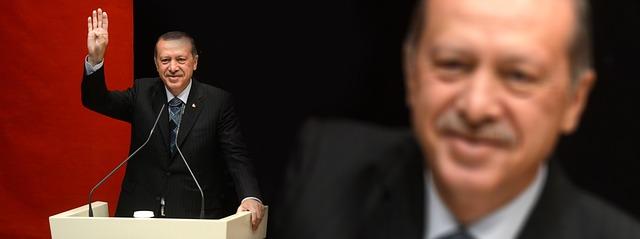
Turkish President Recep Tayyip Erdoğan has signaled the possibility of Egypt joining a burgeoning regional defence alliance comprising Turkiye, Saudi Arabia, and Pakistan. Speaking to reporters, Erdoğan highlighted ongoing discussions aimed at expanding the pact, which seeks to enhance military cooperation and strategic coordination among member states. The move underscores shifting dynamics in Middle Eastern and South Asian security frameworks, reflecting Ankara’s efforts to foster broader regional partnerships amid evolving geopolitical challenges.
Erdogan Signals Potential Expansion of Middle East Defence Alliance with Egypt
In a recent development that could reshape regional security dynamics, Turkish President Recep Tayyip Erdoğan hinted at the possibility of Egypt joining a burgeoning defence alliance currently involving Turkiye, Saudi Arabia, and Pakistan. This prospective expansion underscores Ankara’s strategic intent to foster closer military cooperation in the Middle East amidst rising geopolitical tensions. Erdoğan emphasized that Egypt’s inclusion would not only bolster collective defence capabilities but also enhance stability across the region by promoting shared security objectives.
Analysts suggest that integrating Egypt into this pact could create a powerful bloc with a diverse range of military assets and geopolitical leverage. The alliance’s foundation rests on joint intelligence-sharing, coordinated military exercises, and unified responses to external threats. Below is a summary of key members and their primary contributions to the alliance:
| Country | Strategic Strength | Key Contribution |
|---|---|---|
| Turkiye | Geographical Positioning | Command & Coordination |
| Saudi Arabia | Economic Resources | Military Funding |
| Pakistan | Experienced Armed Forces | Training & Logistics |
| Egypt (Potential) | Regional Influence | Intelligence & Surveillance |
- Enhanced military coordination to address threats from extremist groups and external interference.
- Shared intelligence platforms aiming for quicker risk assessment and response.
- Joint naval patrols ensuring security in key maritime corridors.
Strategic Implications for Regional Security and Geopolitical Balance
The potential inclusion of Egypt in the evolving Turkiye-Saudi-Pakistan defence pact signals a significant recalibration of alliances within the Middle East and South Asia. This prospective expansion could alter the strategic calculus, fostering a new bloc that challenges existing power structures and promotes a collective approach to regional threats. As these nations deepen military and intelligence cooperation, the balance of power may shift away from traditional Western-influenced partnerships, prompting rival states to reassess their diplomatic and security strategies. The inclusion of Egypt, a key player in North Africa, would extend the pact’s influence across the eastern Mediterranean and Red Sea corridors, critical maritime routes that underpin global trade and energy flows.
Key strategic outcomes to watch:
- Enhanced interoperability among member states’ armed forces, amplifying joint operational capabilities.
- Creation of a united front against shared security challenges such as terrorism, maritime security, and regional conflicts.
- Potential impact on the existing Gulf Cooperation Council dynamics, especially in light of Saudi Arabia’s shifting alliances.
- Increased leverage for coalition members in negotiations with global powers seeking influence in the region.
| Country | Strategic Strength | Geopolitical Role |
|---|---|---|
| Turkiye | Military modernization, strategic location at crossroads of Europe and Asia | Regional influencer, NATO key partner |
| Saudi Arabia | Economic clout, religious leadership | Energy supplier, Gulf security hub |
| Pakistan | Sizeable military, nuclear power | South Asian security actor |
| Egypt (Potential) | Control of Suez Canal, large military | North African power center |
Recommendations for Diplomatic Engagement and Conflict De-escalation Measures
To foster lasting peace and stability in the region, it is imperative for involved nations to prioritize open communication channels and initiate multilateral dialogues that address mutual security concerns without escalating tensions. Confidence-building measures such as joint military exercises, intelligence sharing, and establishing crisis hotlines can play a crucial role in mitigating misunderstandings and reinforcing trust. Additionally, engaging neutral international mediators could help facilitate negotiations, especially by highlighting common interests and promoting transparency among stakeholders.
- Regular diplomatic summits involving all regional actors
- Implementation of ceasefire monitoring mechanisms
- Humanitarian collaboration to address civilian impacts
- Promotion of economic partnerships to align interests
| Measure | Expected Outcome |
|---|---|
| Joint Military Drills | Enhanced interoperability and trust |
| Intelligence Sharing | Improved threat assessment |
| Conflict Mediation Panels | Accelerated dispute resolution |
| Economic Cooperation Frameworks | Mutual dependency reducing hostilities |
In Conclusion
As discussions continue around the evolving security architecture in the region, President Erdogan’s suggestion that Egypt might join the Turkiye-Saudi-Pakistan defence pact signals a potential shift towards broader collaboration among key Middle Eastern and South Asian nations. Such developments underscore the strategic recalibrations underway amid shifting geopolitical dynamics, with implications likely to resonate across regional and international security landscapes. Further updates will follow as the situation develops.