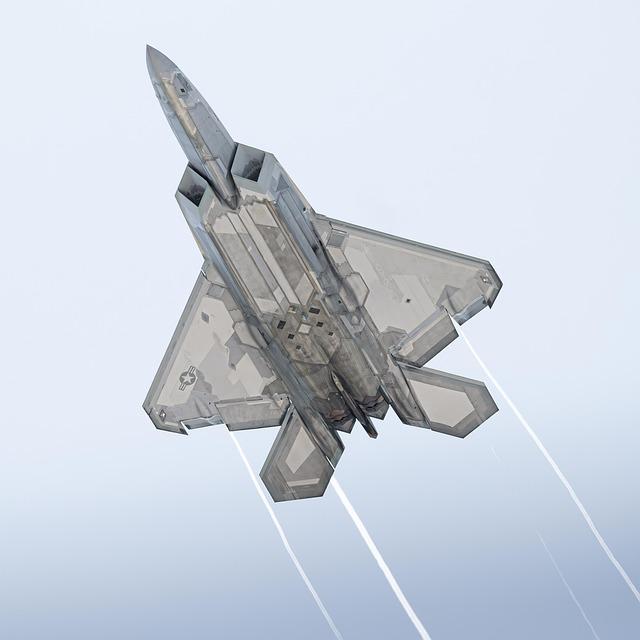
A Ukrainian fighter jet recently flew over Polish airspace, marking a notable development amid ongoing regional security concerns. The incident, confirmed by defense officials, highlights the increasing complexity of military movements near NATO’s eastern border. This unexpected crossover has drawn attention from both Polish authorities and international observers, raising questions about the implications for Ukraine’s military operations and broader geopolitical dynamics in Eastern Europe.
Ukrainian Fighter Jet Overflight Marks Escalation in Regional Airspace Security
In a notable development signaling increased tensions in Eastern Europe, a Ukrainian fighter jet recently conducted a flight over Polish airspace, an action underscoring the complexities of regional security dynamics. This incident has sparked urgent discussions among NATO allies regarding airspace integrity and potential challenges stemming from heightened military activities near the alliance’s eastern border. Officials emphasize the importance of transparent communication channels to avoid miscalculations that could escalate into broader conflicts.
The overflight has drawn attention to several key issues affecting regional airspace security:
- Enhanced air surveillance: NATO partners are stepping up aerial reconnaissance and radar coverage in response to unpredictable maneuvers.
- Rules of engagement: Debates intensify over protocols governing the interception of foreign military aircraft near member states’ borders.
- Diplomatic ramifications: The event prompts urgent dialogue between Ukraine, Poland, and allied nations aimed at reinforcing commitments to collective defense.
| Aspect | Details |
|---|---|
| Aircraft Type | MiG-29 |
| Flight Duration over Poland | Approximately 3 minutes |
| Response | Polish Air Force scrambled F-16s |
| International Reaction | Calls for coordination and restraint |
Poland’s Response and NATO’s Strategic Imperatives in Eastern Europe
In light of the recent Ukrainian fighter jet flight over Polish territory, Warsaw has reinforced its commitment to safeguarding national airspace while maintaining open channels for diplomatic communication. Polish authorities promptly scrambled interceptors to monitor the situation, emphasizing their readiness to respond decisively to any unauthorized incursions. This incident has underscored Poland’s critical role as a frontline state within the NATO alliance, acting as both a strategic transit corridor and a buffer against potential regional destabilization. Moreover, the government has reiterated its call for enhanced intelligence sharing and real-time surveillance technologies to better anticipate and neutralize threats along its eastern borders.
NATO’s strategic objectives in Eastern Europe are being recalibrated to address evolving security challenges heightened by such aerial maneuvers. Alliance members are focusing on:
- Enhancing rapid deployment capabilities and joint exercises near the Eastern flank
- Expanding air defense systems, including integrating advanced missile shields
- Strengthening cybersecurity frameworks to counter hybrid threats
| Initiative | Purpose | Status |
|---|---|---|
| Enhanced Forward Presence | Deterring aggression through multinational battalions | Operational |
| Air Policing Missions | Maintaining sovereignty of airspace over member states | Ongoing |
| Cyber Defense Hub | Protecting critical infrastructure from cyberattacks | In Development |
Recommendations for Strengthening Airspace Monitoring and Cooperative Defense Measures
In an increasingly complex geopolitical environment, enhancing airspace surveillance capabilities is critical for maintaining regional security. To address emerging challenges, it is essential to integrate advanced radar systems with real-time data sharing platforms among NATO allies. Such upgrades would not only improve detection accuracy but also facilitate quicker identification of unauthorized flights. Strengthening collaborative frameworks should involve:
- Joint investments in next-generation sensor technologies and unmanned aerial monitoring platforms.
- Standardized protocols for rapid communication of incursion data between civilian and military air traffic controllers.
- Expanded training programs focused on multinational coordination during airspace violations or unexpected redirects.
- Regular multinational exercises simulating high-threat scenarios to test and refine response mechanisms.
Furthermore, establishing a cooperative defense posture must go beyond shared surveillance to encompass integrated response strategies. Creating a tiered defense architecture where neighboring countries contribute layered early-warning and interception capabilities will significantly enhance deterrence. This system can be represented as follows:
| Layer | Function | Responsible Entities |
|---|---|---|
| Early Detection | Long-range radar and satellite monitoring | NATO Allied Air Forces |
| Command & Control | Real-time data integration and threat assessment | Joint Operations Centers |