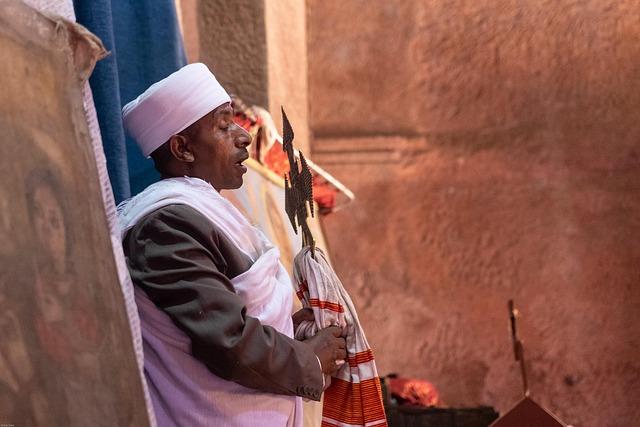
In a revealing investigation tracing the flow of Kremlin funds, an unexpected web emerges linking Orthodox priests, military training camps, and vote-buying schemes. As reported by The New York Times and analyzed by Small Wars Journal, these seemingly disparate elements converge through covert financial channels backed by Moscow’s influence operations. This intricate network highlights a multifaceted strategy designed to consolidate political power and extend Russia’s reach both domestically and abroad.
Kremlin Funding Channels Revealed Through Orthodox Priests and Training Camps
Recent investigations have unveiled a covert network through which Kremlin funds are channeled, intertwining seemingly unrelated entities such as Orthodox priests and paramilitary training camps. At the heart of this transfer are religious institutions that, beyond spiritual guidance, serve as financiers and facilitators of political influence. These priests, respected figures within their communities, have been implicated in funneling cash to support initiatives that ultimately sway electoral outcomes. This complex web leverages faith to cloak financial operations, making the money trail difficult for authorities to trace.
The training camps function as more than military preparation grounds; they double as recruitment hubs where attendees are indoctrinated and mobilized to participate in vote-buying schemes. The interconnection can be broken down into key components:
- Religious Platforms: Money collection and redistribution under the guise of donations and charity.
- Paramilitary Camps: Strategic centers for organizing political operatives and enforcing Kremlin-backed agendas.
- Vote-buying Networks: Ground-level execution of vote manipulation framed as community support.
| Channel | Function | Impact |
|---|---|---|
| Orthodox Churches | Fundraising & Influence | Legitimizing Kremlin outreach |
| Training Camps | Recruitment & Mobilization | Preparation for electoral interference |
| Vote-Buying Rings | Execution of bribery | Undermining democratic processes |
The Role of Vote Buying in Russia’s Political Influence Strategy
In the shadowy corridors of Russian political machinations, vote buying remains one of the Kremlin’s most persistent and covert tools to manipulate electoral outcomes both domestically and abroad. Far from isolated incidents, these practices are often strategically intertwined with broader influence operations, leveraging local actors who range from disenfranchised voters to community leaders. Money flows discreetly through networks that balance coercion with incentives, transforming votes into commodities in a tightly controlled marketplace of power. This mechanism does not merely sway elections superficially but serves as a foundational pillar of Russia’s far-reaching political chess game.
Key elements in this approach include:
- Targeted local intermediaries: Trusted figures, including small business owners and religious leaders, are enlisted to mobilize vote-buying efforts without attracting overt scrutiny.
- Resource allocation: Funds are systematically distributed to maximize impact, often coinciding with other Kremlin-backed initiatives such as training camps or cultural outreach to legitimize influence.
- Operational compartmentalization: Vote buying is segmented geographically and administratively, limiting detection and creating plausible deniability for state actors.
| Vote Buying Tactic | Purpose | Effect | ||||||||||||
|---|---|---|---|---|---|---|---|---|---|---|---|---|---|---|
| Direct Cash Payments | Immediate voter compliance | Boosts turnout among targeted groups | ||||||||||||
| Gift Distribution | Creates goodwill and loyalty | Strategies to Counter Kremlin Financial Networks in Small Conflicts
Disrupting the financial underpinnings of Kremlin-backed operations requires a multifaceted approach that goes beyond traditional sanctions. Targeted financial intelligence must focus on tracing funds flowing through unexpected channels-such as religious institutions, paramilitary training camps, and grassroots political mobilization efforts. These channels serve as critical nodes where illicit Kremlin financing blends with local support, enabling influence over small, volatile regions. By mapping these networks through cross-border banking data and on-the-ground financial forensics, policymakers can identify and isolate the most significant leak points in Kremlin financing streams. Effective countermeasures should include:
Concluding RemarksAs this investigation reveals, the tangled web of Kremlin financing extends far beyond conventional political channels, infiltrating religious institutions, military training facilities, and even electoral processes. The convergence of Orthodox priests, training camps, and vote-buying schemes underscores a multifaceted strategy aimed at consolidating influence both within Russia and abroad. Understanding these connections is crucial for policymakers and analysts seeking to counteract covert Kremlin operations and uphold democratic integrity. Continued vigilance and thorough reporting remain essential as this story-and the Kremlin’s reach-unfolds. ADVERTISEMENT  Related Posts |