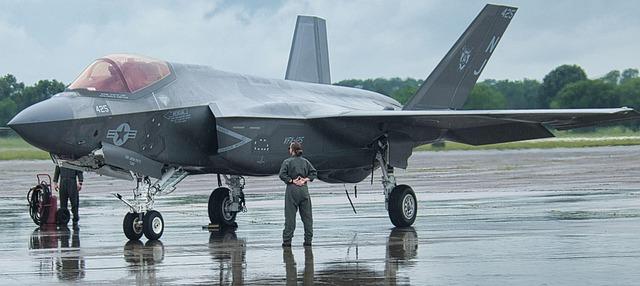
France has signaled a potential breakthrough in European defense collaboration by opening the door to joint fighter jet development with Sweden. In a move that could reshape the continent’s military aerospace landscape, French officials have expressed renewed interest in cooperating with their Swedish counterparts on next-generation combat aircraft projects. This development comes amid broader efforts to strengthen European strategic autonomy and enhance interoperability among allied air forces, positioning the partnership as a key step toward consolidating technological expertise and industrial capabilities within the region.
France and Sweden Explore Strategic Partnership in Fighter Jet Development
France and Sweden have announced preliminary talks aimed at forging a cooperative framework in the development of next-generation fighter jets. This emerging alliance seeks to capitalize on each nation’s technological expertise and defense experience in order to enhance capabilities while sharing costs and risks. Key points of discussion include joint research on stealth technology, advanced avionics, and engine development, reflecting a trend towards greater European defense collaboration amid shifting geopolitical landscapes.
The proposed partnership could influence regional defense procurement strategies and provide an alternative to existing fighter programs. Analysts note several potential benefits of this cooperation:
- Cost efficiency: Pooling resources reduces the financial burden on each nation’s defense budget.
- Technological synergy: Combining French and Swedish aerospace innovations may accelerate breakthroughs.
- Strategic autonomy: Less reliance on third-party suppliers ensures greater control over future defense capabilities.
| Aspect | France | Sweden |
|---|---|---|
| Experience | Rafale program, Aeronautics expertise | Gripen fighter, cutting-edge avionics |
| Strength | Engine technology, stealth research | Modular design, cost-effective manufacturing |
| Defense Strategy | European strategic autonomy | Flexible multirole platforms |
Implications for European Defense Autonomy and NATO Collaboration
France’s move to collaborate with Sweden on fighter jet development marks a pivotal shift in Europe’s quest for greater defense autonomy. By fostering closer ties between two key European nations, this partnership could accelerate innovation in military aviation technology, reducing dependency on external suppliers, and enhancing the continent’s strategic independence. Such joint ventures not only strengthen industrial bases but also ensure that European powers retain control over critical defense capabilities in an increasingly complex security landscape.
At the same time, the initiative underlines the evolving dynamics within NATO, where cooperation and burden-sharing remain essential. While European defense projects seek to bolster regional resilience, they also complement the alliance’s collective readiness. Maintaining interoperability across different systems and platforms will be crucial, and the Franco-Swedish cooperation could serve as a blueprint for future multinational efforts. Key benefits include:
- Enhanced technological integration shared between NATO members
- Streamlined procurement reducing costs and duplication
- Stronger industrial base within Europe, supporting sovereign capabilities
- Reinforced transatlantic security commitments through complementary capabilities
| Aspect | Potential Impact | |||||||||||||||||||||
|---|---|---|---|---|---|---|---|---|---|---|---|---|---|---|---|---|---|---|---|---|---|---|
| European Defense Autonomy | Reduced reliance on non-European suppliers | |||||||||||||||||||||
| NATO Interoperability | Improved coordination across air combat assets | |||||||||||||||||||||
| Industrial Collaboration | Recommendations for Strengthening Bilateral Research and Industrial Integration
To catalyze a robust Franco-Swedish alliance in fighter jet development, it is essential to enhance research collaboration through shared innovation hubs and joint technology roadmaps. Establishing bilateral innovation centers could serve as critical nodes for cross-border knowledge exchange, accelerating advancements in aerospace engineering, stealth technology, and propulsion systems. These centers would facilitate real-time problem solving and foster a culture of transparency, ensuring both nations benefit equally from cutting-edge discoveries. Industry integration must go beyond contractual agreements, emphasizing seamless cooperation on supply chains and manufacturing processes. Practical steps include:
|