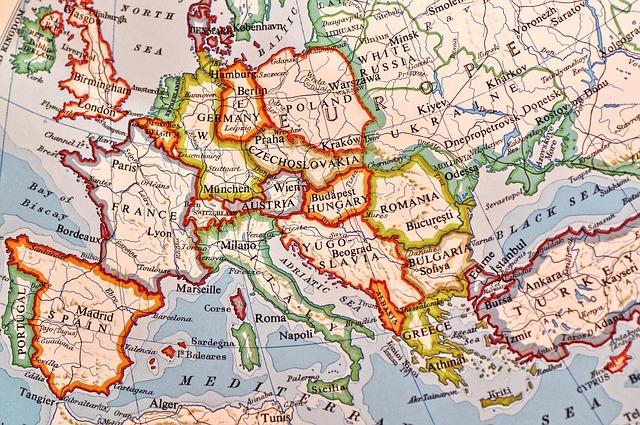
Hungary has once again blocked the European Union’s decision to open accession clusters 2 and 3 for Ukraine, deepening a diplomatic impasse amid Kyiv’s ongoing efforts to advance its EU membership bid. The move underscores continuing tensions between Budapest and Brussels, as Hungary leverages its veto power over the enlargement process amid broader regional and political disagreements. This latest development poses a significant obstacle to Ukraine’s integration aspirations, raising concerns about the unity and effectiveness of the EU’s response to the crisis in Eastern Europe.
Hungary Blocks EU Accession Clusters Two and Three for Ukraine Amid Political Disputes
The European Union’s progress toward Ukraine’s integration has encountered a significant obstacle as Hungary continues to block the opening of accession clusters two and three. These clusters focus on enhancing the internal market, industry, and digital transformation, as well as justice and fundamental rights. Hungary’s veto stems from unresolved political disputes, including concerns over minority rights and bilateral issues with Ukraine, which remain contentious topics in Budapest. This impasse threatens to slow down Kyiv’s reform trajectory and dampen the momentum generated by the EU’s earlier support for Ukraine’s membership ambitions.
Analysts warn that unless Hungary and Ukraine reach a diplomatic breakthrough, the deadlock could persist, impacting not only Ukraine’s accession progress but also the cohesion within the EU. Key points of contention highlighted by Hungarian officials include:
- Language rights of the Hungarian minority in Ukraine
- Security cooperation and cross-border issues
- Alignment with EU regulations in sensitive policy areas
A breakdown of the affected accession clusters is outlined in the table below:
| Cluster | Focus Area | Status |
|---|---|---|
| Cluster 2 | Internal Market, Industry, and Digital Transformation | Blocked by Hungary |
| Cluster 3 | Justice, Freedom, and Security | Blocked by Hungary |
Implications of Hungary’s Veto on Ukraine’s EU Integration Process and Regional Stability
Hungary’s continued veto of the opening of EU accession clusters 2 and 3 for Ukraine marks a significant setback in Kyiv’s EU integration ambitions. These clusters, focusing on the Single Market and Judiciary & Fundamental Rights respectively, are critical pillars for aligning Ukraine’s legal and economic frameworks with EU standards. Budapest’s blockade not only delays reforms but also injects uncertainty into the accession process, complicating Ukraine’s efforts to secure broader European support amid ongoing conflict. Experts warn that this stalling tactic may embolden other member states to leverage political disputes for unrelated bilateral concerns, undermining the EU’s unity and enlargement credibility.
The implications extend beyond Kyiv’s accession timeline, influencing broader regional stability in Eastern Europe. Hungary’s stance risks deepening divisions between EU members, as it contrasts with the bloc’s collective goal of supporting Ukraine against Russian aggression. Key consequences include:
- Prolonged uncertainty: Delayed reforms and accession weaken Ukraine’s institutional resilience.
- Diplomatic strain: Heightened tensions between Hungary and other EU countries complicate coordinated policy action.
- Geopolitical risks: A fragmented EU approach could embolden Russia’s influence in the region.
| Impact Area | Potential Outcome |
|---|---|
| EU Enlargement Process | Increased delays and unpredictability |
| Regional Security | Weakened collective response to threats |
| Bilateral Relations | Worsening Hungary-Ukraine ties |
Strategies for Dialogue and Diplomatic Engagement to Overcome Accession Deadlock
To break the current stalemate, stakeholders must prioritize sustained communication channels that foster mutual understanding. Establishing dedicated EU-Ukraine-Hungary trilateral talks could create a forum for addressing Hungary’s concerns transparently, focusing on shared interests rather than unilateral demands. Complementing formal diplomacy with targeted backchannel discussions can also soften public posturing, allowing negotiators greater flexibility. Key topics for dialogue should include minority rights protections, economic cooperation, and alignment with EU standards-areas where compromise could unlock the deadlock without undermining the integrity of the accession process.
Support mechanisms must be enhanced through coordinated diplomatic efforts involving trusted EU mediators and international actors who can facilitate trust-building. A multi-layered approach could incorporate:
- Mediation led by senior EU officials adept in conflict resolution
- Incremental confidence-building measures such as cultural exchange programs and joint infrastructure projects
- Regular progress reviews with transparent criteria to ensure mutual accountability
| Strategy Type | Objective | Potential Outcome |
|---|---|---|
| Trilateral Dialogue | Address core bilateral concerns | Reduced tensions, pathway to cluster openings |
| Backchannel Discussions | Confidential negotiation space | Flexible solutions, less public pressure |
| Confidence-Building Projects | Enhance trust between parties | Improved diplomatic goodwill |
In Retrospect
As Hungary once again blocks the opening of EU accession clusters 2 and 3 for Ukraine, the path toward deeper integration between Kyiv and Brussels remains fraught with obstacles. This latest development underscores the complex dynamics within the European Union, where member states’ individual interests continue to shape the bloc’s enlargement policies. With Ukraine’s aspirations for closer ties to the EU facing repeated setbacks, the coming weeks will be critical in determining whether consensus can be reached to advance the country’s accession prospects amid ongoing regional and political challenges.