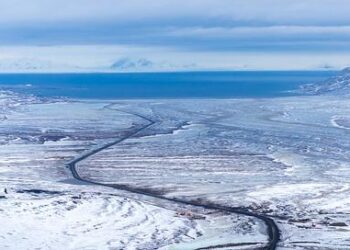
Norway is urgently seeking to establish a new submarine fiber optic cable connection to the remote Arctic territories of Svalbard and Jan Mayen, underscoring the strategic and economic importance of enhancing digital infrastructure in the High North. As global interest in the Arctic intensifies, the Norwegian government aims to strengthen communications and secure reliable internet access for these isolated regions, which are critical for scientific research, environmental monitoring, and sovereignty. The initiative reflects growing concerns over connectivity challenges and the need to support Arctic communities in an era of rapid geopolitical and climate-related changes.
Norway Prioritizes Enhanced Digital Infrastructure for Svalbard and Jan Mayen
The Norwegian government has identified the need for a robust and reliable communication backbone to support the growing demands of Svalbard and Jan Mayen. Plans are underway to deploy a new submarine fiber optic cable that will revolutionize connectivity for these remote Arctic territories. This project is described as “urgent” by authorities, highlighting the critical necessity of enhancing digital infrastructure to ensure uninterrupted broadband access, bolster research activities, and stimulate economic development in the High North.
Key benefits of this initiative include:
- Improved internet speeds facilitating real-time data transfer and communications.
- Increased network reliability reducing outages caused by current limited infrastructure.
- Enhanced operational support for scientific stations and local communities.
- Strategic Arctic presence strengthening Norway’s leadership in polar affairs.
| Aspect | Current Status | Post-Connection Impact |
|---|---|---|
| Internet Capacity | Limited bandwidth | 10x increase |
| Latency | High delays | Significantly reduced |
| Operational Uptime | 70-80% | 95%+ |
| Economic Impact | Minimal digital economy | New growth opportunities |
Strategic Implications of New Submarine Fiber Connection in the High North
The proposed submarine fiber connection to Svalbard and Jan Mayen represents a pivotal shift in the High North’s digital landscape, carrying significant strategic weight for Norway and its geopolitical interests. This initiative is not merely about enhancing telecommunications infrastructure; it is a deliberate move to cement Norway’s presence in these remote territories amidst increasing international attention and competition. Improved connectivity will bolster not only civilian communications but also critical defense capabilities, enabling faster data transmission and real-time monitoring in a region that is becoming increasingly vital due to climate change and resource exploration.
Beyond national security, the project is set to unlock economic and environmental benefits by supporting scientific research and sustainable development. Key advantages include:
- Enhanced Arctic research: Seamless data flow for environmental monitoring and climate science.
- Support for fisheries and maritime industries: Real-time communication for safer navigation and resource management.
- Resilience and redundancy: Creating a robust network that mitigates risks from extreme weather or potential cyber threats.
| Aspect | Implication | Impact Timeline |
|---|---|---|
| Security | Improved military communication and surveillance | Short-term |
| Science | Real-time data for climate research stations | Mid-term |
| Economy | Growth in Arctic maritime and tourism industries | Long-term |
Experts Recommend Accelerated Deployment to Boost Connectivity and Security
Industry specialists emphasize the critical need to fast-track the implementation of submarine fiber optic infrastructure connecting Svalbard and Jan Mayen to mainland Norway. This urgency is driven by the growing demands for robust communication channels that support not only civilian use but also strategic defense operations in the High North. Analysts argue that delays in deployment could hinder Norway’s ability to maintain a technological edge in these geopolitically sensitive regions.
Experts highlight several key benefits tied to the accelerated rollout:
- Enhanced cyber-security: Secure, direct data transmission reduces vulnerability to interception.
- Improved connectivity: Reliable high-speed internet access boosts local economies and research capacities.
- Resilient infrastructure: Fiber optics offer greater stability compared to satellite communications under harsh Arctic conditions.
| Key Aspect | Current Situation | Projected Impact |
|---|---|---|
| Latency | Up to 500 ms via satellite | Reduced to under 30 ms |
| Bandwidth | Limited and inconsistent | Stable 100 Gbps |
| Security | Susceptible to cyber attacks | Advanced encryption and monitoring |
The Conclusion
As Norway moves forward with plans to establish a new submarine fiber optic connection to Svalbard and Jan Mayen, the urgency expressed by officials underscores the strategic and economic importance of enhancing digital infrastructure in the High North. Strengthening connectivity to these remote territories not only supports scientific research and local communities but also reinforces Norway’s presence and sovereignty in the Arctic region. With growing geopolitical interest and environmental challenges shaping the future of the Arctic, the implementation of this critical project will be closely watched by both national stakeholders and international observers.