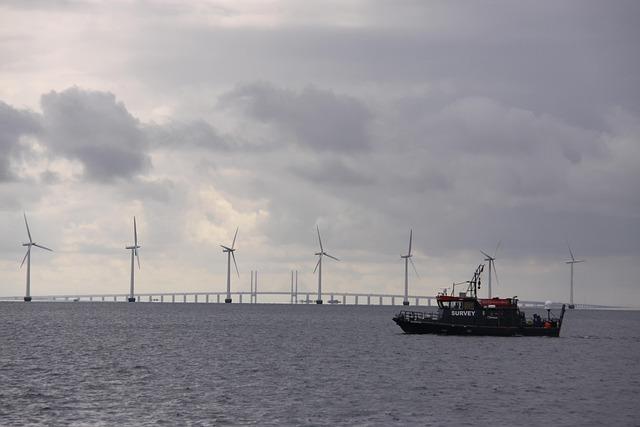
German energy giant EnBW has announced its decision to withdraw from the Swedish offshore wind market, marking a strategic shift in its Nordic operations. While stepping back from Sweden, the company reaffirms its strong commitment to expanding its offshore wind portfolio in Norway. This move highlights EnBW’s focus on markets where it sees the greatest potential for growth amid the accelerating energy transition in the region.
EnBW Exits Swedish Market Amid Strategic Refocus on Offshore Wind Development
German energy giant EnBW has decided to exit the Swedish market as part of a strategic realignment focusing heavily on offshore wind energy in Norway. While this move might raise eyebrows given Sweden’s growing renewable sector, EnBW emphasizes that the withdrawal allows for a more concentrated investment in projects with higher potential returns and streamlined regulatory frameworks. The company’s portfolio will now prioritize key assets in the Norwegian offshore wind segment, where generous government incentives and clear policy support are offering a robust growth environment.
Key highlights of EnBW’s strategic shift include:
- Divestment of Swedish wind assets to reallocate capital efficiently
- Enhancement of offshore wind pipeline in the North Sea and Norwegian waters
- Strengthened partnerships with local authorities and technology providers in Norway
| Market | Status | Focus Area | Key Advantage |
|---|---|---|---|
| Sweden | Exited | Onshore & Offshore Wind | Emerging regulations, Moderate incentives |
| Norway | Expanded investment | Offshore Wind | Strong policy support, High subsidy potential |
Commitment to Norwegian Offshore Projects Signals Confidence in Regional Energy Potential
EnBW’s recent strategic pivot underscores a strong belief in the untapped potential of Norway’s offshore wind sector, despite their withdrawal from Swedish markets. The company’s continued investment signals high confidence in Norway’s regulatory framework, resource availability, and the country’s ambitions to expand its renewable energy footprint. This move reflects an industry-wide recognition of Norway as a critical player in achieving Europe’s green transition goals, especially with ever-growing demand for sustainable energy solutions.
Key factors underpinning EnBW’s commitment include:
- Robust government support and incentives for offshore wind development
- Abundant wind resources along strategically favorable coastal areas
- Advanced grid infrastructure enabling effective energy transmission
- Proximity to major European energy markets ensuring demand stability
| Project Milestone | Expected Completion | Capacity (MW) |
|---|---|---|
| Norwegian Offshore Phase 1 | 2025 | 450 |
| Grid Integration Upgrade | 2026 | – |
| Expansion Phase 2 | 2028 | 700 |
Experts Recommend Strengthening Cross-Border Collaboration to Leverage Nordic Offshore Wind Resources
Industry leaders emphasize the necessity of boosting cross-border cooperation to maximize the potential of Nordic offshore wind resources. As EnBW exits the Swedish market yet pledges ongoing investments in Norwegian offshore developments, experts argue this pivot highlights a broader regional need. Unlocking the full capacity of offshore wind requires harmonized policies, shared infrastructure, and integrated market mechanisms across Nordic countries. Such collaboration could drive down costs, accelerate project timelines, and improve grid stability, thereby enhancing the overall competitiveness of the Nordic offshore wind sector on the European stage.
Key factors identified for fostering effective collaboration include:
- Coordinated Planning: Aligning national energy strategies to avoid overlapping marine permits and streamline environmental assessments.
- Joint Infrastructure Investment: Developing shared transmission systems and interconnectors to optimize power distribution and reduce redundancy.
- Regulatory Harmonization: Creating uniform standards for offshore wind permitting, financing, and market participation.
| Country | Current Offshore Wind Capacity (MW) | Planned Capacity by 2030 (MW) |
|---|---|---|
| Norway | 50 | 1200 |
| Sweden | 10 | 800 |
| Denmark | 1000 | 5000 |
Concluding Remarks
As EnBW steps back from its Swedish offshore wind ambitions, the company’s continued focus on the Norwegian market underscores its strategic commitment to expanding renewable energy capacity in the North Sea region. While the exit from Sweden marks a notable shift, EnBW’s investment in Norway signals confidence in the country’s favorable regulatory environment and significant offshore wind potential. Industry observers will be watching closely as EnBW advances its projects in Norway, contributing to the broader transition toward sustainable energy in Europe.
![Sweden Blocks 2 AI Chatbots, Keeps Copilot [2026] – https://tech-insider.org/](https://europ.info/wp-content/uploads/2026/10/3079689-sweden-blocks-2-ai-chatbots-keeps-copilot-2026-https-tech-insider-org-350x250.jpg)









![Sweden Blocks 2 AI Chatbots, Keeps Copilot [2026] – https://tech-insider.org/](https://europ.info/wp-content/uploads/2026/10/3079689-sweden-blocks-2-ai-chatbots-keeps-copilot-2026-https-tech-insider-org-120x86.jpg)