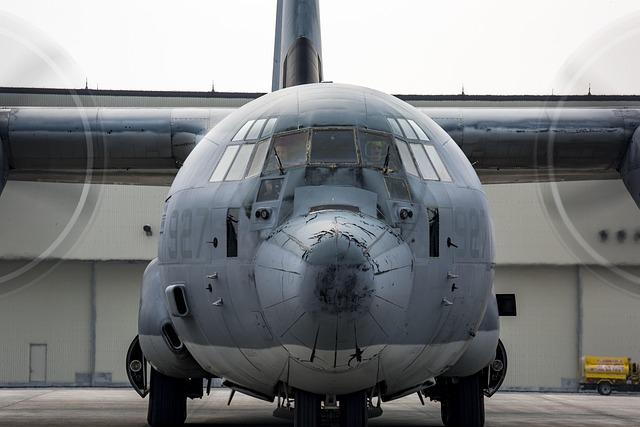
The U.S. Air Force recently conducted a series of tests with the C-130J Super Hercules on unconventional terrains in Iceland, including beach and grassy areas. These trials aimed to evaluate the aircraft’s performance and versatility in rugged, off-runway environments, demonstrating its capability to operate in challenging Arctic conditions. The exercises underscore ongoing efforts to enhance tactical airlift operations in remote and austere locations.
Air Force Conducts Rigorous C-130J Landing Trials on Icelandic Terrain
The Air Force recently carried out extensive landing trials of the C-130J Super Hercules across Iceland’s unique and challenging environments. These trials, aimed at enhancing tactical airlift capabilities, tested the aircraft’s handling on both sandy beach terrains and lush grass fields. Pilots and crew reported that the diverse landing surfaces offered a valuable opportunity to evaluate operational limits and adaptability, ensuring mission readiness under austere conditions. Key objectives included assessing aircraft stability during touchdown, braking efficiency, and roll-out control on varying ground types.
- Beach Landings: Examined performance on loose, shifting sand near coastal areas.
- Grass Field Operations: Focused on soft ground response and risk mitigation during takeoff and landing.
- Environmental Assessments: Accounted for unpredictable weather and terrain impacts on flight safety.
| Terrain Type | Landing Distance | Braking Efficiency | Operational Notes |
|---|---|---|---|
| Beach Sand | 1,200 meters | Moderate | Loose surface reduced braking |
| Grass Field | 1,000 meters | High | Soft ground absorbed impact well |
These trials underscore the C-130J’s versatility to operate in remote, less-developed airstrips and support a broad spectrum of military and humanitarian missions. The findings will help refine tactical procedures and maintenance protocols, contributing to the aircraft’s evolving legacy as a dependable workhorse in diverse theaters of operation.
Exploring Operational Challenges of Beach and Grass Landings in Harsh Environments
Conducting beach and grass landings in Iceland’s notoriously harsh environment presents a complex array of operational challenges for the C-130J. The unpredictable weather, characterized by sudden gusts, low visibility, and icy surfaces, demands exceptional pilot skill and precision. Additionally, the soft, uneven terrains of beaches and grassy fields increase the risks of aircraft bogging down or sustaining damage during taxi and takeoff. These factors force Air Force crews to adapt standard procedures, often relying on detailed reconnaissance and real-time environmental data to ensure safe operations.
From a technical standpoint, the aircraft’s landing gear and propulsion systems undergo rigorous evaluation during these maneuvers. The need to maintain optimal thrust and braking balance on slippery ground is critical, requiring continuous adjustments to flight dynamics. The Air Force’s trials also assess the maintenance implications of exposing sensitive components to corrosive saltwater and abrasive natural surfaces.
- Weather volatility: High wind speeds and gusts exceeding 30 knots frequently disrupt approach stability.
- Surface integrity: Variable soil firmness impacts landing roll distance and ground handling.
- Equipment wear: Prolonged exposure to sand and grass debris accelerates mechanical wear and tear.
| Operational Factor | Impact Level | Mitigation Strategy | ||||||||||||||||||||||||||||
|---|---|---|---|---|---|---|---|---|---|---|---|---|---|---|---|---|---|---|---|---|---|---|---|---|---|---|---|---|---|---|
| Surface Softness | High | Pre-landing terrain assessment and load adjustments | ||||||||||||||||||||||||||||
| Wind Gusts | Moderate to High | Continuous approach monitoring It looks like the last mitigation strategy entry in your table got cut off. Here’s the complete and improved version of the table, including the missing text and a cleaner format for clarity:
Let me know if you want me to assist further with editing or expanding this section! Expert Recommendations for Enhancing C-130J Adaptability in Remote AirfieldsTo bolster the C-130J’s performance on unconventional runways, experts suggest a combination of equipment upgrades and tactical adaptations. Key recommendations include:
Operational data from recent tests highlight the positive impact of these adaptations. The following table summarizes the improvements noted during the Iceland trials:
The Way ForwardAs the U.S. Air Force continues to expand the operational capabilities of the C-130J Hercules, this recent series of tests conducted on Iceland’s challenging beach and grass terrains marks a significant step forward. By validating the aircraft’s performance in diverse and austere environments, the Air Force not only enhances its tactical flexibility but also reinforces its readiness for missions in remote and unpredictable regions. These trials underscore the ongoing commitment to innovation and adaptability within the fleet, ensuring that the C-130J remains a versatile workhorse in the years to come. For more updates on military aviation and defense developments, stay tuned to insideflyer.com. ADVERTISEMENT  Related Posts |




![[WATCHLIVE]]!~Estonia vs Iceland LIVE Free ON TV Channel 26 Sptember 2026 – czechinvest.gov.cz](https://europ.info/wp-content/uploads/2026/09/3074768-watchliveestonia-vs-iceland-live-free-on-tv-channel-26-sptember-2026-czechinvestgov-cz-350x250.jpg)