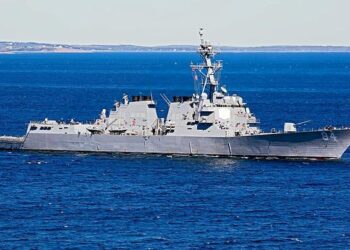
Lithuania has announced a significant shift in its national security policy by moving to lift the constitutional ban on the presence of nuclear weapons on its territory. The decision, aimed at enhancing the country’s defense posture amid growing regional tensions, marks a pivotal moment in Lithuania’s strategic approach to deterrence and alliance commitments. This development, reported by UNITED24 Media, reflects the broader security recalibrations underway in Eastern Europe as nations respond to evolving geopolitical challenges.
Lithuania Prepares Constitutional Amendment to Allow Stationing of Nuclear Arms
Lithuania is advancing a significant constitutional amendment aimed at enabling the stationing of nuclear weapons on its soil for the first time in history. This move is part of a broader strategic response to increasing regional security concerns amid rising tensions with neighboring powers. The proposed change would repeal the existing prohibition on nuclear arms within Lithuanian territory, signaling a historic shift in the nation’s defense policy and its alignment with NATO’s deterrence framework.
The amendment is expected to undergo parliamentary debate in the coming months, attracting both domestic and international attention. Key points surrounding the proposal include:
- Strengthening of national and regional security through enhanced deterrence capabilities.
- Alignment with NATO’s strategic defense initiatives amid evolving geopolitical threats.
- Potential implications for Lithuania’s diplomatic relations and defense commitments.
| Aspect | Current Status | Proposed Change |
|---|---|---|
| Constitutional Ban | Strict prohibition on nuclear arms | Removal of ban to allow stationing |
| Defense Policy | Non-nuclear national territory | Potential nuclear hosting aligned with NATO |
| Regional Impact | Neutral stance on nuclear arms | Enhanced deterrence against external threats |
Strategic Implications for Baltic Security Amid Rising Regional Tensions
The decision by Lithuania to reconsider its longstanding constitutional prohibition on nuclear weapons marks a dramatic shift in the security calculus of the Baltic region. This move comes against the backdrop of escalating regional tensions, particularly related to increased Russian military activities and assertive posturing in the Baltics. Analysts suggest that lifting the ban could serve as both a deterrent and a strategic signal to Moscow, reinforcing Lithuania’s commitment to defend its sovereignty with NATO’s extended deterrence framework. However, this potential nuclear stance also complicates diplomatic relations with key European neighbors, who remain wary of further militarization and proliferation risks in an already volatile security environment.
Key strategic considerations shaping Lithuania’s policy shift include:
- Enhanced deterrence: Strengthening NATO’s forward presence with possible nuclear deployment options.
- Alliance cohesion: Balancing national defense ambitions with alliance commitments and regional stability.
- Geopolitical signaling: Demonstrating resolve amid hybrid threats and information warfare challenges.
- Risk management: Navigating the delicate dynamics of arms control and non-proliferation agreements.
| Aspect | Potential Impact | ||||||||||
|---|---|---|---|---|---|---|---|---|---|---|---|
| Regional Diplomacy | Heightened tensions with neighboring states | ||||||||||
| NATO Posture | Stronger deterrent but increased strategic risks | ||||||||||
| Public Perception | Mixed views fueling domestic debate on security policies |
| Aspect | Recommended Action |
|---|---|
| Diplomatic Relations | Initiate multilateral talks alongside NATO allies |
| Defense Readiness | Upgrade missile defense and surveillance systems |
| Cybersecurity | Expand cyber threat monitoring and rapid response teams |
| Civil Preparedness | Launch public education campaigns on emergency protocols |
In Conclusion
As Lithuania takes decisive steps to amend its constitution and lift the longstanding ban on nuclear weapons on its territory, the move signals a significant shift in the nation’s defense posture amid escalating regional security concerns. While the decision has sparked debate both domestically and internationally, it underscores Lithuania’s determination to bolster its deterrence capabilities in the face of evolving geopolitical challenges. The coming months will be crucial in observing how this constitutional change influences Lithuania’s military alliances and the broader security dynamics within Eastern Europe. UNITED24 Media will continue to monitor and report on developments surrounding this pivotal policy transformation.



![!+[𝐒𝐓ream]HERE’S* Azerbaijan v Lithuania LIVE Free Streams ON Tv Channel 04 October 2026 free HD26309 – 大分トリニータオフィシャルサイト](https://europ.info/wp-content/uploads/2026/10/3076107-𝐒𝐓reamheres-azerbaijan-v-lithuania-live-free-streams-on-350x250.jpg)