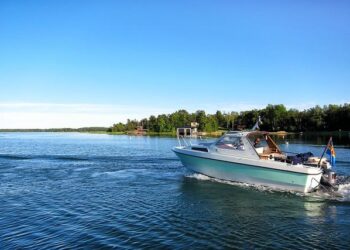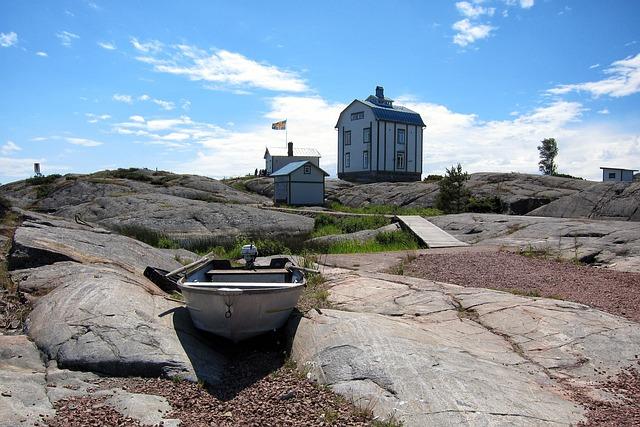
A recent survey reported by Yle reveals that nearly 60 percent of Finns support the militarization of the Åland Islands, a demilitarized archipelago strategically located in the Baltic Sea. The findings underscore growing public concern over regional security amidst increasing geopolitical tensions in Northern Europe. This shift in opinion marks a significant development in Finland’s defense discourse, as the traditionally neutral status of Åland faces renewed scrutiny. The Estonian Public Broadcasting (ERR) also covered the story, highlighting its implications for Baltic security dynamics.
Public Opinion Shapes Defense Debate on Aland Islands
Recent polling reveals a significant shift in public perception regarding the defense posture of the Åland Islands, an autonomous region of Finland. Nearly 60 percent of Finns now express support for increased militarization of the islands, a figure that signals growing concern about regional security dynamics amid rising geopolitical tensions in the Baltic Sea. This marks a notable change from previous years when the demilitarized status of Åland was largely uncontested in Finnish public discourse.
Supporters of the policy change highlight several factors driving this shift:
- Heightened regional threats: Increased military activity by neighboring powers has stirred fears.
- Strategic importance: Åland’s position as a gateway between the Gulf of Bothnia and the Baltic Sea is seen as critical.
- National security: Larger calls for Finland to enhance defense readiness following NATO membership.
| Age Group | Support for Militarization |
|---|---|
| 18-29 | 52% |
| 30-49 | 58% |
| 50+ | 65% |
Strategic Implications of Militarizing Aland for Regional Security
The potential militarization of the Åland Islands signifies a pivotal shift in the regional security dynamics of the Baltic Sea. Given its strategic location between Finland and Sweden, Åland serves as a critical maritime chokepoint, making its defense capabilities a matter of interest not only for Finland but also for neighboring states and NATO allies. Strengthening the islands’ military presence could enhance deterrence against growing geopolitical tensions, particularly with Russia’s assertive posture in the region. Moreover, the increased military activity could serve as a reassurance to local populations and international partners alike, signaling Finland’s resolve to uphold sovereignty and stability in this sensitive corridor.
However, this move carries complex implications beyond mere defense enhancement. Key considerations include:
- Escalation risks: The bolstering of defenses might provoke reactive measures from Russia, potentially heightening regional friction.
- Diplomatic balancing: Åland’s unique demilitarized status under international treaties requires careful navigation to avoid alienating neighboring actors and supranational organizations.
- Resource allocation: Ensuring sustainable funding and infrastructure development without undermining other critical security priorities.
To visualize the strategic trade-offs, consider the following simplified assessment:
| Factor | Benefit | Challenge | ||||||||||||||||||||
|---|---|---|---|---|---|---|---|---|---|---|---|---|---|---|---|---|---|---|---|---|---|---|
| Deterrence | Strengthened regional security | Potential military escalation | ||||||||||||||||||||
| International Law | Reinforces sovereign defense rights | Strains Åland It looks like your HTML snippet for the table was cut off at the last cell. Here is a corrected and completed version of your table with consistent formatting, including completion of the last cell:
“`html The potential militarization of the Åland Islands signifies a pivotal shift in the regional security dynamics of the Baltic Sea. Given its strategic location between Finland and Sweden, Åland serves as a critical maritime chokepoint, making its defense capabilities a matter of interest not only for Finland but also for neighboring states and NATO allies. Strengthening the islands’ military presence could enhance deterrence against growing geopolitical tensions, particularly with Russia’s assertive posture in the region. Moreover, the increased military activity could serve as a reassurance to local populations and international partners alike, signaling Finland’s resolve to uphold sovereignty and stability in this sensitive corridor. However, this move carries complex implications beyond mere defense enhancement. Key considerations include:
To visualize the strategic trade-offs, consider the following simplified assessment:
|