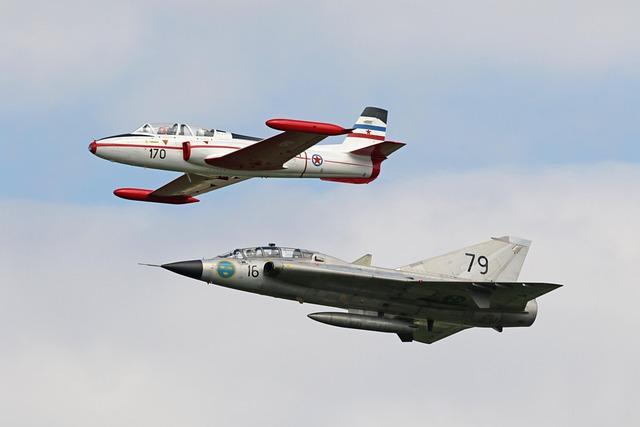
The Saab 105, known in Sweden as the Sk 60, stands as a unique chapter in aviation history-simultaneously serving as a trusted jet trainer for both Sweden and Austria. Developed in the 1960s by Swedish aerospace manufacturer Saab, this versatile aircraft has bridged military training needs across borders for decades. In this article, MiGFlug takes an in-depth look at how the Saab 105 became a cornerstone of pilot education in two nations, exploring its design, operational history, and enduring legacy in the world of military aviation.
Saab 105 Sk 60’s Unique Role in Swedish and Austrian Air Training Programs
The Saab 105, known as the Sk 60 in Swedish service, carved a niche for itself by serving dual air forces with distinct operational doctrines yet similar training needs. Introduced in the early 1960s, this jet trainer offered a versatile platform that adeptly balanced performance with cost-effectiveness. Sweden prized the Sk 60 for its adaptability, using it not only for basic and advanced pilot training but also in reconnaissance and light attack roles. Across the Alps, Austria sought to modernize its aging training fleet, finding in the Saab 105 a reliable, multi-role jet that could fulfill its pilot pipeline demands while also providing a platform for tactical exercises on European soil.
The aircraft’s cross-border success was underpinned by a few key features that both air forces valued:
- Dual-role capability: ideal for transitioning pilots from propeller-driven trainers to frontline jets.
- Robust design: capable of operating in Sweden’s harsh climates and Austria’s mountainous terrain.
- Ease of maintenance: an important factor for smaller air forces with limited budgets and infrastructure.
| Feature | Swedish Air Force | Austrian Air Force |
|---|---|---|
| Introduction Year | 1967 | 1970 |
| Main Training Focus | Basic & Advanced Jet Training | Basic & Tactical Training |
| Additional Roles | Reconnaissance, Light Attack | Light Attack, Border Patrol |
| Number Operated | ~100 | ~40 |
Performance and Versatility Under the Hood of the Saab 105 Trainer Jet
The Saab 105 is a testament to engineering precision, combining agility with robust performance that has kept it relevant in training environments for decades. Powered by twin turbojet engines, the aircraft delivers a balanced thrust-to-weight ratio, enabling rapid climb rates and responsive handling. Its innovative design supports various training missions, from basic flight instruction to advanced tactical exercises, making it a versatile workhorse for air forces. The cockpit layout emphasizes pilot situational awareness, with instrumentation tailored to simulate combat scenarios, fostering readiness in diverse operational contexts.
Adaptability is further enhanced by its modular configuration, which allows easy integration of different avionics and armament systems. This flexibility extends the Saab 105’s role beyond a pure trainer, enabling light attack and reconnaissance functions. Below is a concise overview of its key performance specifications:
| Specification | Value |
|---|---|
| Maximum Speed | 940 km/h (585 mph) |
| Service Ceiling | 13,700 m (45,000 ft) |
| Range | 1,200 km (745 mi) |
| Engine | Two Turbomeca Aubisque turbojets |
Optimizing Maintenance and Upgrades for Extended Service Life
Maximizing the operational lifespan of the Saab 105 (Sk 60) requires a strategic blend of scheduled maintenance and timely upgrades. Both Sweden and Austria have adopted a proactive approach, emphasizing regular inspections, avionics modernization, and structural reinforcements to meet evolving training demands. Key focus areas include:
- Engine overhauls designed to optimize fuel efficiency and thrust output.
- Avionics updates integrating modern navigation systems and digital flight controls.
- Corrosion control practices tailored for the aircraft’s aluminum airframe.
These efforts have resulted in a dramatic reduction in unscheduled downtime and have helped maintain peak flight performance. Continuous enhancements in cockpit ergonomics and safety systems reflect a broader commitment to pilot readiness and airworthiness, ensuring the Saab 105 remains a competitive jet trainer in the 21st century.
| Maintenance Aspect | Upgrade Implementation | Impact |
|---|---|---|
| Engine Diagnostics | Real-time monitoring sensors | Reduced engine failure rates |
| Flight Control Systems | Digital Fly-by-Wire Integration | Enhanced maneuverability |
| Structural Integrity | Advanced composite patches | Extended airframe lifespan |
In Summary
In summary, the Saab 105 (Sk 60) stands as a testament to Scandinavian and Austrian collaboration in military aviation, delivering a versatile and reliable jet trainer that has served multiple generations of pilots. Its enduring presence in both Swedish and Austrian air forces highlights the aircraft’s adaptability and robust design, securing its place in aviation history. As military training continues to evolve, the Saab 105’s legacy remains a significant chapter in the story of Cold War and post-Cold War pilot development.