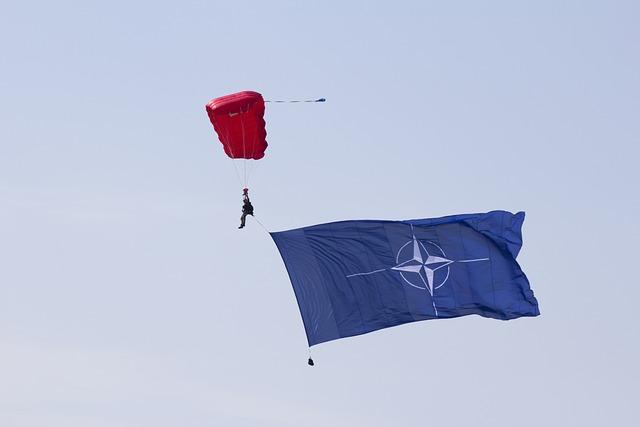
NATO has announced it will deploy surveillance aircraft to Poland in response to recent Russian missile strikes near the country’s borders. This decision marks a significant escalation in NATO’s monitoring efforts amid heightened tensions in Eastern Europe. The move aims to enhance real-time intelligence gathering and strengthen regional security as Moscow’s military activities continue to raise concerns among alliance members.
NATO Strengthens Eastern Flank with Deployment of Surveillance Aircraft in Poland
NATO’s decision to deploy advanced surveillance aircraft to Polish airspace marks a significant escalation in the alliance’s commitment to collective defense amid growing tensions in Eastern Europe. These aircraft are equipped with cutting-edge radar and intelligence-gathering technologies designed to enhance real-time monitoring of military activities near NATO’s eastern borders. The move comes in direct response to recent Russian missile strikes, underscoring NATO’s resolve to deter further aggression and reassure member states in the region of their security guarantees.
The deployment will bolster situational awareness and provide critical data to NATO command centers, improving the alliance’s ability to respond quickly to potential threats. Key features of the surveillance mission include:
- Continuous 24/7 airborne reconnaissance patrols
- Integration with ground-based radar and satellite intelligence
- Enhanced coordination with Polish and NATO air defense units
- Rapid dissemination of real-time threat assessments
| Mission Component | Capabilities | Expected Impact |
|---|---|---|
| Surveillance Aircraft | Long-Range Radar & Signal Intelligence | Proactive threat detection |
| Ground Coordination | Secure Data Link with Air Defense Units | Improved response times |
| Command Integration | Real-Time Combat Information Sharing | Strategic decision support |
Assessing the Impact of Russian Missile Strikes on Regional Security Dynamics
The recent missile strikes by Russia have sent shockwaves through the regional security landscape, prompting NATO to bolster its surveillance capabilities in Eastern Europe. The deployment of advanced reconnaissance aircraft to Poland signals a strategic escalation aimed at enhancing situational awareness and deterrence along NATO’s eastern flank. This move underscores a growing concern over potential spillover effects, as well as the need for rapid intelligence gathering to preempt further destabilizing actions. Analysts highlight that increased aerial surveillance will provide NATO with crucial data to monitor troop movements, missile launches, and other military activities, thereby facilitating faster decision-making in a volatile environment.
Key implications for regional security include:
- Enhanced early warning systems that improve NATO’s response time.
- Strengthened coordination between member states on intelligence sharing.
- Heightened diplomatic tensions with Russia, as military posturing intensifies.
- Increased reassurance for Eastern European allies vulnerable to direct conflict spillover.
| Aspect | Before Strikes | After Strikes |
|---|---|---|
| Surveillance Aircraft Presence | Limited | Expanded Deployment |
| Regional Alert Status | Moderate | High |
| Intelligence Sharing | Standard Operations | Enhanced Coordination |
| Diplomatic Engagement | Ongoing Dialogue | Increased Friction |
Recommendations for Enhancing Airspace Monitoring and Civilian Protection in Eastern Europe
To strengthen airspace security in Eastern Europe, NATO and regional partners must prioritize the rapid deployment of advanced surveillance technologies alongside robust intelligence-sharing frameworks. Integrating real-time data from aerial reconnaissance, ground-based radar systems, and satellite monitoring will create a layered defense capable of early threat detection. Emphasizing the interoperability of these systems ensures that actionable information flows seamlessly between national military commands and NATO’s joint operations centers, enhancing situational awareness and decision-making speed during crises.
Key measures should also focus on civilian safety by implementing wide-scale early warning networks and community preparedness programs tailored to vulnerable border regions. Beyond technological innovation, building resilient civil-military cooperation models will facilitate efficient evacuation plans and emergency response coordination. The following table outlines critical domains and recommended actions essential for elevating airspace surveillance and civilian protection in the region:
| Domain | Recommended Action | Expected Impact |
|---|---|---|
| Surveillance Systems | Deploy multi-sensor drones and AWACS aircraft | Extended real-time monitoring |
| Information Sharing | Establish secure NATO-regional liaison networks | Accelerated threat response |
| Civilian Alerting | Install automated sirens with mobile app integration | Faster community warnings |
| Emergency Preparedness | Conduct joint civil-military evacuation drills | Improved coordination under stress |
Final Thoughts
As tensions continue to escalate in the region, NATO’s decision to deploy surveillance aircraft to Poland underscores the alliance’s commitment to monitoring security developments closely and supporting its eastern members. The move comes amid growing concerns over Russian missile activity, highlighting the fragile stability in Eastern Europe. NATO and its partners remain vigilant, emphasizing diplomacy and readiness as they navigate this complex and evolving situation. Further updates are expected as the deployment proceeds and the situation unfolds.










![[WATCHLIVE]NFL!] Malta vs Gibraltar 𝐋𝐈𝐕𝐄 ON Internet Tv Channel November 16, 2026 – Universitat de Barcelona](https://europ.info/wp-content/uploads/2026/11/3084215-watchlivenfl-malta-vs-gibraltar-𝐋𝐈𝐕𝐄-on-internet-tv-channel-nove-120x86.jpg)