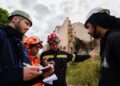
The Royal Marines have returned to the Faroe Islands for the first time since the Second World War, marking a significant development in the United Kingdom’s efforts to enhance security in the North Atlantic region. This deployment, confirmed by the Royal Navy, underscores intensified defence cooperation amid growing geopolitical tensions and reflects the UK’s commitment to safeguarding strategic interests in the area. The move comes as part of a broader push to reinforce military presence and strengthen partnerships with key allies in the Arctic and North Atlantic corridors.
Royal Marines Reestablish Presence in the Faroe Islands Amid Rising Geopolitical Tensions
The deployment marks a historic return for the Royal Marines, who have not maintained a presence on the remote Faroe Islands since the close of World War II. This strategic move underscores the UK’s heightened focus on securing the North Atlantic amid escalating geopolitical tensions, particularly with increased Russian naval activity in nearby Arctic waters. The operation includes joint exercises designed to enhance rapid response capabilities and ensure robust maritime security in this vital region.
- Enhanced Surveillance: Integration of cutting-edge reconnaissance technology for real-time monitoring.
- Multilateral Cooperation: Coordination with Faroese and NATO forces to bolster regional defense.
- Rapid Deployment: Improved readiness for amphibious operations and crisis response.
| Unit | Primary Role | Equipment Deployed |
|---|---|---|
| 43 Commando | Amphibious assault and security | Rigid-hulled inflatable boats, advanced communications |
| Support Squadron | Logistics and intelligence | Surveillance drones, mobile command units |
Strategic Importance of the Faroe Islands in UK and NATO Security Framework
Nestled in the North Atlantic, the Faroe Islands have reemerged as a pivotal node in the security architecture of both the United Kingdom and NATO. Their geographic positioning offers unparalleled access to vital maritime routes, functioning as an advanced early-warning outpost against potential threats emanating from the Arctic and northern European theaters. This strategic positioning allows allied forces to monitor submarine activity, safeguard undersea communication cables, and maintain control over critical chokepoints that influence both military and commercial maritime traffic. The recent return of Royal Marines underscores the UK’s commitment to bolstering its northern flank and reinforcing collective defense mechanisms under NATO’s umbrella.
Key factors enhancing the Faroe Islands’ importance include:
- Proximity to the Arctic Circle: Enables early detection of emerging threats and supports intelligence operations.
- Control over maritime communication lines: Critical undersea cables traverse these waters, vital for global internet and defense networks.
- Facilitation of rapid deployment: Acts as a forward base for allied forces, increasing responsiveness to regional crises.
| Security Role | Operational Benefit |
|---|---|
| Surveillance & Reconnaissance | Enhanced situational awareness in the North Atlantic |
| Maritime Control | Protection of strategic sea lanes and infrastructure |
| Rapid Deployment | Improved reaction times for crisis management |
Recommendations for Enhancing Joint Military Operations and Regional Surveillance Efforts
To strengthen joint military operations in critical regions like the North Atlantic, it is imperative to enhance interoperability between allied forces. This can be achieved by implementing standardized communication protocols and conducting regular multinational training exercises that simulate real-world contingencies. Additionally, leveraging cutting-edge technology such as autonomous maritime drones and AI-powered surveillance systems will provide faster threat detection and improve response times in these strategically sensitive areas.
Priorities for advancing regional surveillance and operational cohesion include:
- Establishing integrated command centers to facilitate real-time intelligence sharing.
- Expanding the use of satellite reconnaissance combined with on-the-ground human intelligence.
- Increasing joint resource allocation for rapid deployment and sustainability of forces.
- Enhancing cyber defense measures to protect critical military communication networks.
| Recommendation | Benefit | Implementation Timeline |
|---|---|---|
| Standardized Communication Protocols | Improved coordination | 1 year |
| Autonomous Maritime Drones | Enhanced surveillance reach | 2-3 years |
| Integrated Command Centers | Real-time intelligence sharing | 18 months |
| Cyber Defense Upgrades | Secure communication networks | Ongoing |
Future Outlook
The return of the Royal Marines to the Faroe Islands marks a significant moment in the UK’s ongoing commitment to strengthening security in the North Atlantic region. Nearly eight decades after their last deployment during the Second World War, this renewed presence underscores the Royal Navy’s strategic focus amid evolving global challenges. As the UK continues to enhance its defense posture, operations such as this highlight the importance of historic ties and forward-looking partnerships in maintaining peace and stability.




![【WATCHLIVE]FREE】Liechtenstein vs Lithuania Live Football Match TOday Channel free 16.11.2026 – UB – Universitat de Barcelona](https://europ.info/wp-content/uploads/2026/11/3083201-【watchlivefree】liechtenstein-vs-lithuania-live-football-match-today-channel-free-1611-2026-ub-universitat-de-ba-350x250.jpg)