* . *
EUROP INFO
ADVERTISEMENT
Sunday, December 21, 2025
No Result
View All Result
No Result
View All Result
EUROP INFO
No Result
View All Result
Home Faroe Islands

Unveiling the Stratigraphy and Structure of the Faroe Islands Flood Basalts: Insights for Large-Scale CO₂ Storage

Charlotte Adams by Charlotte Adams
July 10, 2025
in Faroe Islands
Unveiling the Stratigraphy and Structure of the Faroe Islands Flood Basalts: Insights for Large-Scale CO₂ Storage
ADVERTISEMENT

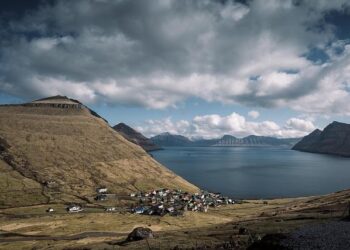
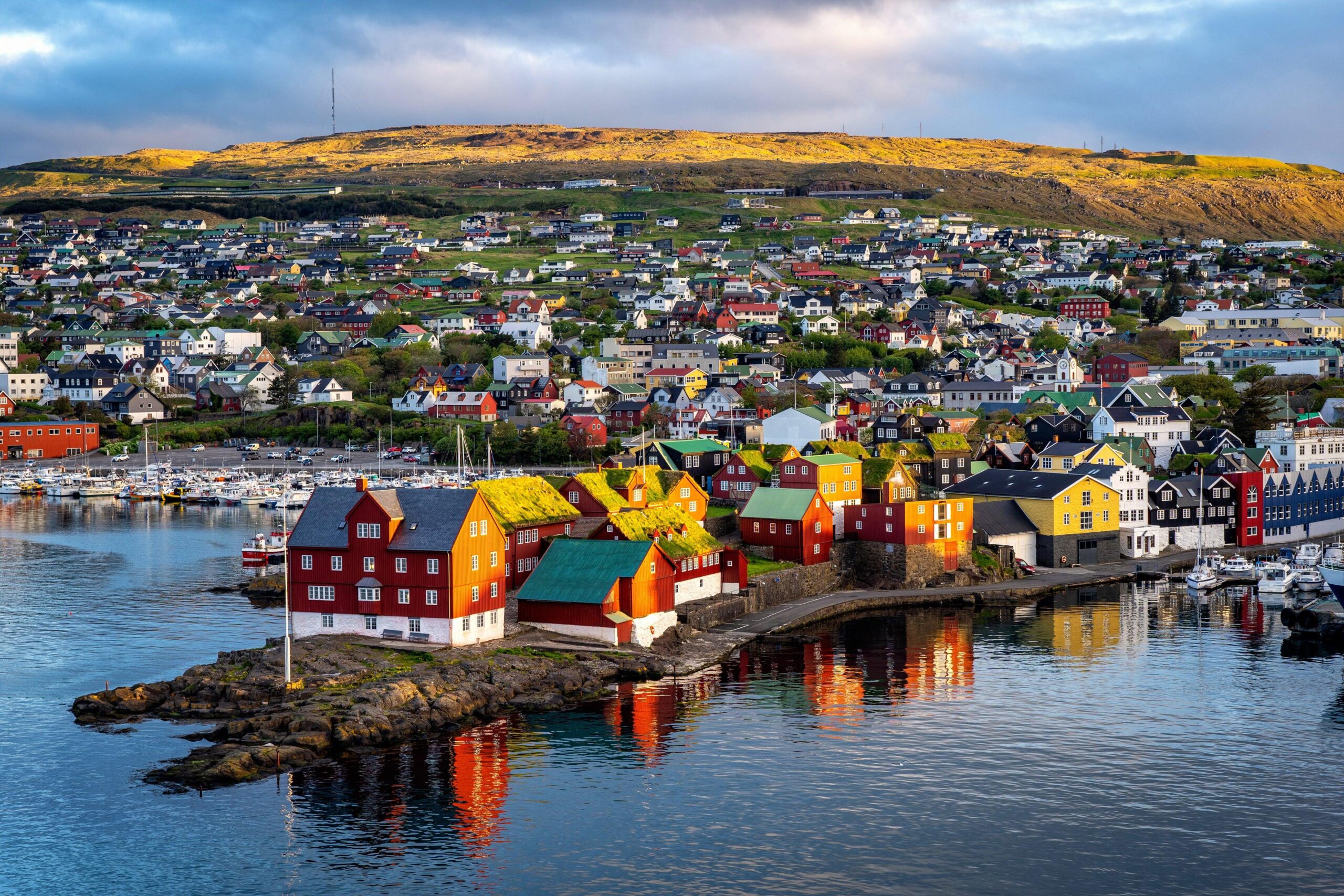
A recent study published on Wiley Online Library sheds new light on the stratigraphy and structural composition of the Faroe Islands flood basalts, a key feature in understanding large-scale volcanic activity. By revisiting these ancient rock formations with advanced analytical techniques, researchers aim to deepen scientific knowledge about their formation processes and geological significance. This fresh perspective not only enhances our grasp of the Faroe Islands’ complex volcanic history but also holds implications for broader studies of flood basalt provinces worldwide.

Table of Contents

Toggle
  • Reevaluating Stratigraphic Layers Reveals New Insights into Faroe Islands Flood Basalts
  • Structural Analysis Uncovers Hidden Complexities Impacting Carbon Capture Strategies
  • Experts Recommend Integrating Revised Geological Data for Enhanced CO2 Storage Potential
  • Final Thoughts

Reevaluating Stratigraphic Layers Reveals New Insights into Faroe Islands Flood Basalts

Recent investigations into the stratigraphic sequences of the Faroe Islands have uncovered previously overlooked complexities within the flood basalt formations. Utilizing advanced seismic imaging and refined field mapping techniques, researchers have identified multiple discrete lava flows interspersed with sedimentary horizons, suggesting a more episodic volcanic activity than initially thought. This revelation challenges earlier models that depicted a largely homogeneous and continuous effusive phase, opening avenues to reinterpret the island’s volcanic history with greater nuance.

Key observations from the study highlight:

  • Variable thicknesses of basalt layers, indicating multiple eruptive pulses rather than a single, sustained outpouring.
  • Intercalated sediment deposits, which provide important temporal markers for correlating eruptive events.
  • Structural discontinuities that suggest tectonic influences played a role in shaping the current stratigraphy.

Stratigraphic FeatureDescriptionImplication
Layer Thickness VariationsRanges from 10 to 80 meters per flowSuggests episodic volcanic pulses
Sedimentary InterbedsThin shale and sandstone layersMarkers for eruption pauses
Fault Zones It looks like your table was cut off after the third row. Here’s a suggestion for completing the last row and finishing the table based on the context provided:

Fault ZonesStructural breaks and displacements within basalt layersIndicates tectonic influence on stratigraphy

This completes your table with the third key stratigraphic feature regarding fault zones, consistent with the content of your paragraph and bullet points. Let me know if you want me to help with anything else!

Structural Analysis Uncovers Hidden Complexities Impacting Carbon Capture Strategies

Recent structural analysis of the Faroe Islands flood basalts has revealed a network of previously undetected fault systems and intricate layering that complicate the geomechanical landscape. These hidden complexities present significant challenges for carbon capture and storage (CCS) initiatives, as the integrity of potential reservoirs depends heavily on the local fault architecture. The study underscores that the simplistic, homogenous models traditionally employed to forecast CO2 behavior risk overlooking critical fracture pathways that could lead to leakage or reduced storage efficiency.

Key findings emphasize the need to factor in:

  • Multi-scale fault segmentation that alters pressure regimes within the basalt layers
  • Variable permeability zones caused by lithological heterogeneity and secondary mineralizations
  • Stress field anisotropy impacting injection strategies and long-term stability

These insights are crucial for refining reservoir models and engineering solutions tailored to the complex stratigraphic framework of these volcanic formations. The table below compares traditional assumptions against the new structural findings and their implications for CCS deployment:

AspectPrevious ModelNew Structural InsightsImpact on CCS
FaultingSparse and linearDense, complex networkIncreased risk of leakage
PermeabilityUniform

Recent structural analysis of the Faroe Islands flood basalts has revealed a network of previously undetected fault systems and intricate layering that complicate the geomechanical landscape. These hidden complexities present significant challenges for carbon capture and storage (CCS) initiatives, as the integrity of potential reservoirs depends heavily on the local fault architecture. The study underscores that the simplistic, homogenous models traditionally employed to forecast CO2 behavior risk overlooking critical fracture pathways that could lead to leakage or reduced storage efficiency.

Key findings emphasize the need to factor in:

  • Multi-scale fault segmentation that alters pressure regimes within the basalt layers
  • Variable permeability zones caused by lithological heterogeneity and secondary mineralizations
  • Stress field anisotropy impacting injection strategies and long-term stability

These insights are crucial for refining reservoir models and engineering solutions tailored to the complex stratigraphic framework of these volcanic formations. The table below compares traditional assumptions against the new structural findings and their implications for CCS deployment:

<

Experts Recommend Integrating Revised Geological Data for Enhanced CO2 Storage Potential

Recent analyses underscore the critical importance of incorporating updated geological models into carbon capture and storage (CCS) strategies within the Faroe Islands flood basalt formations. Experts emphasize that previous interpretations underestimated the stratigraphic complexity and structural heterogeneity, directly impacting the accuracy of CO2 sequestration capacity estimates. Integrating revised data enables a more precise delineation of porosity distribution, fracture networks, and caprock integrity, all of which are pivotal for predicting the long-term stability and effectiveness of large-scale storage projects.

Key advantages of embracing the revised geological framework include:

  • Improved risk assessment of potential leakage pathways through fault systems
  • Enhanced identification of high-capacity storage zones within complex basalt layers
  • Optimization of injection strategies based on a refined understanding of reservoir properties
  • Support for regulatory compliance with updated geological evidence
AspectPrevious ModelNew Structural InsightsImpact on CCS
FaultingSparse and linearDense, complex networkIncreased risk of leakage
PermeabilityUniform
ParameterPrevious ModelRevised ModelImpact on CO2 Storage
Porosity (%)8-1210-18+50% increase in effective storage volume
Fracture Density (m/m2)LowModerate to HighImproved migration pathways, but increased leakage monitoring needed
Caprock Thickness (m)30-5050-70Enhanced seal integrity

Final Thoughts

In revisiting the stratigraphy and structure of the Faroe Islands flood basalts, this comprehensive study sheds new light on the region’s complex volcanic history and its broader implications for understanding large igneous provinces. By integrating detailed fieldwork with advanced analytical techniques, researchers have unraveled previously hidden layers and structural details that challenge existing models. These findings not only enhance our geological knowledge of the North Atlantic but also provide critical insights for future studies on volcanic activity and carbon cycling. As the scientific community continues to explore the Faroe Islands’ unique formations, this work stands as a pivotal reference point, opening avenues for deeper investigation into Earth’s dynamic past.

Tags: CO2 SequestrationEarth sciencefaroe-islandsFlood BasaltsGeological StructuregeologyLarge-Scale Carbon DioxidePaleoenvironmentSedimentologyStratigraphytectonicsVolcanic RocksWiley Online Library
ADVERTISEMENT
Previous Post

FERNRIDE Unveils Fully Driverless Operations at HHLA TK Estonia Seaport

Next Post

3 Undervalued UK Stocks Poised for Growth

Charlotte Adams

Charlotte Adams

A lifestyle journalist who explores the latest trends.

Related Posts

Croatia qualifies for World Cup by beating Faroe Islands and Netherlands move closer – AP News
Faroe Islands

Croatia Secures World Cup Spot with Win Over Faroe Islands as Netherlands Edge Closer

December 20, 2025
TPY-4 radars to be installed in Denmark’s Faroe Islands, possibly Greenland – Janes
Faroe Islands

Denmark to Deploy Advanced TPY-4 Radars in the Faroe Islands and Potentially Greenland

December 18, 2025
📝 World Cup 2026 qualifiers: Faroe Islands and Arnautovic make history – Yahoo Sports Canada
Faroe Islands

Faroe Islands and Arnautovic Make History in Thrilling World Cup 2026 Qualifiers

December 17, 2025
Faroe Islands passes Russian sanction bill, possibly jeopardizing bilateral negotiations – SeafoodSource
Faroe Islands

Faroe Islands Approve Russian Sanction Bill, Threatening Future Bilateral Talks

December 15, 2025
The past, present and future: Faroe Islands women respecting, representing and making history with world championship debut – IHF
Faroe Islands

Faroe Islands Women Make History with Thrilling World Championship Debut: Honoring Their Past, Shaping the Future

December 13, 2025
Highlights and goal of Faroe Island 1-0 Kazakhstan in International Friendly. – VAVEL.com
Faroe Islands

Faroe Islands Edge Kazakhstan 1-0 in Thrilling International Friendly Showdown

December 11, 2025
How pink skies and a remote Icelandic town changed Humbe’s new album – Los Angeles Times

How pink skies and a remote Icelandic town changed Humbe’s new album – Los Angeles Times

December 20, 2025
Guernsey FC beat Seaford for fifth successive win – BBC

Guernsey FC beat Seaford for fifth successive win – BBC

December 20, 2025
How Does Emily in Paris Season 5 End? The Breakups, Makeups, and More Explained – Netflix

How Does Emily in Paris Season 5 End? The Breakups, Makeups, and More Explained – Netflix

December 20, 2025
The Brits who beat Brexit: Gibraltar celebrates its return to Europe – The Washington Post

How Gibraltar Triumphed Over Brexit to Reclaim Its Place in Europe

December 20, 2025
Azerbaijan Tourism Emerges as a Bridge Between Europe and Asia, Blending Silk Road Heritage with Modern Travel Experiences – Travel And Tour World

Azerbaijan Tourism: Bridging Europe and Asia with Silk Road Heritage and Modern Adventures

December 20, 2025
Webcam shows mountaineer allegedly leave dumped girlfriend to freeze to death on Austria’s highest peak – New York Post

Webcam Captures Mountaineer Allegedly Abandoning Girlfriend to Freeze on Austria’s Highest Peak

December 20, 2025
2024 Country Reports on Human Rights Practices: Germany – U.S. Department of State (.gov)

Inside Germany’s 2024 Human Rights Landscape: Key Insights and Developments

December 20, 2025
EU Commits to $105 Billion Loan to Ukraine—but Without Russian Assets – The Wall Street Journal

EU Pledges $105 Billion Loan to Ukraine, Excluding Russian Asset Funds

December 20, 2025

Categories

Archives

July 2025
MTWTFSS
 123456
78910111213
14151617181920
21222324252627
28293031 
« Jun   Aug »

Our authors

  • Atticus Reed
  • Ava Thompson
  • Caleb Wilson
  • Charlotte Adams
  • Ethan Riley
  • Isabella Rossi
  • Jackson Lee
  • EURO-NEWS
  • Mia Garcia
  • Noah Rodriguez
  • Olivia Williams
  • Samuel Brown
  • Sophia Davis
  • Victoria Jones
  • William Green

© 2024 EUROP.INFO - Copyright for syndicated content belongs to the linked Source.

No Result
View All Result

    © 2024 EUROP.INFO - Copyright for syndicated content belongs to the linked Source.

    This website uses cookies. By continuing to use this website you are giving consent to cookies being used. Visit our Privacy and Cookie Policy.
    Go to mobile version

    1 - 2 - 3 - 4 - 5 - 6 - 7 - 8