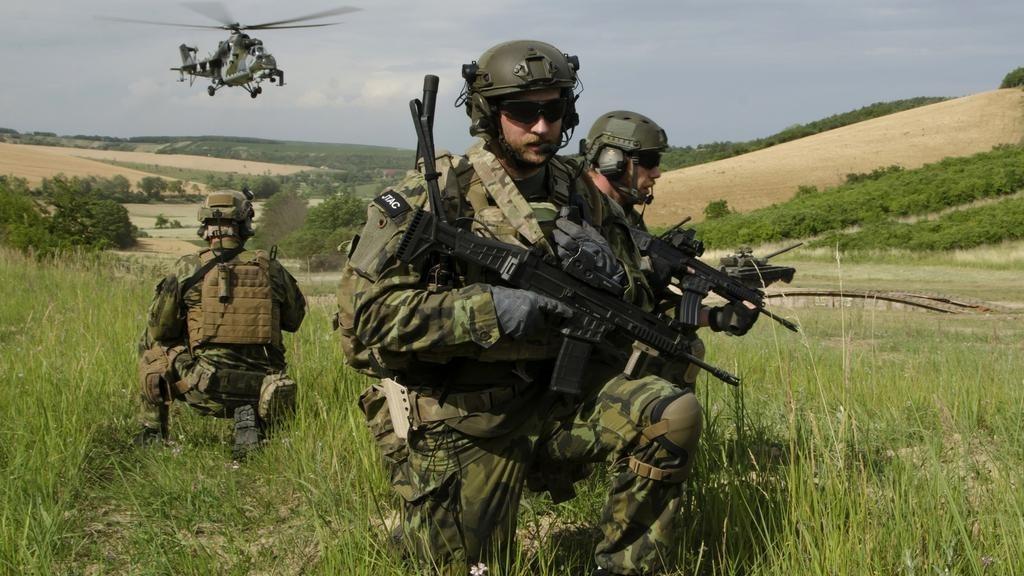
Czech defense conglomerate CSG is charting a new course as it shifts its focus from traditional ammunition manufacturing to advanced drone technology. The move highlights the company’s ambition to adapt to evolving military demands and expand its footprint in the rapidly growing unmanned systems market. As global defense strategies increasingly emphasize innovation and automation, CSG’s strategic pivot underscores a broader industry trend toward next-generation warfare capabilities.
CSG’s Strategic Shift Signals New Era in Czech Defense Innovation
Czech defense group CSG is embarking on a transformative journey, shifting its focus from traditional ammunition manufacturing to advanced drone technology. This strategic realignment reflects an ambition to position itself at the forefront of modern warfare innovation, addressing the evolving demands of both domestic and international defense markets. By leveraging cutting-edge research and development, CSG aims to enhance its product portfolio with intelligent unmanned aerial systems that offer superior reconnaissance, surveillance, and tactical capabilities.
Key elements driving this shift include:
- Investment in R&D to accelerate drone design and production cycles.
- Collaboration with tech startups to integrate AI and autonomous navigation features.
- Expansion into new markets emphasizing defense modernization efforts in Central and Eastern Europe.
| Focus Area | 2023 | 2025 Projection |
|---|---|---|
| Traditional Ammunition Sales | 75% | 40% |
| Drone Technology Development | 10% | 45% |
| R&D Budget Allocation | 20M EUR | 50M EUR |
Integrating Advanced Drone Technologies to Enhance Battlefield Capabilities
The Czech defense group CSG is rapidly advancing its portfolio by incorporating cutting-edge unmanned aerial systems designed to revolutionize battlefield operations. By shifting focus from traditional munitions to sophisticated drone platforms, CSG aims to provide enhanced reconnaissance, real-time intelligence, and precision engagement capabilities. These drones are engineered to operate in complex environments, offering forces unparalleled situational awareness and operational flexibility. Featuring modular payload options, they can be quickly adapted for surveillance, target acquisition, or electronic warfare missions, making them vital assets in modern combat scenarios.
Key elements driving this transformation include:
- Autonomous Flight Systems – enabling extended mission endurance and reduced operator workload.
- Integrated Sensor Suites – combining thermal imaging, LiDAR, and multispectral cameras for comprehensive battlefield monitoring.
- Secure Communication Links – ensuring encrypted data transmission resistant to electronic interference or cyberattacks.
- Swarm Coordination Features – allowing multiple drones to operate in tandem for force multiplication.
| Feature | Benefit | Operational Impact |
|---|---|---|
| Autonomous Navigation | Enhanced mission duration | Lower pilot fatigue and increased coverage |
| Multi-Sensor Integration | 360° situational awareness | Improved target detection accuracy |
| Encrypted Comm Link | Data security | Resilience against jamming and interception |
| Swarm Capabilities | Coordinated attacks | Greater tactical flexibility on the battlefield |
Expert Recommendations for Navigating the Transition from Conventional Arms to Modern UAVs
Industry experts emphasize that the shift from traditional firearms and munitions to advanced UAV technology demands a comprehensive strategy centered on integration, operator training, and innovation investment. The move can’t be merely technological-it requires cultural adaptation within defense organizations to embrace unmanned systems as force multipliers rather than just supplementary tools. Experts suggest prioritizing:
- Robust training programs to develop new skill sets focused on drone operation, maintenance, and mission planning.
- Cross-disciplinary collaboration between software engineers, aeronautical specialists, and tactical commanders to align UAV capabilities with battlefield realities.
- Incremental deployment, enabling forces to gradually integrate UAVs alongside existing assets, minimizing operational disruption.
Beyond human factors, securing reliable supply chains and advancing research in AI-driven autonomy remain critical. The following table outlines key focus areas along with their challenges and recommended actions, serving as a roadmap for defense groups like CSG navigating this complex transformation.
| Focus Area | Main Challenge | Recommended Action |
|---|---|---|
| Operator Training | Skill Gap | Develop simulator-based curricula |
| Technology Integration | System Compatibility | Adopt modular UAV platforms |
| Supply Chain | Component Availability | Source diversified suppliers |
| Autonomy & AI | System Reliability | Invest in adaptive algorithms |
To Wrap It Up
As Czech defense group CSG embarks on its strategic pivot from traditional ammunition manufacturing to advanced drone technology, the move reflects broader shifts within the global defense industry toward innovation and automation. By leveraging its engineering expertise and investing in unmanned systems, CSG aims to position itself as a competitive player in the evolving battlefield landscape. Observers will be watching closely to see how this transformation unfolds and what it means for the future of defense manufacturing in the Czech Republic and beyond.