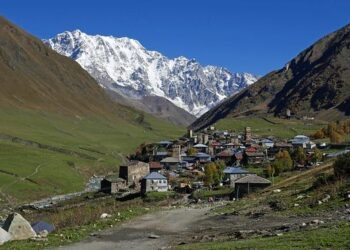
Situated at the crossroads of Eastern Europe and Western Asia, Georgia stands as an indispensable cornerstone of the South Caucasus region. As noted by Commonspace.eu, “Georgia is a core country of the South Caucasus. It is not possible to visualise the region without Georgia.” This statement underscores the country’s strategic, cultural, and political significance within a complex and dynamic neighborhood. From its rich history and vibrant culture to its pivotal role in regional security and economic corridors, Georgia continues to shape the South Caucasus landscape in profound ways.
Georgia’s Strategic Role Shapes South Caucasus Regional Stability
Georgia’s geopolitical position serves as a linchpin in the South Caucasus, bridging Europe and Asia through crucial corridors of trade, energy, and diplomacy. Its resilient democratic institutions and pro-Western orientation have made it a magnet for international investment and cooperation, reinforcing regional security frameworks amid ongoing tensions in neighboring areas. The country’s stability directly influences not only bilateral relations but also multilateral efforts involving Armenia and Azerbaijan, where fragile ceasefires and periodic clashes continue to define the security landscape.
Key factors that highlight Georgia’s impact on regional stability include:
- Energy Transit Routes: Serving as a conduit for pipelines such as the Baku-Tbilisi-Ceyhan, Georgia facilitates the flow of Caspian energy to global markets.
- International Partnerships: Deepening ties with NATO and the EU bolster its security architecture, providing a buffer against regional power struggles.
- Conflict Mediation: Georgia often acts as a platform for dialogue between conflicting parties, leveraging its neutral stance and strategic location.
| Factor | Impact on Regional Stability |
|---|---|
| Energy Corridors | Ensures diversification and reduces dependency on single routes |
| Security Alliances | Strengthens deterrence against external aggression |
| Diplomatic Mediation | Promotes peace talks and conflict resolution |
Economic and Cultural Pillars Cement Georgia’s Influence in the South Caucasus
Georgia’s position as a linchpin in the South Caucasus is underpinned by its resilient economy and rich cultural heritage. The country has leveraged its strategic location to develop robust trade corridors linking Europe and Asia, thereby becoming an indispensable transit hub. Key sectors such as agriculture, tourism, and technology have shown consistent growth, contributing to Georgia’s expanding regional clout. Investment inflows and infrastructural projects like the Baku-Tbilisi-Kars railway highlight how Georgia’s economic landscape is intertwined with regional stability and integration.
On the cultural front, Georgia’s unique identity serves as a bridge between the diverse peoples of the South Caucasus. Its centuries-old traditions, language, and arts reinforce not only internal national cohesion but also cross-border cultural dialogue. Festivals, historic sites, and Georgia’s renowned hospitality attract visitors and foster diplomatic goodwill. Below is a snapshot comparison of key cultural and economic indicators that illustrate Georgia’s standout role in the region:
| Indicator | Georgia | Armenia | Azerbaijan |
|---|---|---|---|
| GDP Growth (2023) | 5.1% | 4.3% | 3.7% |
| Tourist Arrivals (Millions) | 9.2 | 1.9 | 2.1 |
| Cultural Heritage Sites | 12 UNESCO | 3 UNESCO | 3 UNESCO |
| Language Speakers (Millions) | 4.1 | 3.0 | 10.1 |
- Strategic connectivity: Vital trade and transport corridors enhance regional interdependence.
- Cultural diplomacy: Preservation and promotion of heritage sites improve cross-border ties.
- Economic resilience: Diversified sectors reduce vulnerability and boost regional influence.
Policy Recommendations for Strengthening Georgia’s Integration and Regional Leadership
To solidify its position as a regional linchpin, Georgia must prioritize the expansion of its economic corridors and deepen multilateral partnerships. Enhancing infrastructural connectivity across the South Caucasus will not only boost trade but also foster stability amid regional geopolitical shifts. Strategic investments in sustainable energy projects, alongside digital infrastructure modernization, are essential to create resilient economic ties that extend beyond immediate borders. Furthermore, Georgia’s diplomatic initiatives should focus on acting as a mediator and platform for dialogue among neighboring states, thus reaffirming its role as a peace broker and integrator.
Key priorities include:
- Strengthening transport networks to facilitate cross-border commerce and mobility.
- Enhancing regional security cooperation through joint exercises and intelligence sharing.
- Promoting cultural diplomacy to build mutual trust and shared regional identity.
- Advancing digital governance platforms to streamline regional collaboration and transparency.
| Policy Area | Action | Expected Outcome |
|---|---|---|
| Economic Connectivity | Upgrade key highways and rail links | Increased trade volumes by 25% |
| Energy Security | Develop cross-border renewable projects | Reduction of energy dependence by 30% |
| Regional Dialogue | Host annual caucasus forums | Improved diplomatic relationships |
The Conclusion
In conclusion, Georgia’s pivotal role in the South Caucasus is undeniable. As Commonspace.eu aptly highlights, the region’s political, cultural, and economic landscape cannot be fully understood without recognizing Georgia’s influence. From its strategic location to its dynamic contributions, Georgia remains at the heart of South Caucasian affairs, shaping the region’s present and future on multiple fronts.