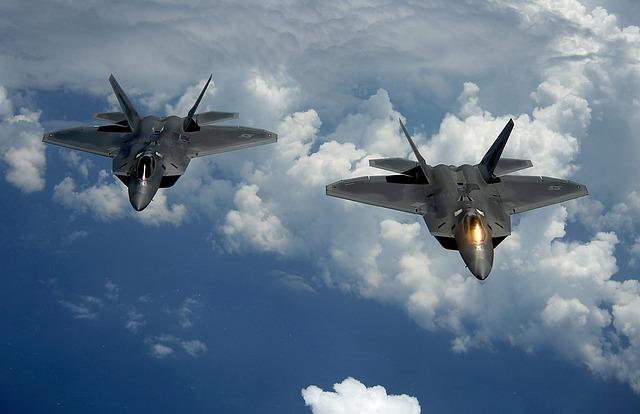
In a tense display of military vigilance, United States fighter jets were scrambled to intercept at least five Russian warplanes detected near Alaska’s airspace, officials confirmed. The incident underscores ongoing strategic posturing between the two nations, as Russian aircraft approached the sensitive boundary of U.S. territory in the Arctic region. Authorities closely monitored the situation, emphasizing the commitment to safeguarding national security amid heightened geopolitical tensions.
US Fighter Jets Scramble in Response to Russian Warplanes Near Alaska Airspace
In a swift and calculated response, U.S. Air Force fighter jets were dispatched to intercept a group of Russian military aircraft approaching Alaska’s airspace. The operation involved at least five Russian warplanes, including a mix of bombers and reconnaissance aircraft, which prompted heightened vigilance along the North American Aerospace Defense Command (NORAD) monitored corridors. This incident marks one of the more significant airspace challenges in recent months, underscoring the persistent tensions in the Arctic region as global powers flex their strategic capabilities.
Key details of the interception include:
- Deployment of F-22 Raptor stealth fighters from Eielson Air Force Base
- Use of advanced radar and electronic surveillance to track movement
- Coordination with Canadian NORAD partners to monitor the incursion
- No direct violation of U.S. sovereign airspace was reported
| Aircraft Type | Origin | Purpose | Duration Near Airspace |
|---|---|---|---|
| Russian Tu-95 ‘Bear’ | Kamchatka | Reconnaissance | 45 minutes |
| Russian Su-35 | Far East Base | Escort | 50 minutes |
| US F-22 Raptor | Alaska (Eielson AFB) | Interception | 60 minutes |
Analyzing the Strategic Implications of Russian Military Flights Over North American Territory
The recent deployment of US fighter jets to intercept multiple Russian warplanes approaching Alaska underscores a growing pattern of high-stakes aerial maneuvers near North American airspace. Such incursions not only test the rapid response capabilities of the US military but also signal Moscow’s intent to project power and assert its geopolitical influence in the Arctic and beyond. Analysts note that these flights serve multiple strategic purposes:
- Demonstration of Reach: Reinforcing Russia’s capacity to operate far from its borders.
- Psychological Warfare: Undermining US airspace security perception.
- Data Collection: Gathering intelligence on US radar and defense systems.
The heightened frequency and complexity of these flybys highlight vulnerabilities and necessitate enhanced aerial surveillance and interception protocols. Here’s a concise overview of the operational aspects tied to the recent interceptions:
| Aspect | Details |
|---|---|
| Number of Russian Warplanes | At least five |
| US Fighter Jets Scrambled | Multiple F-22 Raptors |
| Flight Path | Approach near Aleutian Islands |
| Response Time | Under 10 minutes |
Recommendations for Enhancing US Air Defense Readiness Against Increased Aerial Intrusions
To effectively counter the surge in aerial encroachments near US airspace, it is imperative to bolster both technological capabilities and operational protocols. Enhancing radar coverage and integrating advanced early-warning systems along the Alaskan corridor will provide critical minutes of response time. Moreover, increasing the frequency of joint military exercises with allied nations can sharpen reflexive interception skills and improve communication channels across command networks. Investment in next-generation stealth fighters and unmanned aerial vehicles could also provide a strategic advantage in tracking and deterring foreign incursions.
Equally important is the need for a multi-layered approach to air defense readiness that encompasses:
- Rapid deployment protocols for fighter jets, ensuring minimal scramble times.
- Real-time intelligence sharing between NORAD, the US Air Force, and allied forces.
- Enhanced pilot training programs centered on intercepting non-traditional and electronic warfare-capable aircraft.
- Infrastructure upgrades to remote radar outposts and command centers across Alaska.
| Recommendation | Expected Impact | Timeframe |
|---|---|---|
| Advanced Radar Systems | Improved early detection | 12-18 months |
| Joint Military Drills | Enhanced interagency coordination | Ongoing |
| Pilot Combat Training | Faster interception response | 6-9 months |
| Infrastructure Modernization | Reliable communication links | 18-24 months |
Closing Remarks
As tensions persist amid ongoing global geopolitical challenges, the recent scramble of US fighter jets to intercept multiple Russian warplanes near Alaskan airspace underscores the delicate nature of international military posturing. Both nations continue to closely monitor each other’s movements, with such encounters serving as stark reminders of the strategic vigilance maintained along contested borders. Analysts will be watching closely to see how this latest incident influences the broader dynamics between the United States and Russia moving forward.