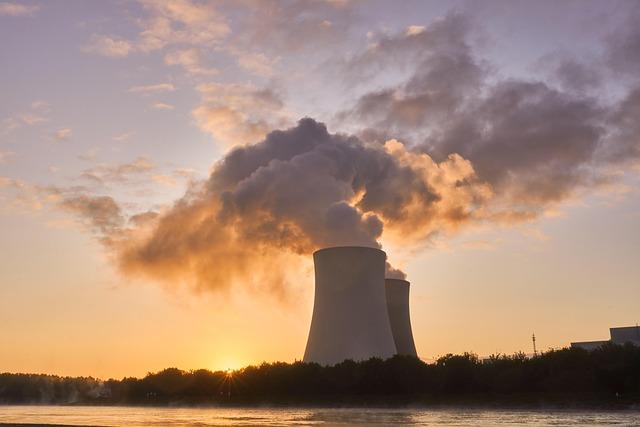
International negotiations are currently underway to replace Armenia’s Metsamor Nuclear Power Plant with a modern modular nuclear facility, officials confirmed Monday. The discussions, involving Armenian authorities and key global partners, aim to address the aging infrastructure and enhance the country’s energy security through advanced, scalable nuclear technology. This development marks a significant step in Armenia’s energy strategy as it seeks to balance environmental concerns, regional stability, and economic growth.
International Talks Advance on Phasing Out Metsamor Nuclear Power Plant
Diplomatic engagements between Armenian officials and international energy partners have gained momentum, focusing on the planned decommissioning of the Metsamor nuclear power plant. Central to discussions is the proposal to install a state-of-the-art modular nuclear facility that promises enhanced safety, increased efficiency, and reduced environmental impact compared to the aging Metsamor station. Experts emphasize the potential of modular reactors to address Armenia’s energy security while aligning with global climate commitments.
The negotiations also highlight a collaborative approach involving multiple stakeholders, including European energy agencies and private sector investors. Key points under review include:
- Technical feasibility of modular reactors in Armenia’s seismic zone
- Funding and investment strategies supported by international financial institutions
- Regulatory framework adaptations to accommodate new nuclear technologies
- Timelines for phased decommissioning and commissioning of replacement facilities
| Aspect | Current Status | Projected Timeline |
|---|---|---|
| Metsamor Operation | Extending service life to 2026 | Decommissioning by 2030 |
| Modular Plant Design | Preliminary assessments ongoing | Final design by 2025 |
| International Funding | Initial commitments secured | Completion of financial agreements in 2024 |
Detailed Technical and Environmental Assessments Shape Replacement Plans
Comprehensive evaluations are at the core of the current strategy to decommission the aging Metsamor Nuclear Power Plant and introduce a next-generation modular nuclear facility. These assessments encompass not only advanced technical analyses of reactor design and safety parameters but also a rigorous environmental impact study to ensure sustainable coexistence with the local ecosystem. Specialists are employing state-of-the-art modeling techniques to predict seismic resilience, waste management protocols, and energy output efficiency, thereby guaranteeing that the new plant will meet international standards and local expectations for reliability and security.
Environmental considerations are intricately woven into the planning process, focusing on minimizing carbon footprint and protecting natural resources. Key factors under review include:
- Water consumption and thermal discharge management to preserve aquatic habitats.
- Biodiversity assessments to avoid disruption of native flora and fauna.
- Long-term radioactive waste containment with minimal ecological disturbance.
To provide transparency and support decision-making, experts have developed comparative forecasts on important operational metrics:
| Parameter | Current Metsamor Plant | Proposed Modular Plant |
|---|---|---|
| Estimated Lifespan | 40 years | 60+ years |
| Seismic Resilience | Moderate | Enhanced (Modern Standards) |
| Annual Emissions | Minimal | Near-zero (Advanced Tech) |
| Waste Management | Traditional On-site Storage | Modular Recycling Systems |
Experts Recommend Modular Nuclear Technology for Enhanced Safety and Flexibility
Leading industry specialists are advocating for the deployment of modular nuclear technology as a pivotal solution to address both safety concerns and energy demands in regions currently dependent on legacy reactors. Unlike traditional large-scale plants, modular reactors offer enhanced operational flexibility, enabling incremental capacity expansion and streamlined maintenance schedules that significantly reduce downtime. Experts emphasize that these advancements not only improve seismic resilience-critical in earthquake-prone areas-but also incorporate state-of-the-art passive safety systems designed to mitigate risks without reliance on active controls or external power sources.
Key benefits highlighted by the specialists include:
- Rapid construction timelines due to factory fabrication of components
- Lower initial capital investment facilitating easier financing and phased deployment
- Reduced environmental footprint through efficient fuel usage and minimized waste production
- Scalability that aligns with evolving grid demands and energy policies
| Feature | Modular Reactors | Traditional Plants |
|---|---|---|
| Construction Time | 2-4 years | 8-12 years |
| Safety Systems | Passive & Passive-Assist | Active Mechanical |
| Capital Cost | Lower per unit | High upfront |
| Scalability | Modular, upgradable | Fixed capacity |
Final Thoughts
As international negotiations continue to explore viable options for replacing the Metsamor nuclear power plant with a modern modular facility, stakeholders remain focused on balancing Armenia’s energy security, environmental concerns, and economic considerations. The outcome of these discussions could chart a new course for the country’s energy future, reflecting broader regional and global trends toward safer, more flexible nuclear technology. Armenpress will continue to monitor developments and provide updates on this critical issue as talks progress.